





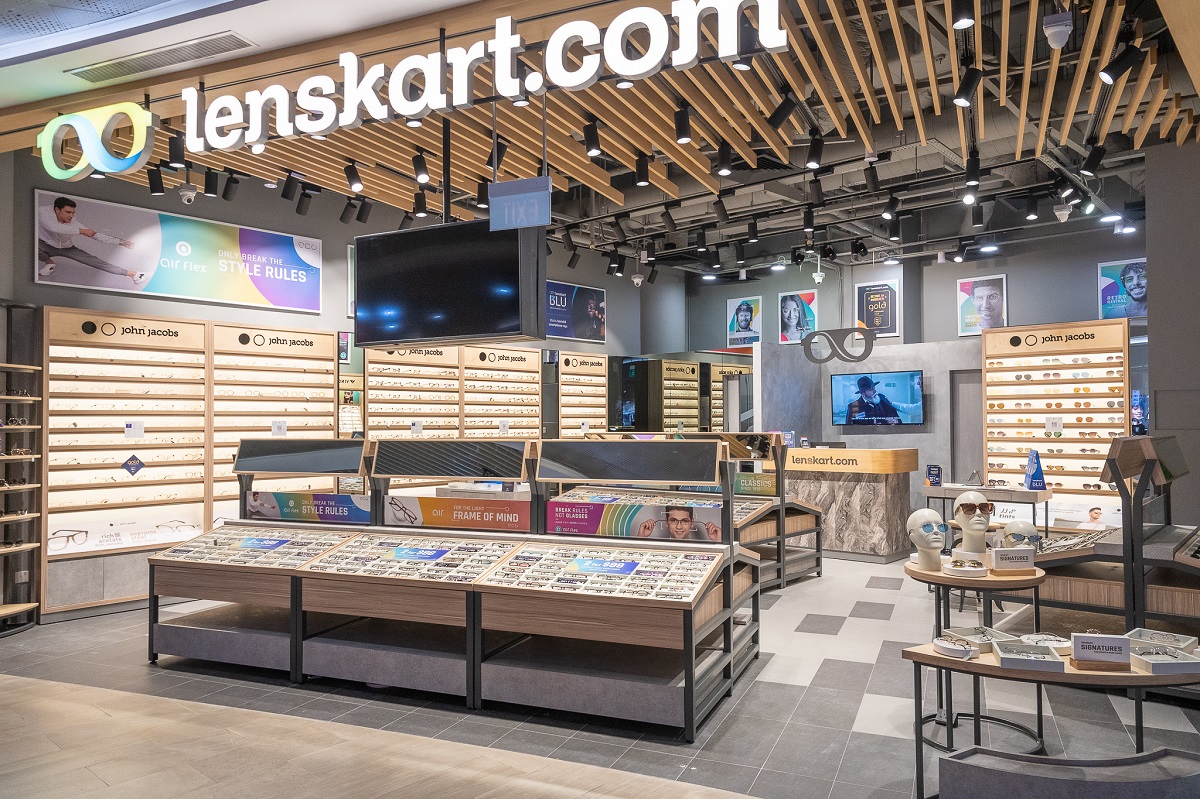
A new vision for India’s public markets
India’s eyewear leader Lenskart is preparing to make its long-awaited debut on Dalal Street with an initial public offering (IPO) valued at around US$875 million, scheduled for October 31, 2025. The listing, expected to value the company at nearly US$8.4 billion, underscores the growing strength of India’s consumer and e-commerce ecosystem.
For India’s retail and startup sectors, the offering marks a defining moment — bridging consumer technology with traditional capital markets and highlighting investor confidence in the country’s digital-first retail model.
From startup to retail powerhouse
Founded in 2010 by Peyush Bansal, Lenskart began as an online eyewear store and has evolved into one of Asia’s largest omnichannel eyewear companies. Its business model combines e-commerce convenience with in-store experience, supported by data-driven inventory management and proprietary lens-manufacturing technology.
Today, Lenskart operates more than 2,500 retail outlets across India and Southeast Asia, while serving over 20 million customers. The company’s consistent expansion has been fueled by early investments from global backers such as SoftBank Vision Fund, Temasek Holdings, and Alpha Wave Ventures.
The company’s financial trajectory has mirrored the broader rise of India’s consumer internet sector. As disposable incomes rise and digital adoption expands, eyewear has become a fast-growing lifestyle segment. According to the Ministry of Commerce and Industry of India, organized eyewear retail in India is projected to grow at more than 10% annually, supported by online platforms and health-conscious consumers. (For official updates, visit the Ministry of Commerce and Industry and the Securities and Exchange Board of India (SEBI)).
From private capital to public confidence
Lenskart’s IPO signals a major strategic shift — from relying on venture and private equity funds to tapping India’s capital markets for long-term expansion. The offering will consist of both fresh equity issuance and a secondary share sale by existing investors. Proceeds from the IPO will be used to scale manufacturing capacity, expand international presence, and accelerate investments in artificial intelligence and product design.
The company has also been strengthening its overseas footprint. In 2023 and 2024, Lenskart acquired stakes in Singapore-based Owndays and launched joint ventures in the Middle East. These moves position it as a pan-Asian retail platform, leveraging economies of scale and cross-market distribution.
Unlike many Indian startups that struggled post-listing, Lenskart has maintained steady profitability at the operating level. Analysts point to its vertically integrated supply chain, allowing it to control margins from design to delivery. This structure helps the firm stay resilient amid currency volatility and global supply disruptions.
Industry observers note that the IPO will serve as a bellwether for India’s next wave of consumer-tech listings. Following Mamaearth, Oyo, and Swiggy, Lenskart’s offering may determine investor appetite for retail-driven, profitable tech enterprises.
The rise of product-led e-commerce
Lenskart’s journey reflects a broader evolution within Asia’s startup ecosystem — where product-led digital brands are replacing discount-driven e-commerce. The company has successfully integrated technology, retail design, and local production to build a defensible business model that goes beyond online convenience.
Its AI-driven lens recommendation system and virtual try-on technology have become central to its customer experience. Moreover, the firm’s manufacturing facilities in Bhiwadi, Rajasthan, and Zhaoqing, China, enable it to maintain quality control and manage costs effectively.
Lenskart’s ability to connect digital innovation with tangible retail operations gives it an advantage over asset-light competitors. The IPO also demonstrates growing investor preference for companies that combine profitability with scale — a sharp contrast to earlier years when valuations often outweighed fundamentals.
In the broader context, India’s retail technology market is entering a maturity phase. With rising per capita income and expanding financial inclusion, firms like Lenskart are shaping a new class of consumer brands built on data, design, and distribution.
Scaling beyond borders
Post-listing, Lenskart plans to accelerate its international expansion across Southeast Asia, the Middle East, and potentially Japan. The company’s strategy focuses on blending local partnerships with centralized manufacturing and digital marketing systems.
Analysts believe that the firm’s overseas ventures could eventually contribute over 25% of total revenue within five years. In parallel, Lenskart will continue investing in eyewear innovation, aiming to dominate Asia’s prescription lens and fashion eyewear segments.
The IPO will also test the resilience of India’s equity market amid global headwinds. However, the country’s domestic liquidity, driven by retail investors and mutual funds, remains strong. This makes India one of the few markets where large-scale tech and consumer listings continue to attract consistent demand.
As India deepens its integration into global capital markets, Lenskart’s offering symbolizes both the maturity of the nation’s startup ecosystem and the globalization of its retail vision.
India’s next retail milestone
Lenskart’s US$875 million IPO marks not just a financial milestone but a strategic evolution in India’s consumer economy. The company’s shift from a venture-backed startup to a listed multinational brand illustrates the growing sophistication of Asia’s retail and financial ecosystems.
As it prepares to enter public markets, Lenskart stands as a case study in how innovation, supply-chain efficiency, and consumer trust can create scalable value. Its journey from startup to sector leader shows that India’s next growth story may not come from software alone — but from smart, product-driven enterprises built for the world.