





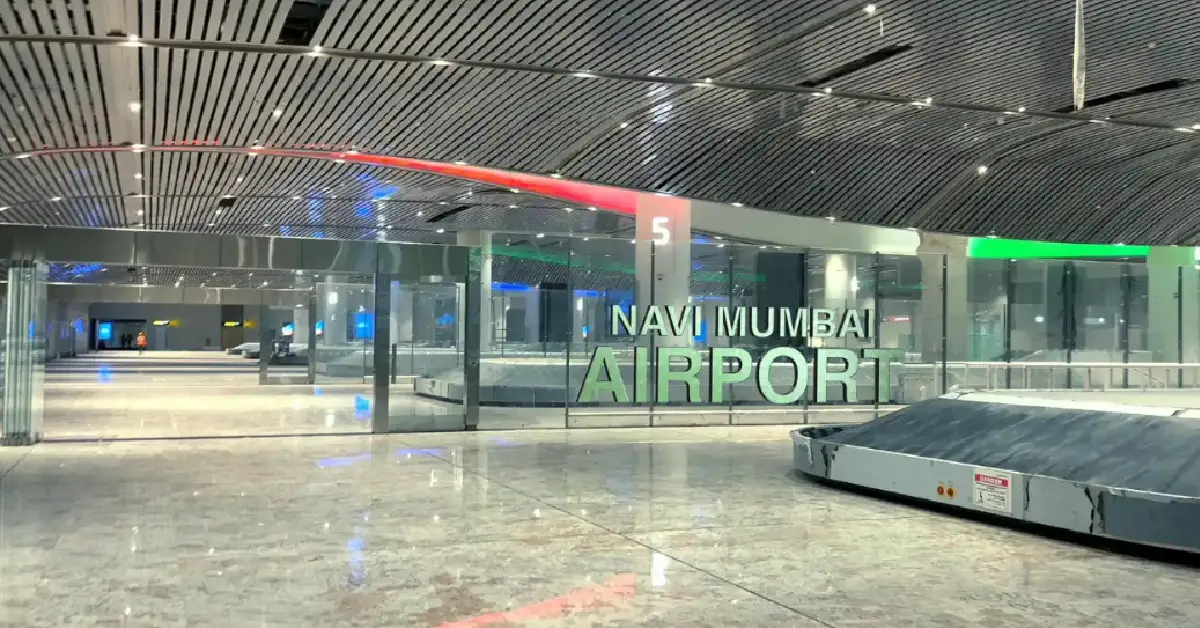
New airport clears final hurdle for launch
Adani Group’s Navi Mumbai International Airport has received its Aerodrome Licence from India’s Directorate General of Civil Aviation (DGCA), paving the way for commercial operations. The licence, announced on September 30, 2025, clears the last regulatory milestone ahead of an early-October inauguration.
The project, decades in the making, is expected to transform connectivity for Mumbai’s metropolitan region and ease congestion at Chhatrapati Shivaji Maharaj International Airport.
A long-awaited second airport for Mumbai
Plans for a second airport in Mumbai date back more than 20 years, driven by rising passenger volumes and the need to reduce pressure on the city’s overstretched primary hub. The site in Navi Mumbai was selected for its proximity to industrial clusters, shipping hubs, and emerging residential zones.
Adani Group, which took control of the project in 2019, has overseen its development through Navi Mumbai International Airport Private Limited (NMIAL). Built at an estimated cost of over US$2.5 billion, the airport has faced challenges, including land acquisition, rehabilitation of local villages, and environmental clearances.
Despite delays, construction accelerated in recent years, with the first phase designed to handle 20 million passengers annually. Future expansions aim to scale capacity to more than 90 million passengers per year, putting it on par with Asia’s largest aviation hubs.
Unlocking regional and national benefits
The DGCA licence is more than a bureaucratic green light—it marks the operational readiness of India’s most ambitious aviation project in decades.
Passenger relief: With Mumbai’s existing airport operating at near-saturation, Navi Mumbai will absorb rising demand from both domestic and international travelers.
Cargo growth: Its strategic location near the Jawaharlal Nehru Port Trust (JNPT), India’s largest container port, positions it as a future hub for air cargo logistics.
Regional connectivity: Designed as a multi-modal transport hub, the airport will link to Mumbai Trans Harbour Link, metro extensions, and dedicated freight corridors.
In addition, the project reflects India’s broader focus on infrastructure-led growth. Aviation is a key sector under Prime Minister Narendra Modi’s push to make India a global logistics hub, and Navi Mumbai represents a showcase for this vision.
Adani’s stake in shaping aviation
For the Adani Group, Navi Mumbai International Airport is more than a business venture—it is a symbol of its growing role in India’s infrastructure story. The conglomerate already manages several airports, including Ahmedabad, Lucknow, and Jaipur, but Navi Mumbai is its most high-profile project.
By combining expertise in energy, logistics, and real estate, Adani is positioning itself as a central player in shaping India’s urban future. At the same time, the group faces scrutiny over execution timelines and ensuring sustainability. Building an airport of this scale near sensitive coastal zones requires balancing growth with ecological safeguards.
The airport also illustrates how India is rethinking aviation governance. Instead of relying solely on state-owned operators, private developers like Adani are driving investments, raising questions about long-term cost structures and user experience. For travelers, the competition between two airports in Mumbai could improve service quality and lower fares.
Reshaping India’s aviation landscape
Navi Mumbai International Airport will likely reshape passenger and cargo flows not just for Mumbai but for India as a whole. Its opening comes at a time when India is one of the fastest-growing aviation markets globally, with passenger traffic projected to double over the next decade.
The airport’s success will depend on several factors:
Timely expansion of later phases to match rising demand.
Integration with ground transport, ensuring accessibility for commuters across the Mumbai metropolitan region.
Sustainability practices, including green building certifications and renewable energy use, which will be critical as global aviation faces environmental scrutiny.
For airlines, the new hub offers fresh slots and opportunities to expand international routes. For Mumbai, it promises reduced congestion, improved connectivity, and a stronger claim as South Asia’s leading aviation hub.
A milestone for Mumbai and Indian aviation
The DGCA’s approval of Navi Mumbai International Airport marks the start of a new chapter for Indian aviation. After years of planning and delays, the airport is finally ready to serve as a gateway of growth for the Mumbai metro region and beyond.
For India, it underscores the role of infrastructure in driving competitiveness and global integration. For travelers, it promises faster journeys, greater choice, and a symbol of how the country is preparing for its aviation future.