
Artificial intelligence is transforming not only startups but also legacy industries like banking, automotive, real estate, and healthcare. In 2025, these 10 Asian CEOs are embedding AI into traditional business models—redefining competitiveness, efficiency, and growth across the global economy.
Image by Business Today
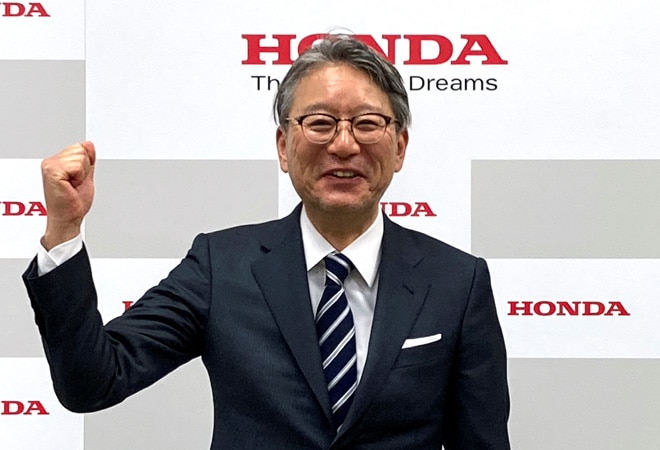
Toshihiro Mibe |
- Japan
Honda Motor Co.
$130 billion in FY2024 revenue; over 4 million vehicles sold globally
Toshihiro Mibe is leadin Honda through a bold transformation. Under his leadership, AI has been deployed in areas like autonomous driving systems, predictive maintenance, and battery optimization for electric vehicles. Honda’s factories are also integrating machine learning to improve manufacturing efficiency. With an eye on future mobility, Mibe is reshaping Japan’s automotive legacy for the AI era.
Image by Yicai Global
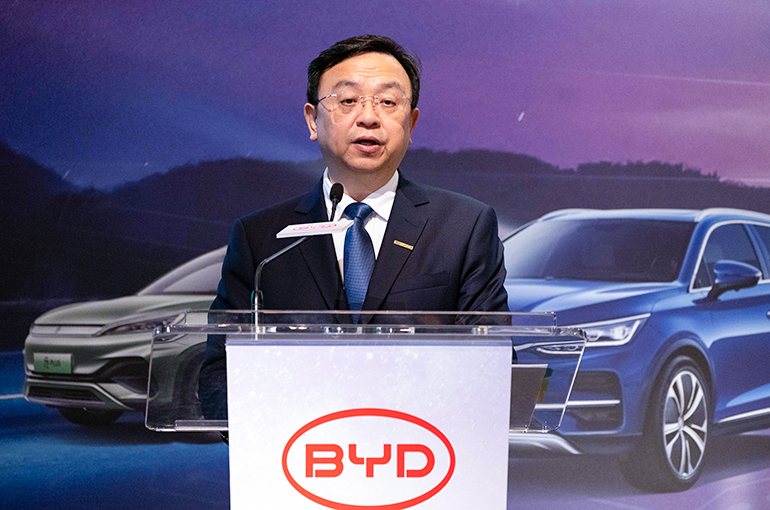
Wang Chuanfu |
- China
BYD (Build Your Dreams)
600,000+ EVs sold in Q1 2025; $90 billion market capitalization Founded: 1995
As the founder and CEO of BYD Wang Chuanfu has overseen the rise of China’s largest EV and battery company. AI underpins much of BYD’s operations, from supply chain optimization to self-driving vehicle platforms. The company is also using AI to develop smart energy storage solutions, cementing its status as a global green-tech leader.
Image by gstatic
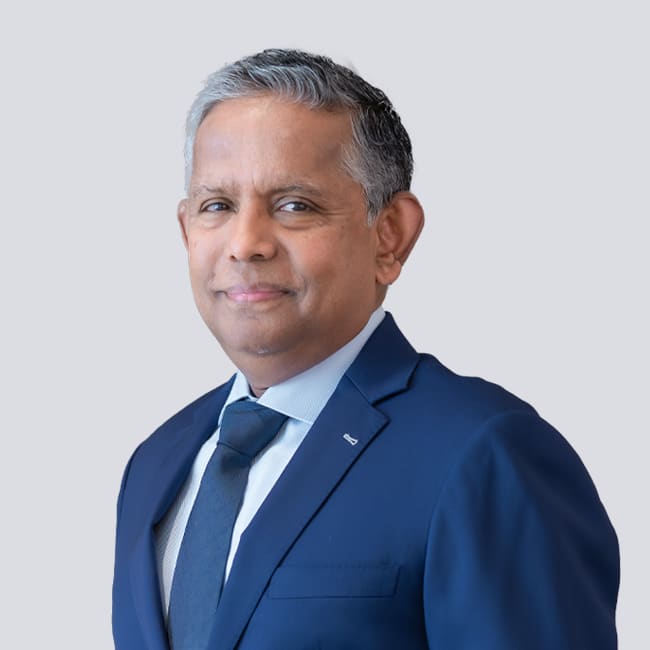
Tan Su Shan |
- Singapore
DBS Group Holdings (Development Bank of Singapore)
USD 8.4 billion net profit in FY2024; Southeast Asia’s largest bank by assets Founded: 1968
Tan Su Shan, appointed CEO in 2025, is modernizing Asia’s largest bank by assets. AI is now used in fraud detection, portfolio advisory, and credit scoring. With machine learning models predicting risk and streamlining operations, DBS is emerging as a pioneer in AI-led financial transformation in Southeast Asia.
Image by wikipedia
Rajiv Singh |
- India
DLF Limited (Delhi Land and Finance)
$12 billion market cap; 150+ real estate projects across India Founded: 1946
Under Rajiv Singh guidance, DLF has moved from concrete to code. AI tools help monitor construction sites, reduce timelines, and enhance energy efficiency in buildings. Digital twins and predictive analytics are also being deployed to create smarter urban ecosystems. DLF’s strategy shows how real estate can thrive in a data-driven future.
Image by gstatic
Adar Poonawalla |
- India
Serum Institute of India
1.5 billion vaccine doses annually; 170+ countries served Founded: 1966
Adar Poonawalla is making AI central to global vaccine supply chains. At Serum Institute, algorithms now support drug discovery, trial modeling, and distribution planning. The result: faster R&D cycles, better resource allocation, and more responsive public health solutions. Poonawalla’s strategy blends biotechnology with intelligent automation.
Image by MarcaMoney
Hiroki Totoki |
- Japan
Sony Group Corporation
$8.5 billion operating profit in FY2024; leader in image sensors Founded: 1946
Sony newly appointed CEO, Hiroki Totoki, is doubling down on AI across sectors. Whether in semiconductor design, gaming (via PlayStation), or content production, Sony is weaving AI into product development. By combining its hardware expertise with generative models, Sony is reclaiming its innovation edge in the AI age.
Image by Nikkei
Toru Nishikawa |
- Japan
Preferred Networks
$2 billion estimated valuation; partnerships with Toyota and FANUC Founded: 2014
Preferred Networks is among Japan’s most advanced AI startups. CEO Toru Nishikawa is focused on industrial automation—especially using AI in manufacturing robotics, logistics, and healthcare imaging. His approach connects deep-tech R&D with Japan’s traditional industrial base, enabling high-precision, AI-powered operations.
Image by Minor Hotels
Dillip Rajakarier |
- Thailand
Minor International
530+ hotels and restaurants in 65 countries Founded: 1967
Dillip Rajakarier is bringing AI into hospitality. Minor International now uses machine learning for guest personalization, booking prediction, and dynamic pricing. Predictive maintenance systems also optimize hotel operations. By digitizing guest experiences, Heinecke is showing how legacy service industries can evolve into tech-powered ecosystems.
Image by Asian Development Bank
Masatsugu Asakawa |
- Japan
Asian Development Bank (ADB)
$120 billion lending portfolio for Asia
As ADB’s President, Masatsugu Asakawa is using AI to modernize development finance. From climate modeling to project risk assessments, data science tools now guide funding decisions. ADB’s AI-based platforms aim to enhance transparency and maximize impact, setting a new standard for public infrastructure financing.
Image by gstatic
Anthony Tan |
- Malaysia
Grab Holdings
$12 billion NASDAQ valuation; 33 million monthly users
Anthony Tan has taken Grab beyond ride-hailing into a fully integrated super app. AI now powers real-time routing, loan underwriting, and food delivery predictions. Through its AI-first strategy, Grab is evolving into a fintech, mobility, and lifestyle platform—tailored to Southeast Asia’s digital economy.
Across Asia, these 10 CEOs are not simply adopting AI—they are weaving it into the DNA of legacy sectors. Their leadership reflects a broader trend where traditional industries are becoming intelligent, data-rich, and globally competitive. By combining domain expertise with advanced technology, these companies are unlocking new value—and setting benchmarks for AI-powered transformation in the global economy.
Discover more inspiring journeys on Feature.Asia: 10 Entrepreneurs Under 30 Changing Asia’s Economy