





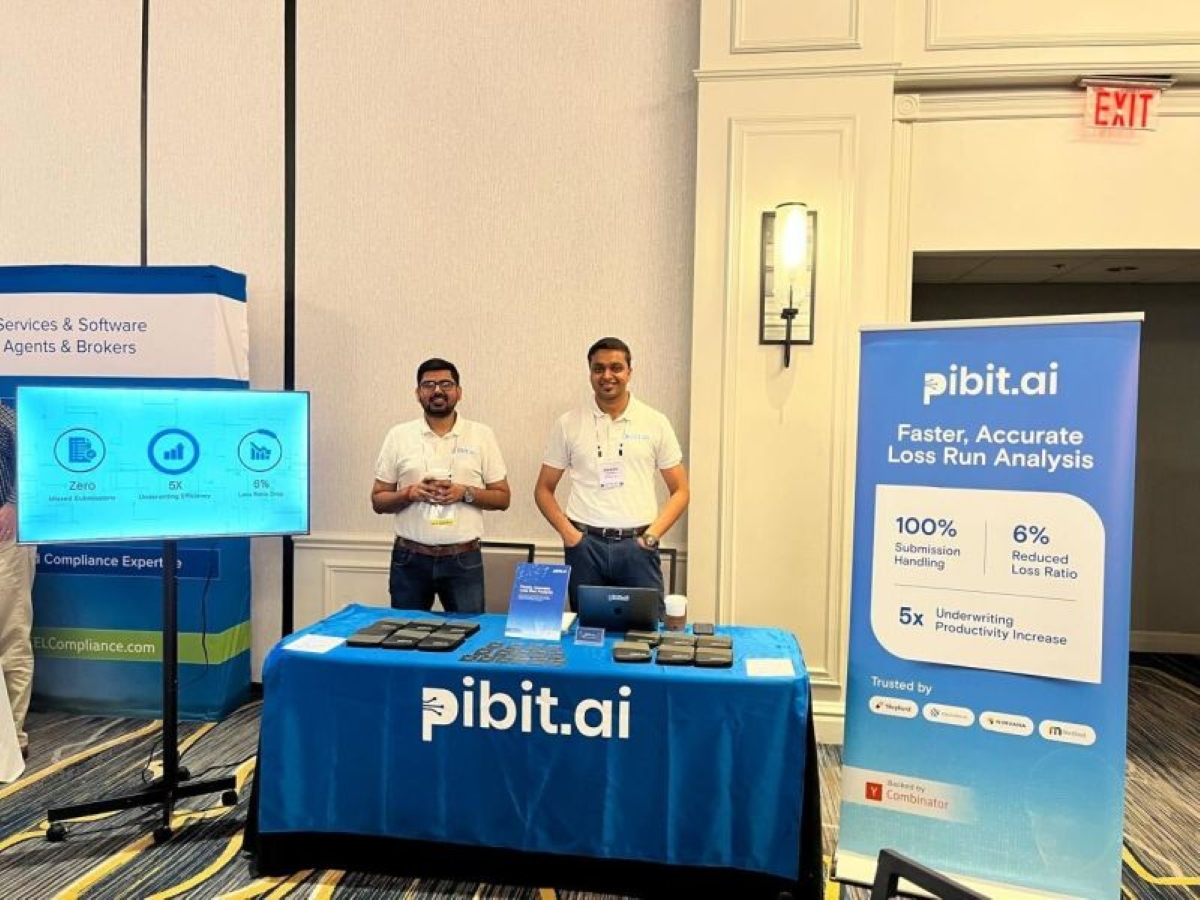
AI-driven underwriting enters a new growth phase
Insurtech startup Pibit.AI has raised US$7 million in Series A funding to scale its AI-powered underwriting engine and strengthen partnerships with insurers across Asia. Led by Stellaris Venture Partners, the round reflects growing investor belief that underwriting is the next major frontier for applied AI in financial services. For insurers facing rising claim complexity and margin pressure, Pibit.AI offers a faster, more reliable risk-decision laye while keeping underwriters in control of outcomes.
Legacy underwriting slows Asia’s digital shift
Across most Asian markets, underwriting still relies heavily on manual processes. Risk evaluations often come from scattered submissions by brokers, hospitals, or corporate clients. These documents are frequently inconsistent, requiring manual review and slowing down response times. This results in delayed policy decisions and uneven pricing—especially in commercial insurance and retail products.
Meanwhile, demand for insurance is rising. Digital sales channels are scaling fast, and consumers now expect near-instant policy decisions. But underwriting teams are overstretched. A shortage of experienced talent, paired with growing workloads, has led insurers to seek automation tools that streamline processes while preserving oversight.
Founded in 2020, Pibit.AI addresses this exact gap. Its core platform, CURE (Centralized Underwriting Risk Environment), ingests complex submissions, extracts relevant data, and converts it into structured risk signals. CURE highlights missing information, flags anomalies, and suggests classifications. Underwriters then choose to accept, revise, or reject the AI’s recommendations.
Scaling trusted AI into insurer workflows
With the Series A round, Pibit.AI is expanding both its product capabilities and customer reach. On the tech side, the team plans to cover more insurance products, boost document-reading accuracy, and strengthen explainability. In underwriting, speed matters—but transparency is essential. Insurers must audit pricing decisions to manage long-term risk exposure. Pibit.AI wants to move from a peripheral tool to a core system.
The company also aims to embed its engine deeper into insurer workflows. AI works best when integrated with internal policy systems, broker portals, and claims data. Deeper integration allows Pibit.AI to tailor its models to specific industry needs, improving results over time. This helps insurers quote faster and select risks more predictably—without rebuilding their tech stack.
Investor enthusiasm points to a broader trend. While AI is already common in fraud detection and customer service, underwriting holds greater operational leverage. Automating even part of the document and triage process frees underwriters to focus on high-value cases and improves consistency across routine decisions.
Underwriting becomes the next AI battleground
Pibit.AI’s growth signals a shift in Asia’s insurance ecosystem. Digital tools have made policy purchase easier, but underwriting has lagged behind. Now, with more complex portfolios and expanding coverage, the cost of slow underwriting has grown. Delays reduce conversion rates. Inconsistency damages performance. AI tools that assist—not replace—underwriters are becoming essential infrastructure.
Regulators are watching closely. Across Asia, agencies are pushing for greater transparency and fair pricing as AI enters the underwriting process. In India, the Insurance Regulatory and Development Authority of India (IRDAI) promotes AI adoption—but only if tools remain safe, traceable, and compliant. CURE is built with these requirements in mind. It combines advanced features with structured rules and clear audit paths.
Underwriting is well-suited for AI intervention. It involves repeat patterns, semi-structured documents, and judgment-based analysis. AI systems can speed up reviews, unify how risks are measured, and surface hidden trends that humans might miss. When done right, AI strengthens—not weakens—the discipline of underwriting.
From automation to smarter risk systems
As Pibit.AI grows, its role may evolve from document automation to broader risk intelligence. With more data and deeper integrations, it could help insurers spot new risk clusters, fine-tune models, and avoid portfolio blind spots. This would support new products in areas like climate risk, gig worker coverage, and SME insurance, where traditional underwriting struggles due to limited history.
The company also plans regional expansion. Many Southeast Asian markets face the same challenges as India—especially in commercial lines with unstructured broker data. A flexible engine that handles diverse formats and languages could give Pibit.AI a strong edge.
Over time, underwriting AI may become a central part of Asia’s insurance infrastructure—alongside digital claims and distribution. The most valuable platforms will combine speed, accuracy, and transparency, helping insurers grow responsibly and at scale.
Building the foundation for AI-native insurance
Pibit.AI’s US$7 million Series A confirms that underwriting is becoming one of Asia’s top AI opportunities. By scaling CURE and deepening partnerships, the company is transforming a manual bottleneck into a faster, smarter engine for insurance growth. As adoption rises across the region, AI tools that improve decision-making while staying compliant will shape the future of coverage—and Pibit.AI is ready to lead that transformation.