




A landmark customer signals India’s fab ambitions are turning real
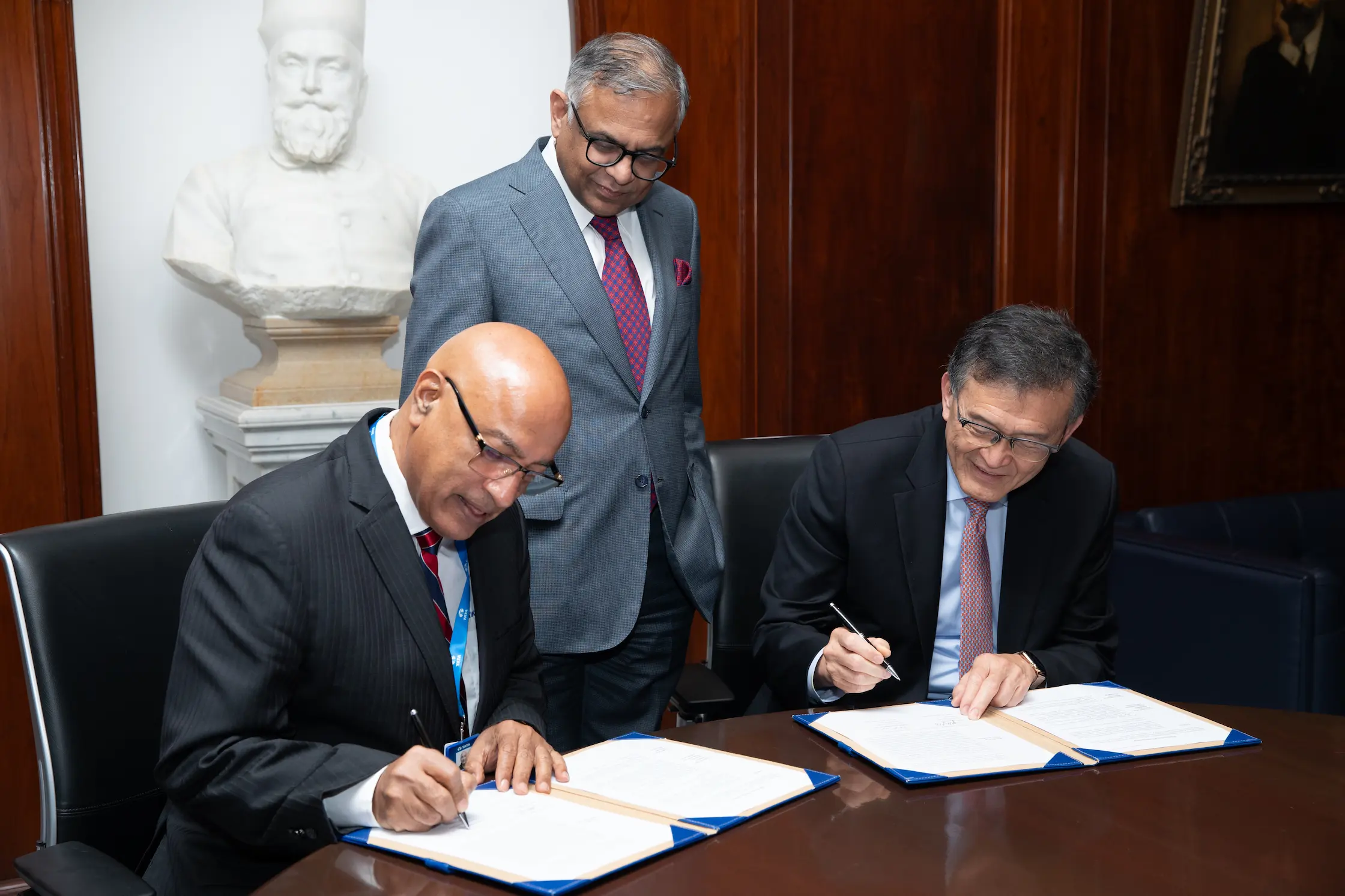
Tata Electronics has signed a deal with Intel to explore manufacturing and advanced packaging of Intel products at Tata’s upcoming semiconductor facilities in India. Intel becomes Tata’s first major prospective customer for a national chip-manufacturing foray valued at about US$14 billion. The partnership covers both the planned wafer-fabrication plant in Dholera, Gujarat, and the outsourced assembly and testing (OSAT) facility in Assam. For India, this is more than a commercial win. It is the first high-profile proof that global chipmakers may trust Indian fabs and packaging lines once they come online. After years of policy talk, subsidies, and ecosystem-building, a credible customer relationship puts India’s semiconductor story onto a more practical footing.
From policy ambition to factory floors in Gujarat and Assam
India has long wanted a domestic semiconductor supply chain, yet it has depended heavily on imported chips for consumer electronics, autos, telecom, and defense systems. That dependence became a strategic problem as global shortages and geopolitics exposed how fragile supply lines can be. In response, New Delhi launched incentives through the India Semiconductor Mission to attract fabs, packaging units, and materials suppliers. Tata Electronics stepped in as the national-scale private champion, committing to two cornerstone facilities: India’s first commercial fab in Dholera and a major OSAT plant in Assam.
Tata’s fab plan is being built with technology-transfer support from Taiwan’s Powerchip Semiconductor Manufacturing Corporation (PSMC). The Dholera site is designed for up to 50,000 wafers per month, and it will target mature and specialty nodes that matter for autos, power electronics, industrial systems, and many AI-adjacent devices. The Assam OSAT unit complements that by giving India a high-volume packaging and testing base, a segment where global supply is currently concentrated in East and Southeast Asia. Together, these sites form the spine of Tata’s US$14 billion chip bet.
The Intel relationship has been building quietly for months. Tata has recruited senior leaders with Intel foundry backgrounds and has been aligning its manufacturing roadmap with global customer requirements. At the same time, Intel has been expanding its outsourced and diversified manufacturing model worldwide, making it more open to new geographic partners.
What the Tata–Intel alliance actually includes
The MoU outlines two big workstreams. First, Intel and Tata Electronics will explore manufacturing and packaging of Intel products for local and global markets. This indicates that Tata’s Gujarat fab and Assam OSAT unit are being positioned as export-capable lines, not only domestic supply factories. Second, the pair will collaborate on advanced chip packaging, an area that has become critical for modern computing. As AI chips get more complex, packaging now shapes performance almost as much as transistor size. Intel’s packaging expertise, paired with Tata’s new OSAT capacity, could help India enter one of the highest-value layers of the chip stack.
There is also a broader compute ecosystem angle. Tata and Intel have signaled intent to work on locally relevant silicon and AI-compute reference designs, which suggests downstream opportunities for Indian device makers and enterprise solutions. If Tata can host part of Intel’s product chain in India, it can reduce lead times for local PC, server, and industrial buyers. It can also entice suppliers of substrates, gases, and specialty chemicals to co-locate, tightening the ecosystem around the fabs.
For Tata, a major customer like Intel does three things at once. It validates the product and process roadmap. It strengthens bargaining power with tool vendors and materials suppliers. And it gives Tata a benchmark for quality, yield, and reliability that other customers will want to see before signing. For Intel, the alliance diversifies production geography and ties the company to a fast-growing end market where governments and enterprises want trusted supply.
Why a “first customer” matters more than the press headline
Semiconductor manufacturing is a credibility business. Announcing a fab is easy. Securing a demanding global customer before the fab even ships its first wafer is hard. Intel’s involvement tells the market that Tata’s facilities are being designed to meet real-world customer specs, not only policy targets. This can change how other chip firms view India. Once a tier-1 customer commits to a qualification pathway, it becomes easier for a second and third customer to follow. The risk perception drops. The ecosystem thickens.
It also alters India’s position in the regional chip map. Asia’s semiconductor backbone has long sat in Taiwan, South Korea, Japan, and increasingly parts of China and Southeast Asia. India has been the outlier: huge in chip design talent, small in chip manufacturing. The Tata–Intel deal does not close that gap overnight, yet it starts to stitch India into the manufacturing layer with a global brand beside it. That is strategically powerful for India’s industrial policy and for its ambition to be a trusted alternative supply base.
Still, expectations need balance. Tata’s fab will begin with mature nodes, not leading-edge AI GPUs. That is the right choice for a first Indian fab, because mature chips dominate volume and have stable demand. If India can reliably produce these at scale, it earns the right to climb the value curve later. Packaging and test, where India is now making a serious entry, may also become a quicker global foothold because the world needs more OSAT capacity for AI-era chips.
The next 18 months will decide whether India’s supply chain becomes durable
The alliance now enters its execution phase. Tata must complete construction, qualify tools, and bring yields up to global standards. Meanwhile, Intel will run technical mapping to decide which products can be routed through Gujarat and Assam, and at what scale. This process can take several quarters even in mature fabs. So, the real test is not the MoU itself, but the first successful prototypes and volume ramps.
If qualification succeeds, multiple follow-ons become more likely. Other global chipmakers that already sell into India may see local manufacturing as attractive, especially for automotive, industrial, and power devices. Domestic electronics brands could benefit from shorter supply lines and better price stability. Finally, a cluster of suppliers in chemicals, substrates, and precision equipment could gather around Tata’s sites, which is how real semiconductor ecosystems form.
Risks remain. Fabs are capital-intensive and unforgiving. Delays in tools, power infrastructure, or water systems can slow ramps. India’s success will hinge on stable policy support, skilled talent pipelines, and highly reliable utilities in both Gujarat and Assam. Yet this is exactly why securing Intel early matters. A credible customer makes the ramp worth fighting for.
A turning point from ambition to supply-chain reality
Tata Electronics bringing Intel in as a first major prospective customer is a milestone for India’s semiconductor journey. It ties India’s US$14 billion fab-and-OSAT buildout to a world-class buyer and compresses the distance between policy intent and commercial output. The deal also pushes India into advanced packaging, one of the most valuable segments in the AI compute era. Now the focus shifts to execution. If Tata’s lines qualify Intel products on schedule, India will have a real domestic chip supply chain base for the first time. That would reshape not only India’s electronics future, but also Asia’s broader manufacturing landscape.