


EtherealX reusable launch vehicle push attracts growth-stage attention
Asian spacetech startup EtherealX is in advanced talks to raise $20–25 million in a round expected to include a consortium of global investors led by TDK Ventures, with participation discussed from Accel and Prosus.
If the round closes at that level, it will mark another step in how frontier aerospace is moving from “national programme adjacent” to “venture-scale platform.” The story is not only about capital. It is about whether Asia can build repeatable launch capability that serves a fast-growing satellite economy and a more competitive regional space stack.
Why reusable launch has become the new credibility test in spacetech
The global space economy has shifted from a handful of large missions to frequent satellite deployments. Earth observation, broadband, navigation services, and defence-grade sensing rely on constellations that need regular launches and replacement cycles. That demand favours launch providers that can reduce cost and increase cadence.
Reusable launch vehicles sit at the centre of that cost-cadence equation. In theory, reusability turns a rocket from a one-time consumable into a re-flyable asset. In practice, it demands deep systems engineering, disciplined testing, and an industrial approach to manufacturing and refurbishment. It also demands reliability, because a low-cost launch that fails once can destroy customer confidence for years.
For Asia, the timing is important. The region is building more satellites, funding more deeptech, and strengthening national space ambition. Yet access to launch remains constrained by capacity, geopolitics, and scheduling bottlenecks. As a result, reusable launch is becoming a “hard-tech proof” category. It signals whether a startup can build and test complex systems, not just prototype hardware.
What EtherealX is building and why the consortium matters
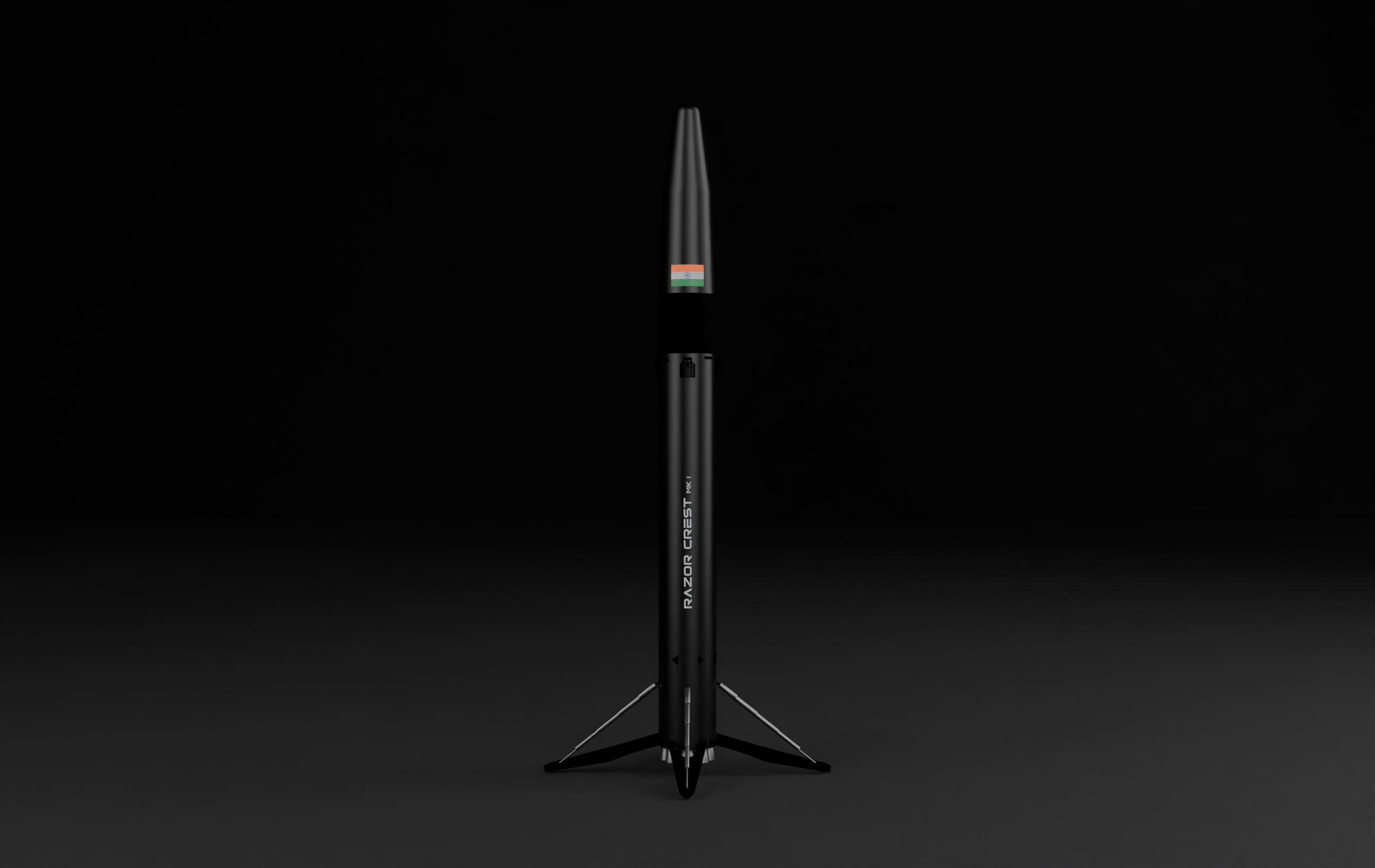
EtherealX is positioning itself around reusable launch vehicle technology designed to support satellite missions. Reports on the funding talks indicate the round is meant to accelerate development and growth plans, with interest from a mix of corporate and venture investors.
That investor mix matters. Corporate VCs often look for technical differentiation, manufacturing credibility, and long-run ecosystem value. Traditional VCs often look for category leadership, scalable economics, and a clear path to commercial contracts.
A lead like TDK Ventures also signals the type of diligence a frontier hardware company must clear. Corporate investors typically apply heavier scrutiny on engineering assumptions, supply chain realism, and test timelines. If that scrutiny is satisfied, it can become a trust catalyst for later strategic partnerships.
EtherealX also communicates bold technical ambition on its own platform, including its stated vehicle and engine concepts, which frame the company’s intended performance envelope. EtherealX.
However, in launch, ambition is only the first chapter. The real differentiator is execution pace: test cadence, subsystem maturity, and the ability to convert milestones into customer confidence.
What this round could signal for Asian space funding
If EtherealX closes a $20–25 million round, it reinforces a broader pattern: growth capital is returning to “hard frontier” categories after a period when many funds preferred pure software or faster-payback climate plays.
This does not mean investors have become risk-blind. Instead, it suggests they believe the satellite market is now large enough to support multiple launch solutions, including regional providers that can serve domestic and allied demand.
It also highlights the geography of capital. A consortium that spans corporate VC and global funds points to cross-border conviction in Asian deeptech. That can lift the entire spacetech stack, because launch capability often pulls adjacent demand: materials, avionics, propulsion components, simulation, test infrastructure, and mission software.
For founders across Asia, there is a second-order lesson. Venture appetite is not just about “space excitement.” It is about credible pathways to contracts. Investors will ask who will buy launches, how often they will buy them, and what switching costs will exist when incumbents respond with price pressure or priority scheduling.
The hardest part is not raising—it's surviving the timeline
Aerospace is unforgiving because timelines are long and failure modes are public. A launch startup must manage engineering risk, regulatory compliance, and supply chain constraints, while also keeping investor patience intact. The tension is constant: move fast enough to stay relevant, but not so fast that the test programme becomes careless.
That is why growth funding is a double-edged signal. It validates the thesis, yet it raises expectations for near-term milestones. In many frontier rounds, the market quietly shifts the benchmark from “prototype progress” to “flight-ready readiness.” Once that shift happens, the company’s storytelling must change too. It must become operational: test schedules, safety gates, manufacturing learning curves, and redundancy planning.
Another constraint is ecosystem depth. Reusability requires precision manufacturing and reliable components. If key parts remain imported or constrained, scaling becomes harder. Therefore, Asian launch startups that build resilient supplier networks and local test partnerships often gain a practical edge over rivals with stronger branding but weaker industrial planning.
What to watch if EtherealX closes the round
The most useful way to judge progress is to watch for three signals.
First, testing cadence. Regular, transparent subsystem tests suggest engineering maturity. Long gaps often imply bottlenecks, redesign, or supply constraints.
Second, manufacturing discipline. Reusability is not a single breakthrough. It is a repeatable process. The company must show it can build consistently, inspect consistently, and refurbish consistently.
Third, customer pathway clarity. Even before commercial launches, credible engagement with satellite operators, integrators, or institutional customers signals that the product is being shaped by real mission needs. Contracts and letters of intent are not the same as revenue, but they can show whether the market is pulling the technology forward.
If these signals appear, the round will look like a step toward a launch platform. If they do not, it may look like another ambitious hardware story trapped between promise and the physics of execution.
EtherealX reusable launch vehicle funding talks reflect a deeper shift in Asia
EtherealX’s funding talks—at $20–25 million with a consortium including TDK Ventures, Accel, and Prosus—highlight a growing willingness to back frontier aerospace in Asia.
The strategic question is bigger than one company. It is whether Asia’s spacetech ecosystem can convert capital into test cadence, reliability, and customer trust. If it can, reusable launch becomes more than a moonshot. It becomes a regional infrastructure layer for the next decade of satellites, sensing, and digital connectivity.