




Agnikul NeevCloud partnership advances orbital AI computing
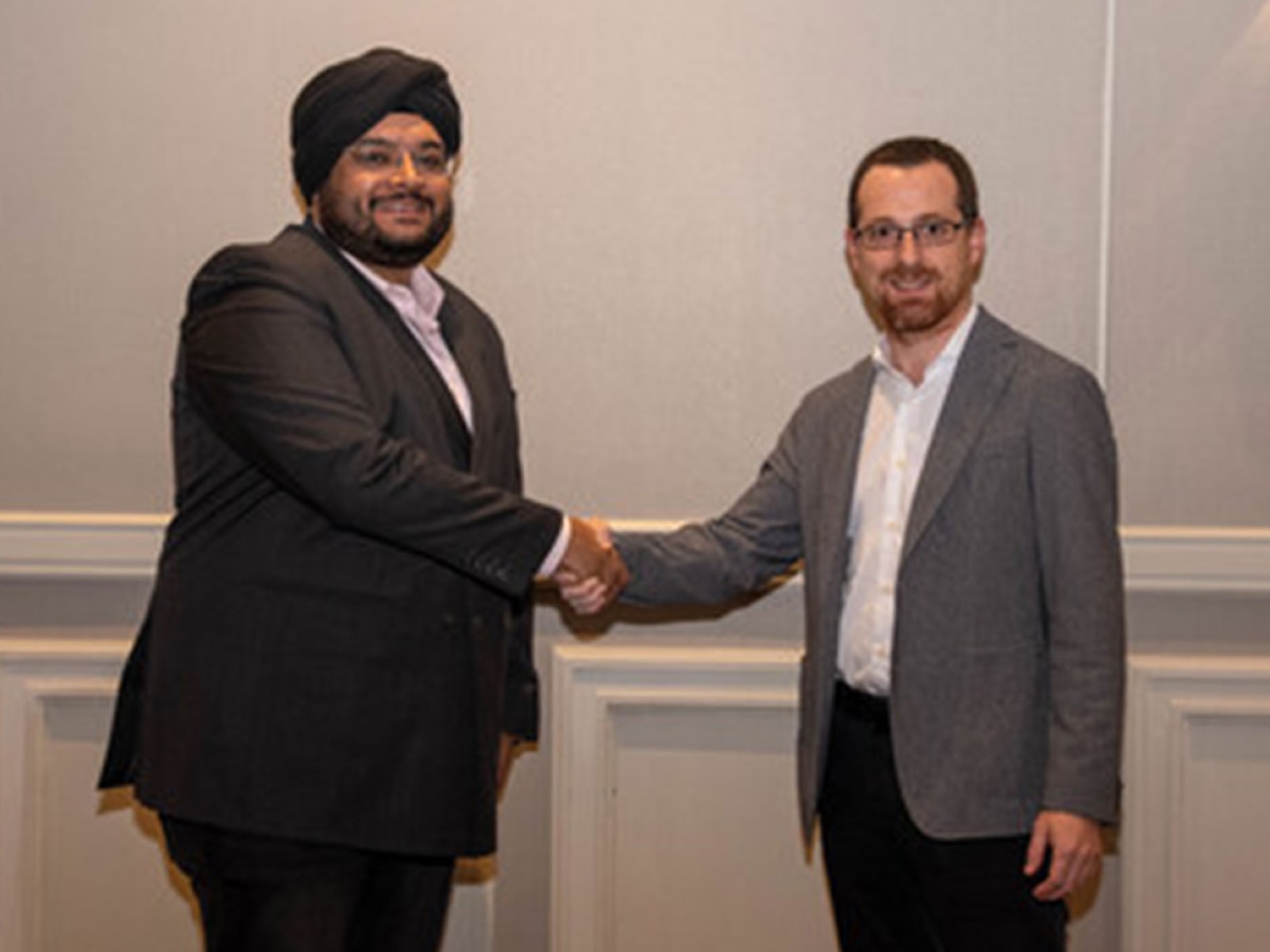
Indian spacetech startup Agnikul Cosmos has partnered with AI infrastructure firm NeevCloud to explore the development of a space-based AI data center using an orbital platform. The collaboration aims to test one of the world’s first orbital AI computing concepts, combining rocket capability with high-performance artificial intelligence infrastructure.
The initiative reflects a convergence of two frontier domains: commercial space launch and distributed AI computing. As terrestrial data centers face rising power constraints and latency bottlenecks, the idea of orbital computing is gaining attention. Consequently, the Agnikul NeevCloud partnership positions India within a highly experimental but strategically significant segment of global technology innovation.
India’s space and AI ambitions converge
India has steadily strengthened its private space ecosystem under the guidance of the Indian National Space Promotion and Authorization Center (IN-SPACe) and the Indian Space Research Organisation (ISRO). Startups such as Agnikul Cosmos have emerged as key players in small satellite launch services and propulsion innovation.
At the same time, India’s AI sector has expanded through initiatives backed by the Ministry of Electronics and Information Technology (MeitY) and various state-level innovation missions. Cloud providers and AI infrastructure startups are increasingly seeking alternative solutions to meet the exponential growth in compute demand.
Orbital computing concepts propose placing high-performance data processing units in low Earth orbit. In theory, such systems could benefit from solar energy availability and reduced cooling constraints. Although still experimental, this model is attracting research interest worldwide.
Integrating launch capability with AI infrastructure
Under the partnership, Agnikul Cosmos will contribute its launch and orbital deployment expertise, while NeevCloud will focus on AI computing architecture and data center design. The project aims to develop a prototype orbital platform capable of hosting high-density compute modules.
The collaboration requires alignment across several technical domains. Launch reliability, satellite power systems, radiation shielding and secure data transmission must integrate seamlessly with AI workload optimization. Therefore, early feasibility studies will likely prioritise modular testing rather than full-scale deployment.
Moreover, the partnership leverages India’s growing private space supply chain. By aligning launch services with compute infrastructure development, the companies aim to shorten innovation cycles.
Importantly, the project also signals confidence in India’s regulatory framework supporting private space ventures. IN-SPACe’s facilitation of commercial space initiatives enables startups to pursue ambitious concepts with clearer operational pathways.
Orbital computing tests next frontier of AI scaling
The Agnikul NeevCloud partnership highlights how AI infrastructure challenges are pushing companies to reconsider conventional architectures. As terrestrial data centers consume rising amounts of energy, alternative models are gaining visibility.
Orbital AI data centers remain highly speculative. Significant engineering hurdles persist, including latency management, debris mitigation and maintenance logistics. Nevertheless, experimentation itself demonstrates technological ambition.
India’s entry into orbital computing concepts reinforces its positioning as more than a launch services hub. Instead, the country seeks participation in advanced systems integration across space and AI domains.
Furthermore, cross-sector partnerships reduce innovation isolation. Rocket companies and AI infrastructure firms typically operate in distinct ecosystems. This collaboration bridges that gap and fosters interdisciplinary progress.
Experimental phase precedes commercial viability
In the near term, the partnership is expected to focus on research validation and proof-of-concept studies. Technical demonstrations may involve smaller-scale orbital testbeds before any large deployment.
Over the medium term, regulatory coordination will play a critical role. Space traffic management, cybersecurity compliance and international spectrum allocation must align with operational ambitions.
Looking ahead, orbital AI data centers will require clear commercial justification. Enterprises must evaluate whether latency, cost and reliability advantages outweigh deployment complexity.
If early trials demonstrate technical feasibility, India could emerge as a key contributor to next-generation distributed computing infrastructure. However, sustained investment and disciplined execution will determine long-term viability.
India explores AI computing beyond Earth
The partnership between Agnikul Cosmos and NeevCloud represents a bold step toward orbital AI computing. By combining space launch capability with AI infrastructure design, the collaboration seeks to test one of the world’s first space-based data center concepts.
Although significant engineering and regulatory challenges remain, the initiative underscores India’s ambition to lead in frontier innovation. As AI scaling pressures intensify, unconventional computing architectures may become increasingly relevant within the global technology landscape.