





China-led clean mobility push targets Southeast Asia scale
Chinese electric vehicle and energy technology cooperation is accelerating across Southeast Asia as Jiuzi Holdings and Xinhui Solar confirmed an expanded partnership supported by an additional $30 million private placement. The capital will be deployed under a joint-venture framework to build EV charging infrastructure and integrated energy services across major Southeast Asian cities and transport corridors.
The move reflects growing confidence in Southeast Asia’s EV adoption curve and signals a shift from pilot projects to infrastructure-scale execution. By combining EV retail, charging networks, and solar-backed energy solutions, the partnership aims to position itself early in markets where clean mobility demand is rising faster than grid capacity.
Southeast Asia’s accelerating EV and energy transition
Southeast Asia sits at a critical inflection point in its transport and energy transition. Urban congestion, air-quality concerns, and rising fuel costs are pushing governments and consumers toward electric mobility. At the same time, the region faces uneven grid readiness and limited charging coverage.
China’s EV ecosystem has matured rapidly over the past decade, producing globally competitive hardware, software, and energy solutions. As domestic growth stabilises, Chinese firms increasingly look abroad to replicate proven models. Southeast Asia offers demographic scale, policy momentum, and relatively open market structures.
Jiuzi Holdings and Xinhui Solar bring complementary strengths to this expansion. One focuses on EV distribution and downstream services, while the other specialises in solar and energy system integration. Together, they aim to address not just vehicle sales, but the entire usage ecosystem that enables EV adoption.
How the $30M private placement will be deployed
The additional $30 million will fund charging station rollout, solar-enabled energy hubs, and operational teams across selected Southeast Asian markets. Priority locations include capital cities, logistics corridors, and high-density urban zones where charging gaps remain acute.
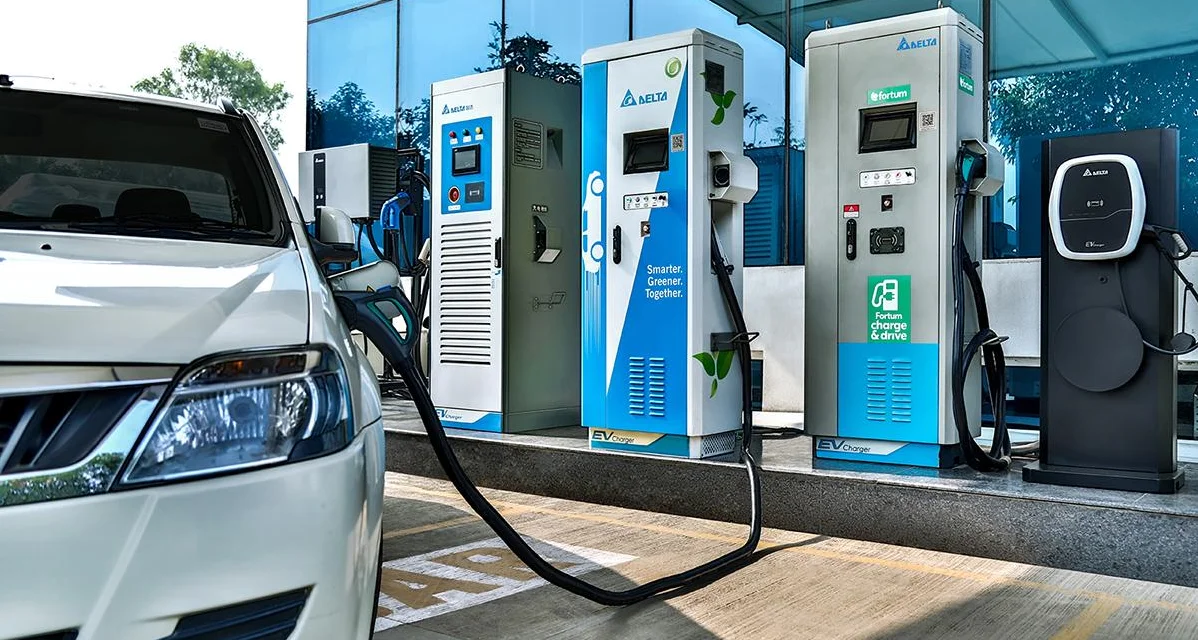
Rather than building standalone chargers, the joint venture plans to deploy integrated energy sites. These locations combine fast-charging infrastructure with solar generation and energy management systems. This model reduces grid strain and improves operating economics.
Capital will also support partnerships with local property owners, fleet operators, and municipal stakeholders. By embedding infrastructure into existing commercial and transport nodes, the venture aims to accelerate deployment timelines while lowering land and permitting risks.
EV adoption now depends on infrastructure, not vehicles
The expanded cooperation highlights a crucial shift in the EV sector. In many Southeast Asian markets, consumer interest is no longer the main barrier. Instead, charging reliability, energy costs, and service coverage determine adoption speed.
Chinese firms understand this challenge well. Their domestic success came not only from vehicle innovation, but also from dense charging networks and energy integration. Exporting this systems-level approach gives them an advantage over vehicle-only entrants.
This partnership reflects a broader industry lesson. EV penetration scales fastest when infrastructure development moves in parallel with vehicle availability. Capital allocation is therefore shifting from marketing and retail toward hard assets and operational execution.
Joint venture model reduces regional complexity
Southeast Asia is not a single market. Regulatory frameworks, grid capacity, and consumer behaviour vary widely across countries. A joint-venture structure allows partners to adapt locally while maintaining central coordination.
Jiuzi Holdings contributes downstream market access, brand relationships, and operational know-how in EV services. Xinhui Solar adds energy engineering expertise and experience in deploying renewable-backed systems at scale.
This division of roles enables faster decision-making and clearer accountability. It also allows the venture to localise offerings without fragmenting core technology and standards, which is essential for multi-country expansion.
Cities, corridors, and fleets as early adopters
The rollout strategy prioritises urban centres and intercity corridors, where charging demand concentrates first. Commercial fleets, ride-hailing services, and logistics operators are expected to anchor early utilisation.
Fleet-led adoption creates predictable demand and accelerates breakeven for charging assets. It also familiarises consumers with EV usage, helping normalise electric mobility in daily life.
Over time, the network is expected to expand into secondary cities as EV penetration grows. This staged approach balances capital efficiency with long-term coverage ambitions.
Scaling clean mobility infrastructure across ASEAN
In the near term, the partnership’s success will depend on execution speed and local alignment. Securing sites, grid connections, and operating permits remains complex in some markets.
Over the medium term, integrated energy sites could become templates for regional replication. As costs decline and utilisation rises, similar models may spread across ASEAN, especially in markets pursuing aggressive EV targets.
Longer term, the venture could evolve beyond charging into broader energy services. Battery storage, grid balancing, and data-driven energy management represent natural extensions once infrastructure density is achieved.
Early infrastructure movers gain durable advantage
Competition in Southeast Asia’s EV infrastructure space is intensifying. However, first movers with capital and systems integration often gain durable advantages through site control, partnerships, and brand trust.
By committing $30 million at this stage, the Jiuzi–Xinhui partnership signals long-term intent rather than opportunistic entry. This positioning may help secure premium locations and anchor customers before markets crowd.
As EV adoption accelerates, infrastructure players with scale and operational depth are likely to become strategic assets themselves, attracting further capital and partnerships.
A systems-led push into Southeast Asia’s EV future
The expanded cooperation between Jiuzi Holdings and Xinhui Solar marks a meaningful step in Southeast Asia’s clean mobility build-out. Backed by a $30 million private placement, the joint venture moves decisively from concept to infrastructure execution.
By focusing on integrated charging and energy solutions, the partnership addresses the real bottleneck in EV adoption. As Southeast Asia’s electric mobility transition gathers pace, such systems-led strategies are likely to define who shapes the region’s transport and energy future.