



HSBC Hang Seng buyout marks decisive Asia-Pacific consolidation
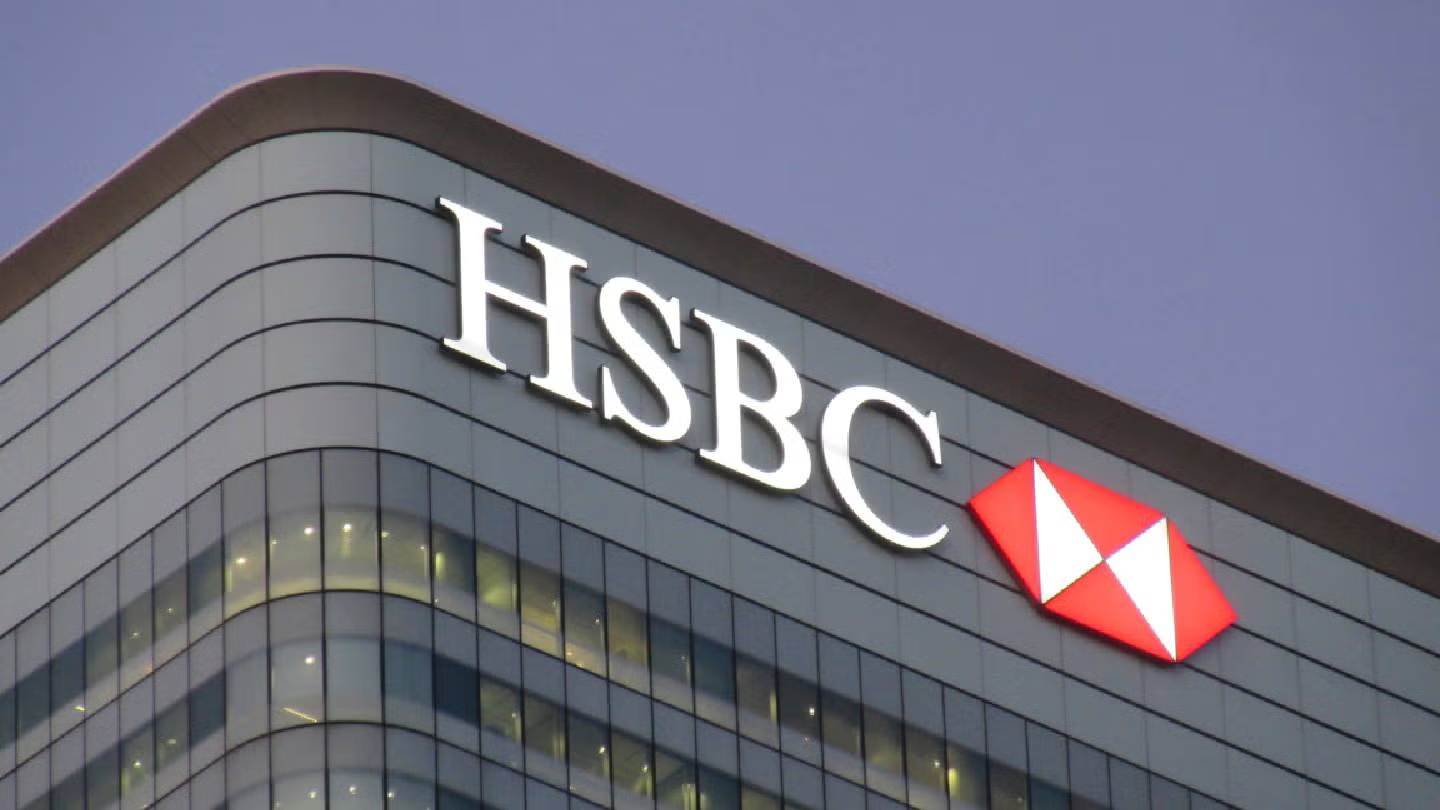
Shareholders of Hang Seng Bank have approved HSBC’s $13.6 billion proposal to acquire all remaining outstanding shares, paving the way for the Hong Kong lender to become a wholly owned subsidiary of HSBC Asia-Pacific, subject to final High Court approval. The decision represents one of the most significant banking consolidations in Asia in recent years.
The transaction signals HSBC’s long-term strategic confidence in Hong Kong and the wider Asia-Pacific region. At a time when global banks are streamlining international operations, HSBC is doubling down on core Asian markets by simplifying ownership structures and strengthening regional control.
The historic relationship between HSBC and Hang Seng Bank
HSBC and Hang Seng Bank share a deep-rooted history. Hang Seng has long operated as one of Hong Kong’s most trusted retail and commercial banks, with a strong domestic franchise, extensive branch network, and deep ties to local businesses and households.
HSBC has been a controlling shareholder for decades, using Hang Seng as a cornerstone of its Hong Kong retail and SME banking strategy. However, the presence of minority shareholders created structural complexity, particularly around capital management, dividend policy, and strategic alignment.
As Asia’s financial markets matured and regulatory demands increased, full ownership became increasingly attractive. The approved buyout reflects a logical progression in a relationship that has already functioned as an integrated partnership in practice.
Why HSBC is moving to full ownership now
HSBC’s decision to fully acquire Hang Seng Bank reflects several strategic priorities. First, full ownership simplifies governance. Decision-making, capital allocation, and risk management can now align more closely with HSBC’s Asia-Pacific strategy without minority shareholder constraints.
Second, the move enhances operational efficiency. As a wholly owned subsidiary, Hang Seng can integrate systems, compliance frameworks, and product strategies more seamlessly with HSBC’s regional operations. This is especially important as banks invest heavily in digital platforms, data analytics, and cross-border wealth management services.
Third, the timing reflects confidence in Hong Kong’s role as a financial hub. Despite recent market volatility and geopolitical uncertainty, HSBC’s commitment signals belief in long-term demand for banking, wealth, and trade finance services linked to Greater China and Southeast Asia.
Consolidation reflects confidence, not retreat
The Hang Seng buyout should not be read as retrenchment. Instead, it represents concentration of conviction. While some global banks have reduced Asian exposure, HSBC is choosing to deepen it by consolidating assets where it already holds competitive advantage.
Full ownership allows HSBC to capture the full economic value of Hang Seng’s strong deposit base, stable earnings, and trusted brand. It also reduces complexity for investors, presenting a clearer picture of HSBC’s Asian earnings contribution.
More broadly, the transaction highlights how scale matters in modern banking. Regulatory costs, technology investment, and cybersecurity demands continue to rise. Consolidation allows banks to spread these costs across larger balance sheets while maintaining service quality and compliance standards.
What full ownership means for Hong Kong banking
Once court approval is secured, Hang Seng Bank is expected to operate more tightly integrated with HSBC’s Asia-Pacific platform. Customers are unlikely to see abrupt changes, but gradual enhancements in digital services, wealth products, and cross-border offerings are expected.
For employees, full ownership may bring clearer career pathways within the broader HSBC network, particularly across Asia. For customers, deeper integration could mean smoother access to regional banking and investment services.
At the market level, the deal could encourage further consolidation among Asian banks as institutions reassess ownership structures and capital efficiency. Strong domestic franchises paired with global balance sheets may become an increasingly favoured model.
HSBC reinforces long-term bet on Hong Kong and Asia
HSBC’s $13.6 billion buyout of Hang Seng Bank marks a defining moment in Asian banking consolidation. By securing full ownership, HSBC is reinforcing its commitment to Hong Kong as a core financial hub and Asia-Pacific as its primary growth engine.
The transaction reflects strategic clarity at a time of global uncertainty. Rather than dispersing focus, HSBC is consolidating strength, signalling confidence that Asia’s long-term banking, wealth, and trade flows remain central to its future.