




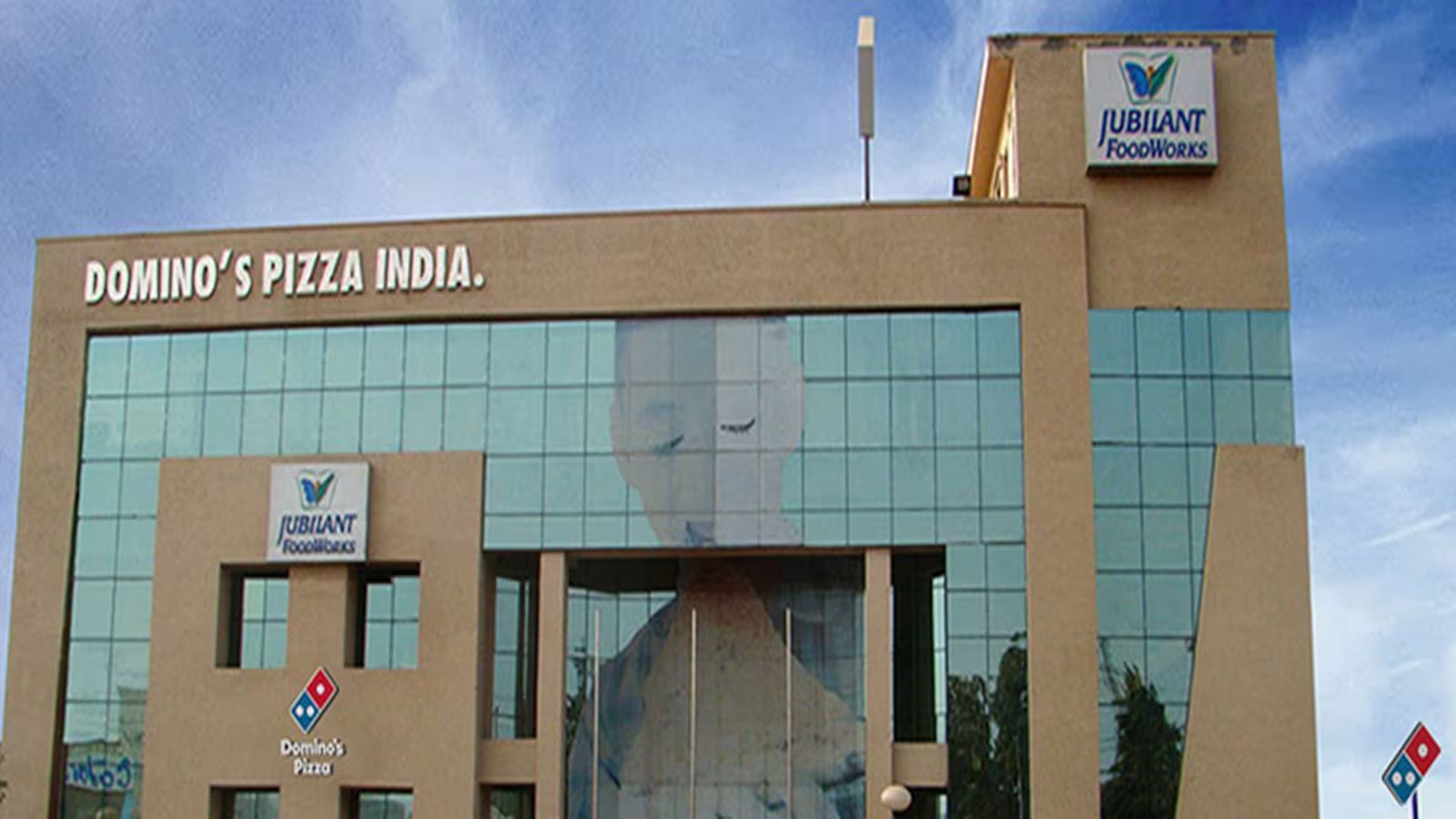
Jubilant FoodWorks energy strategy shift follows supply disruption
Jubilant FoodWorks, the operator of Domino’s Pizza in India, is adjusting its operations and exploring alternative energy sources after disruptions in LPG supply impacted its quick-service restaurant (QSR) network. The situation highlights how external shocks can directly affect large-scale retail and food service operations.
The Jubilant FoodWorks energy strategy reflects a broader operational pivot as companies seek resilience in the face of supply chain volatility. Energy inputs, often overlooked in QSR operations, have become a critical factor in ensuring business continuity.
Consequently, the development underscores how companies are adapting in real time to geopolitical and supply-side challenges.
Energy supply disruptions impact food service operations
Quick-service restaurants rely heavily on consistent energy supply for cooking, heating, and operational processes.
In India, LPG (liquefied petroleum gas) is widely used across the food service sector due to its efficiency and accessibility.
However, recent supply disruptions—linked to broader geopolitical and energy market dynamics—have affected availability and pricing.
Government agencies such as the Ministry of Petroleum and Natural Gas oversee energy supply and distribution, but global factors often influence domestic conditions.
For large operators like Jubilant FoodWorks, even short-term disruptions can impact:
- Store operations and service speed
- Cost structures and margins
- Customer experience and brand perception
As a result, companies must respond quickly to maintain operational continuity.
Exploring alternative energy and operational adjustments
The Jubilant FoodWorks energy strategy involves a combination of immediate adjustments and longer-term planning.
Operational adjustments
In the short term, the company is optimizing its existing resources to minimize disruption.
This includes:
- Reallocating LPG supplies across outlets
- Adjusting cooking processes where possible
- Ensuring continuity in high-demand locations
Alternative energy exploration
More importantly, Jubilant FoodWorks is exploring alternative energy sources to reduce reliance on LPG.
Potential options include:
- Electric cooking systems
- Induction-based kitchen equipment
- Hybrid energy models combining gas and electricity
Such diversification can improve resilience and reduce exposure to supply shocks.
Cost and efficiency considerations
Energy strategy is also closely linked to cost management.
Alternative energy solutions may require upfront investment but can offer long-term savings and stability.
In addition, energy-efficient technologies can enhance operational efficiency across the network.
QSR industry adapts to supply chain volatility
Jubilant FoodWorks’ response reflects a broader trend in the QSR and retail sectors.
Companies are increasingly facing disruptions linked to:
- Energy supply fluctuations
- Logistics challenges
- Geopolitical uncertainties
Major QSR brands such as McDonald’s, KFC, and Burger King have also been adapting their supply chains and operations to manage risks.
In India, the QSR market is highly competitive, with rapid expansion across urban and semi-urban areas.
Operational efficiency and reliability are critical differentiators.
Companies that can maintain consistent service despite disruptions gain a competitive advantage.
Operational resilience becomes strategic priority
The Jubilant FoodWorks energy strategy highlights a key shift in corporate strategy.
Operational resilience is no longer just a support function—it is becoming a core strategic priority.
Energy, logistics, and supply chain management are now directly linked to business performance.
Companies must anticipate disruptions and build flexibility into their operations.
This includes diversifying suppliers, investing in technology, and exploring alternative resources.
For QSR operators, energy diversification represents an important step.
It reduces dependence on a single source and enhances the ability to respond to unexpected challenges.
Energy diversification to shape QSR operations
Looking ahead, energy strategy is likely to play a larger role in the QSR industry.
Several trends support this shift:
- Increasing volatility in global energy markets
- Growing focus on sustainability and emissions reduction
- Advances in energy-efficient cooking technologies
- Expansion of renewable energy solutions
Companies may invest more in electric and hybrid kitchen systems.
In addition, renewable energy sources such as solar power could become part of long-term strategies.
For Jubilant FoodWorks, the current disruption may accelerate innovation in energy management.
The company’s response could set a precedent for other QSR operators in India and across Asia.
Jubilant FoodWorks adapts to disruption with strategic shift
Jubilant FoodWorks’ response to LPG supply disruptions demonstrates how companies can adapt quickly to operational challenges. By exploring alternative energy solutions and optimizing resources, the company is strengthening its resilience.
As supply chain volatility continues to impact industries, proactive strategies such as energy diversification will become essential. The Jubilant FoodWorks energy strategy highlights how operational agility can drive long-term stability and competitiveness.