




Lenovo adopts a portfolio AI strategy across devices and infrastructure
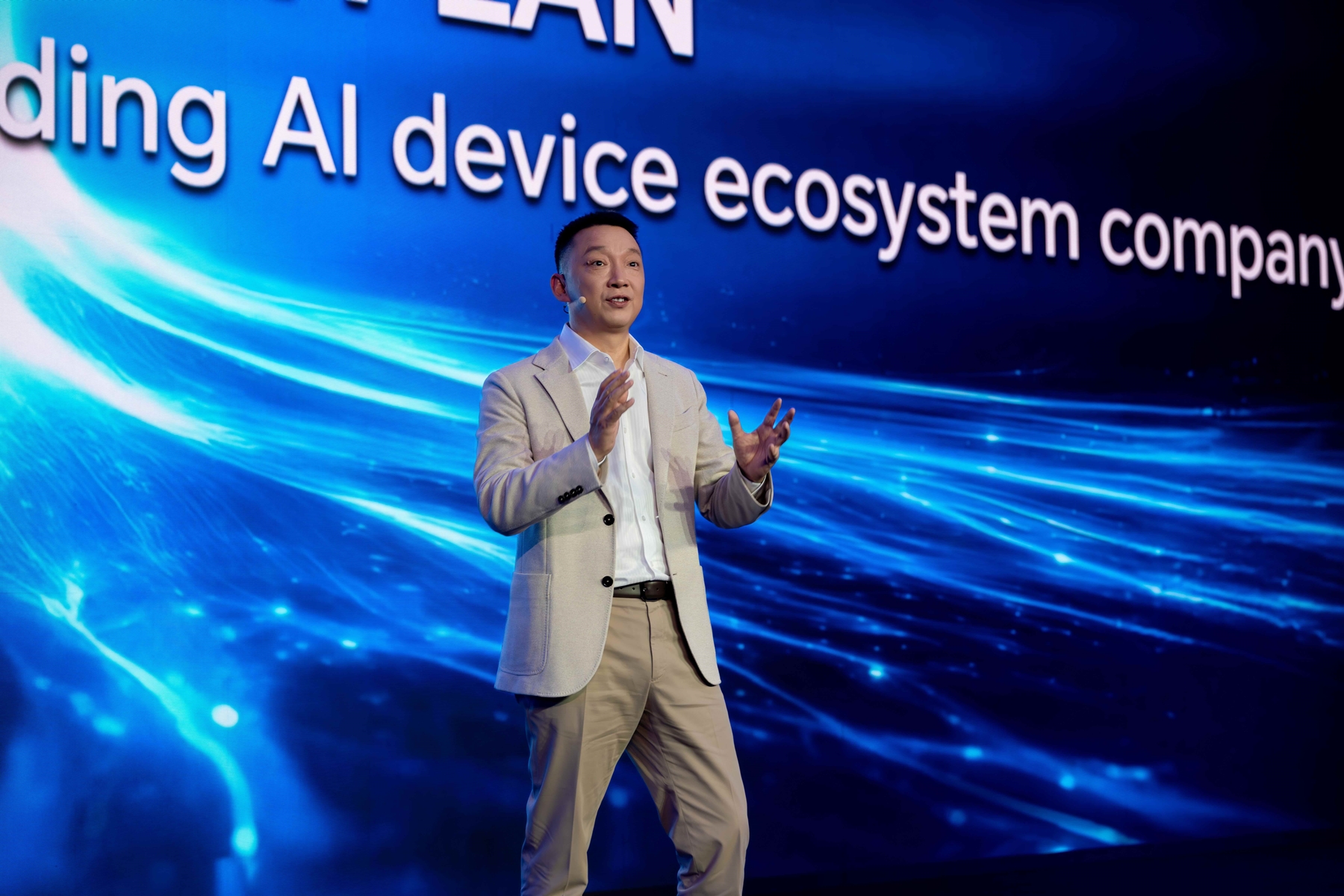
Lenovo is accelerating a multi-AI model partnership strategy, working with several large language model developers including Alibaba, Mistral AI, and Humain, while also teaming up with NVIDIA to strengthen hybrid AI data centre infrastructure. The approach aims to embed AI more deeply across PCs, wearables, and enterprise systems, without relying on a single AI provider.
This strategy reflects a broader shift among global hardware makers. As AI becomes a core capability rather than a standalone feature, Lenovo is positioning itself as an AI-agnostic platform, offering customers flexibility, resilience, and choice across rapidly evolving AI ecosystems.
Why hardware companies are rethinking AI integration
Early waves of AI adoption focused heavily on cloud platforms and software providers. However, as AI workloads spread across endpoints, factories, offices, and data centres, hardware companies now play a central role in how AI is delivered and scaled.
Relying on a single AI model presents clear risks. Model performance varies by language, task, and regulatory environment. In addition, pricing structures, licensing terms, and geopolitical constraints can change quickly. For global companies serving diverse markets, dependency on one provider can limit adaptability.
Asia adds further complexity. Enterprises operate across multiple languages, data sovereignty regimes, and compliance frameworks. As a result, demand is rising for modular AI architectures that allow enterprises to select the most suitable model for each use case. Lenovo’s global footprint places it at the intersection of these demands.
Building an AI-agnostic product ecosystem
Lenovo’s strategy centres on decoupling AI capability from a single model provider. By integrating multiple large language models into its software and hardware stack, the company enables customers to deploy AI based on performance needs, regional requirements, or cost considerations.
Partnerships with Alibaba, Mistral AI, and Humain provide access to models with different strengths, including multilingual processing, reasoning capabilities, and enterprise-focused use cases. This allows Lenovo to support customers in both mature and emerging AI markets without enforcing a uniform AI layer.
At the product level, Lenovo is embedding AI across personal computing devices, smart wearables, and enterprise systems. On-device AI supports privacy-sensitive workloads, while hybrid deployments allow enterprises to balance cloud scale with local control. This flexibility is becoming a key differentiator as AI use cases multiply.
Hybrid infrastructure is the backbone of enterprise AI
Lenovo’s partnership with NVIDIA highlights the growing importance of hybrid AI infrastructure. Enterprises increasingly prefer AI systems that span on-premise data centres, private clouds, and edge environments. This approach supports performance, compliance, and cost efficiency.
Rather than viewing AI solely as a software problem, Lenovo is aligning compute hardware, acceleration, and orchestration layers into a unified offering. This positions the company closer to enterprise decision-makers who prioritise stability and long-term scalability over rapid experimentation.
The shift also reflects a maturing AI market. As enterprises move from pilots to production, infrastructure choices become strategic commitments. Vendors that support open ecosystems and interoperability gain trust, especially in regions with complex regulatory landscapes.
Strengthening data centre and enterprise capability
Lenovo’s hybrid AI data centre focus complements its device-level AI ambitions. High-performance computing systems, accelerated by GPUs, support training, inference, and industry-specific workloads. These capabilities are critical for sectors such as manufacturing, healthcare, finance, and logistics.
By aligning closely with NVIDIA’s AI hardware roadmap, Lenovo ensures compatibility with advanced accelerators while maintaining control over system integration and optimisation. This strengthens its role as a full-stack enterprise AI partner, rather than a commodity hardware supplier.
Importantly, Lenovo’s approach allows enterprises to avoid vendor lock-in. Customers can update or replace AI models without re-architecting infrastructure. This flexibility reduces long-term risk and encourages broader AI adoption across conservative industries.
What Lenovo’s strategy signals for Asia’s AI ecosystem
In the near term, Lenovo’s multi-AI approach is likely to improve product differentiation across its PC and enterprise portfolios. Customers gain access to AI features tailored to local markets, languages, and compliance needs.
Over the medium term, the strategy could accelerate enterprise AI adoption across Asia. Many organisations hesitate to commit to AI due to uncertainty around standards and longevity. A modular, vendor-neutral approach lowers these barriers.
Longer term, Lenovo’s position as an orchestrator of AI ecosystems may influence how hardware OEMs compete globally. Rather than racing to build proprietary AI models, success may depend on enabling choice, integration, and governance across complex AI landscapes.
A calculated shift toward AI flexibility and resilience
Lenovo’s pursuit of multi-AI model partnerships marks a calculated shift toward flexibility, resilience, and ecosystem alignment. By integrating multiple AI providers and strengthening hybrid infrastructure capabilities, the company is adapting its business model to an AI-driven era.
As AI becomes embedded across devices and enterprise systems, strategies built on openness and partnership are likely to endure. Lenovo’s approach illustrates how hardware OEMs can remain relevant and competitive by embracing, rather than controlling, the evolving AI ecosystem.