





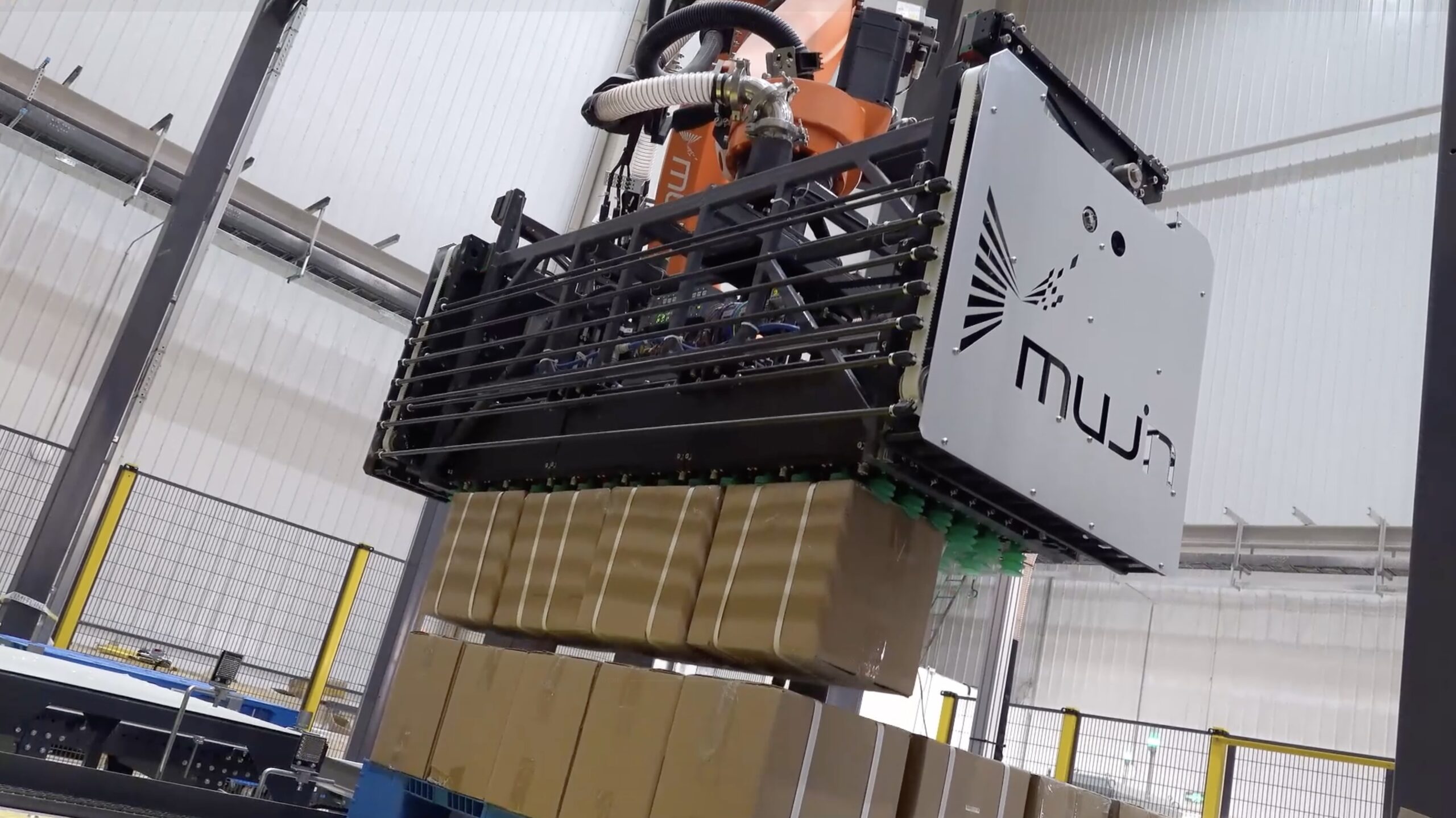
Mujin Series D funding signals renewed confidence in AI robotics
Japanese robotics startup Mujin has closed a $233 million Series D funding round, marking one of the largest recent capital raises in Asia’s industrial AI and robotics sector. The funding positions Mujin to accelerate deployment of AI-driven industrial robots across manufacturing, logistics, and warehouse automation markets.
The round highlights a broader trend. While consumer tech funding remains selective, capital continues to flow toward AI hardware and automation platforms with clear commercial use cases. Mujin’s raise underscores investor confidence in robotics systems that deliver measurable productivity gains rather than experimental innovation alone.
Why industrial AI robotics is attracting capital again
Industrial automation has entered a new phase. Traditional robots excelled at repetitive tasks but struggled in unstructured environments. Advances in AI perception, motion planning, and control systems have changed that equation. Modern AI robots can now handle variability in objects, layouts, and workflows, making them suitable for real-world factory and warehouse settings.
Mujin emerged as a leader in this shift. Founded in Japan, its technology focuses on intelligent motion planning and control software that allows robots to operate with minimal manual programming. This capability aligns with challenges faced by manufacturers globally, including labour shortages, rising costs, and the need for flexible production lines.
Japan’s industrial base also plays a role. As one of the world’s largest manufacturing economies, Japan provides a strong domestic testbed for advanced robotics. Success at home allows firms like Mujin to refine systems before expanding internationally, strengthening their credibility with global customers.
How Mujin plans to deploy the $233M capital
Mujin plans to use the Series D funding to scale both product development and global deployment. A major focus will be expanding its AI robotics platforms across logistics and manufacturing clients, where demand for automation continues to rise. The company aims to increase system reliability, speed of deployment, and adaptability to different industrial settings.
Another priority is international expansion. Mujin has been steadily building its presence outside Japan, particularly in North America and Europe. The new capital allows the company to invest in local teams, customer support, and partnerships that shorten sales cycles and improve implementation outcomes.
The funding also supports deeper integration between software and hardware. Mujin’s approach treats AI control software as the core value layer, enabling robots from different manufacturers to operate more intelligently. This hardware-agnostic strategy increases addressable market size and reduces dependency on a single robotics platform.
Investors are backing robotics with proven ROI
Mujin’s large Series D round reflects a shift in investor priorities. Rather than funding speculative robotics concepts, investors now favour platforms that demonstrate clear return on investment for customers. Industrial AI robots that reduce labour dependency, increase throughput, and adapt to changing workflows fit that profile.
The timing is notable. Many manufacturers face pressure to reshore production, improve resilience, and manage ageing workforces. AI-driven robotics offers a practical response to these challenges. Mujin’s technology addresses a core pain point by reducing the need for manual reprogramming, which often slows automation adoption.
However, execution risk remains. Scaling robotics businesses requires long sales cycles, complex installations, and close customer collaboration. Success depends not only on technology, but also on service quality and integration expertise. Mujin’s ability to balance rapid growth with operational discipline will determine whether this funding round delivers long-term impact.
What Mujin’s growth means for global robotics competition
Over the next few years, Mujin’s progress will be watched as a benchmark for Japanese AI robotics on the global stage. If the company successfully expands overseas, it could strengthen Japan’s position in next-generation automation alongside established robotics giants.
The broader market is also evolving. Competition is intensifying as startups and incumbents race to offer smarter, more flexible robots. Differentiation will come from software intelligence, deployment speed, and ecosystem partnerships rather than hardware alone.
For Asia’s tech ecosystem, Mujin’s funding round sends a clear signal. Capital remains available for deep-tech companies that combine AI with tangible industrial outcomes. As global industries modernise, AI robotics platforms with proven value propositions are likely to remain a priority for both customers and investors.
Mujin Series D underscores strength of Asia’s industrial AI sector
Mujin’s $233 million Series D funding round marks a significant milestone for Japan’s AI robotics industry. It demonstrates sustained investor interest in automation technologies that address real-world industrial challenges at scale.
If Mujin converts this capital into global growth and consistent execution, it could become a flagship example of how Asian deep-tech startups compete internationally. More broadly, the deal reinforces the view that industrial AI robotics is moving from experimentation to widespread commercial adoption.