


Samsung pushes capacity to meet AI server demand
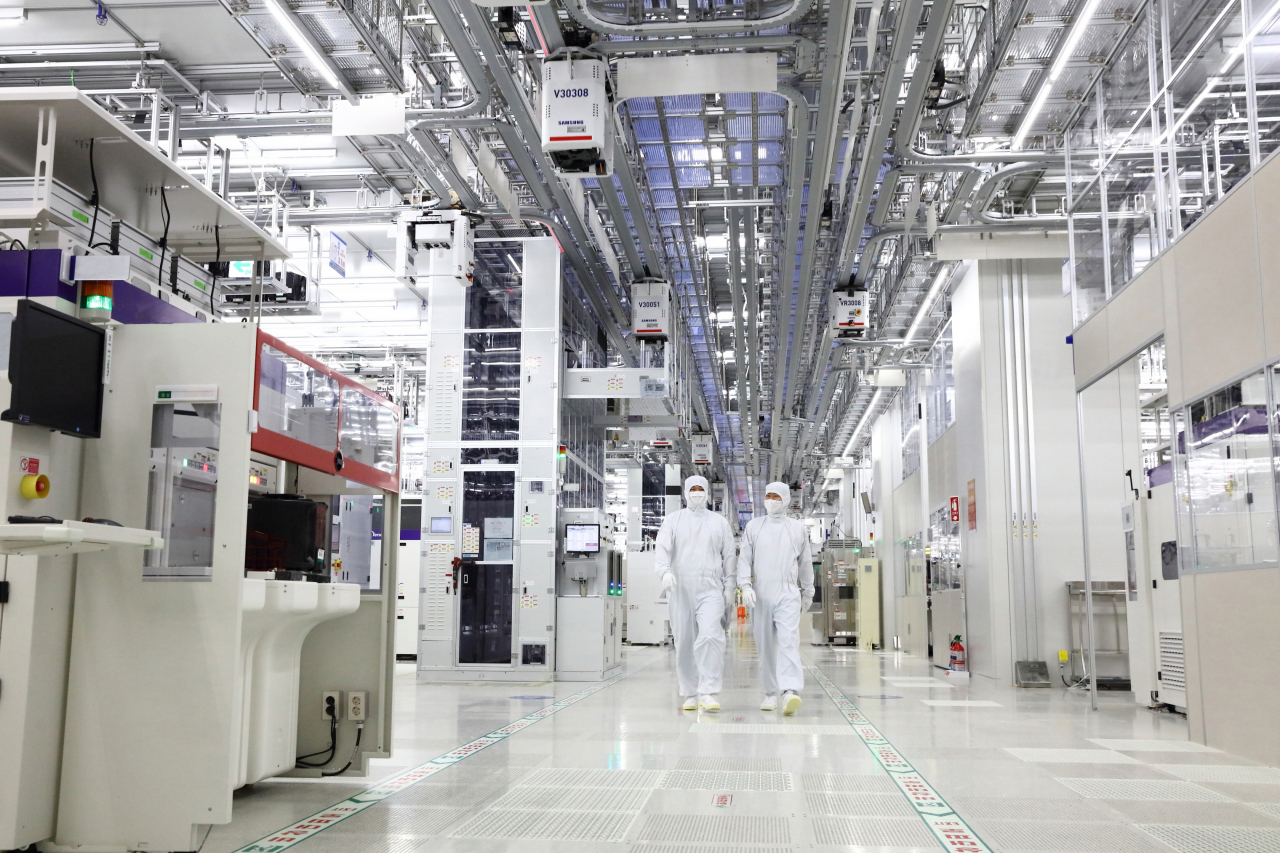
Samsung Electronics will add a new semiconductor production line at its Pyeongtaek mega-campus to respond to surging global demand for AI server chips. The line, known as Pyeongtaek Plant 5, will focus on advanced memory such as high-bandwidth memory and server DRAM, both critical for AI training and inference workloads. The company plans to start mass production in 2028 under a wider five-year domestic investment plan of about US$310 billion. The expansion signals that Samsung expects AI infrastructure to stay a long-cycle growth engine, and it places South Korea at the center of Asia’s hardware competition as demand for compute keeps rising.
From demand slowdown to a renewed memory boom
Samsung’s Pyeongtaek site is already one of the largest chip manufacturing complexes in the world. It houses multiple fabs that produce memory used in smartphones, PCs, cloud systems, and data centers. Over the past two years, Samsung slowed some expansion plans after a global memory slump hit prices and inventories. That pause now looks temporary. AI has changed the demand curve for memory, especially for high-bandwidth products that sit next to GPUs and AI accelerators in servers.
As large cloud operators and enterprise buyers build new AI clusters, they need far more memory per server than in earlier compute eras. Training modern models requires wide memory channels, high throughput, and low latency. This has pushed HBM and server-grade DRAM into a new strategic tier. Samsung, which competes head-to-head with other Asian memory leaders, now faces a clear choice: add capacity or risk losing share in a market that could define the next decade of semiconductors. The Pyeongtaek Plant 5 build is the company’s answer to that moment.
This expansion also sits inside a broader domestic plan. Samsung has committed about US$310 billion over five years to new fabs, AI chip lines, and supporting infrastructure in South Korea. Alongside Pyeongtaek, the plan includes upgrades across the firm’s memory roadmap and related AI data-center investments, which reinforce its end-to-end AI hardware posture.
Memory capacity becomes a competitive weapon
Plant 5 strengthens Samsung’s ability to supply AI memory at scale. HBM demand has tightened across the industry, with lead times and yield rates becoming key battlegrounds. By adding a dedicated line, Samsung can increase output while tuning processes for next-generation HBM nodes. That matters because HBM is not a commodity product anymore. It is tightly linked to AI system performance and vendor trust. Buyers want stable suppliers who can deliver both volume and consistency.
The Pyeongtaek move also changes the regional balance. Asia already dominates global memory supply, and South Korea is its core. When Samsung adds capacity, it reshapes pricing power and share fights across the whole market. It also adds pressure on rivals to respond with their own upgrades. This dynamic creates a faster investment cycle across Japan, Taiwan, and China, where governments and firms see AI chips as strategic infrastructure.
Samsung’s expansion is also tied to its push into AI system stacks. Memory is the gateway product that lets Samsung deepen ties with hyperscalers, GPU makers, and AI server builders. Strong HBM supply can pull more contracts toward Samsung’s broader portfolio, including advanced packaging and foundry services. In that sense, Plant 5 is not only about memory. It is about defending Samsung’s place in the AI hardware chain end-to-end.
AI is forcing Asia’s chip sector into a new pace
Samsung’s decision highlights a bigger truth about AI’s effect on hardware. Unlike past cycles driven by phones or PCs, AI demand comes from data centers that scale in large steps. When a major cloud firm commits to a new AI cluster, it pulls thousands of servers into the market at once, and each server needs more memory than before. This creates a demand pattern that is sharp, capital-heavy, and hard to pause. For chip makers, the risk of under-investing is now higher than the risk of short-term oversupply.
There is also a geopolitical layer. Many Asian economies now treat semiconductors as national capacity, not just industrial output. Samsung’s US$310 billion domestic plan aligns with that view. It strengthens South Korea’s position in AI supply chains and signals confidence that the country can remain a key exporter of AI-critical parts.
For buyers across Asia, more Samsung capacity may reduce near-term tightness, but it will not remove competition. Instead, the fight will shift toward quality, node leadership, and delivery reliability. In AI memory, those factors matter as much as price.
Plant 5 sets the runway for the next HBM era
Plant 5 is scheduled to begin mass production in 2028. By then, AI workloads will likely demand even higher HBM density and speed. Samsung is already shipping HBM3E and preparing HBM4 samples, and the new line gives it space to scale these generations without disrupting existing output.
The expansion may also lead to more ecosystem building around Pyeongtaek. Large fabs attract equipment makers, materials firms, and smaller chip design partners. Over time, this can deepen South Korea’s chip cluster and pull more AI hardware value into the country.
For the wider region, Samsung’s move signals that the AI server boom is not a short spike. It is a structural shift that will keep pushing memory, packaging, and foundry plans. Asia’s chip leaders will keep spending heavily, and the winners will be those who turn capital into reliable AI supply faster than others.
A capacity bet that mirrors AI’s long cycle
Samsung’s new Pyeongtaek production line is a strategic response to a world that needs far more AI hardware. By scaling memory output for AI servers under a US$310 billion domestic plan, Samsung is betting that AI demand will stay deep and durable through the late 2020s. The decision also raises the stakes for Asia’s chip race, where capacity, quality, and speed now decide who anchors the global AI supply chain.