


ARK AI screening expansion accelerates clinical adoption in Korea
South Korean healthcare AI startup ARK is expanding its AI-powered medical screening platform across hundreds of hospitals through a distribution partnership with Daewoong Pharmaceutical, one of the country’s leading pharmaceutical companies. The collaboration aims to accelerate the adoption of artificial intelligence tools in clinical diagnostics and preventive healthcare.
The ARK AI screening expansion reflects a growing trend in Asia’s healthcare sector where AI technologies are moving beyond research environments and into real-world hospital systems. As hospitals seek faster and more accurate diagnostic tools, AI-driven medical screening platforms are becoming critical components of modern healthcare infrastructure.
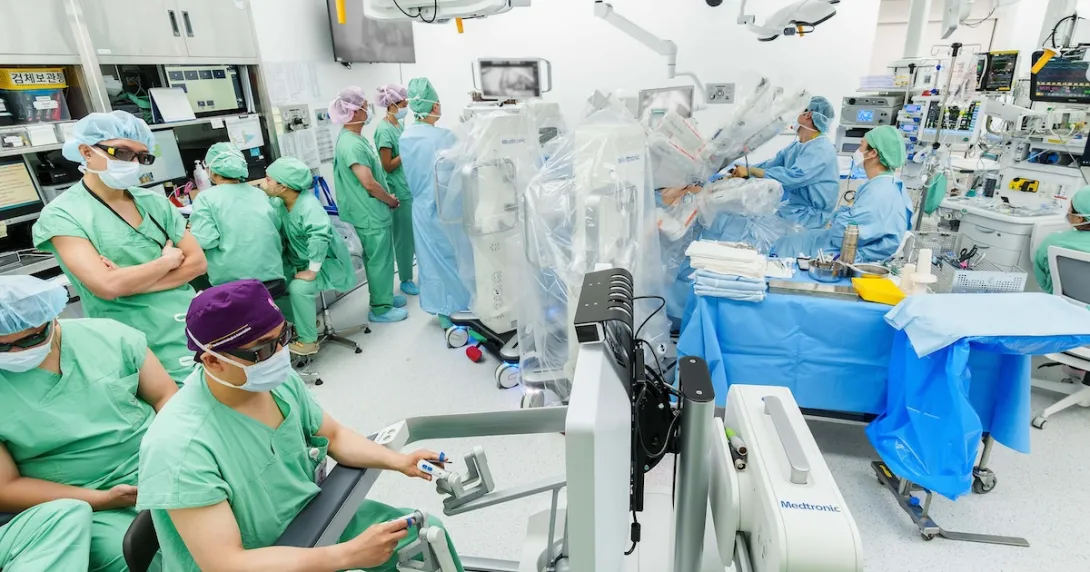
Across South Korea and the wider Asia-Pacific region, medical institutions are increasingly integrating AI technologies into clinical workflows. These systems support doctors by analyzing medical images, detecting abnormalities earlier, and improving diagnostic accuracy.
South Korea strengthens AI-driven healthcare innovation
South Korea has emerged as one of Asia’s leading centers for healthcare technology and medical AI innovation. The country combines advanced digital infrastructure with strong healthcare research institutions and supportive government policy.
Government organisations such as the Ministry of Health and Welfare (MOHW) and the Ministry of Science and ICT (MSIT) actively promote AI adoption in healthcare through national innovation programs and digital health initiatives.
Meanwhile, regulatory bodies such as the Ministry of Food and Drug Safety (MFDS) oversee the approval and regulation of AI-based medical devices and diagnostic software.
South Korea’s hospital system also plays a key role in medical innovation. Major institutions such as Seoul National University Hospital, Samsung Medical Center, and Asan Medical Center regularly collaborate with technology companies to test and deploy AI-powered healthcare tools.
In addition, global technology companies and local startups are investing heavily in healthcare AI solutions. Companies such as VUNO, Lunit, and Deepnoid have developed AI systems that assist doctors in analyzing medical images and detecting diseases such as cancer and cardiovascular conditions.
These developments illustrate how South Korea’s healthcare ecosystem is becoming a major hub for AI-driven medical innovation.
ARK partners Daewoong Pharmaceutical for hospital rollout
Through its partnership with Daewoong Pharmaceutical, ARK aims to distribute its AI medical screening technology to hospitals and healthcare providers across South Korea.
Daewoong Pharmaceutical brings extensive industry networks and healthcare distribution capabilities. The company has long-standing relationships with hospitals and clinics throughout the country.
Consequently, the partnership allows ARK to scale its technology more rapidly than it could through direct sales alone.
The AI screening platform developed by ARK is designed to assist physicians by analyzing patient data and identifying potential health risks at early stages.
AI algorithms can process medical images and health records quickly, enabling doctors to detect diseases earlier and recommend preventive treatments.
This technology can be particularly useful in screening programs for chronic diseases, where early detection significantly improves treatment outcomes.
Furthermore, the partnership allows ARK to integrate its AI platform into existing hospital information systems and diagnostic workflows.
Such integration ensures that healthcare professionals can access AI insights without disrupting clinical operations.
As hospitals adopt more digital tools, AI platforms that integrate smoothly into existing systems are more likely to succeed.
AI healthcare startups compete in a growing market
The ARK AI screening expansion occurs within a rapidly growing global market for healthcare AI technologies.
Medical institutions worldwide are increasingly adopting AI tools that improve diagnostic accuracy, reduce costs, and support clinical decision-making.
In South Korea, several AI healthcare startups have already achieved international recognition.
Companies such as Lunit have developed AI systems capable of detecting cancer in medical images with high accuracy. Similarly, VUNO provides AI-based solutions that support medical imaging analysis and patient monitoring.
Global technology companies are also investing heavily in healthcare AI.
Companies such as Google Health, IBM Watson Health, and Microsoft have launched AI platforms designed to support medical research, diagnostics, and healthcare data analysis.
However, healthcare AI startups often face significant challenges when scaling their technologies.
Clinical validation, regulatory approval, and integration with hospital systems require extensive testing and collaboration with medical institutions.
Therefore, partnerships with established healthcare companies such as Daewoong Pharmaceutical can significantly accelerate adoption.
AI moves from laboratory research to hospital practice
The expansion of ARK’s AI medical screening platform highlights a broader shift occurring in healthcare technology.
For many years, AI applications in medicine were primarily confined to research laboratories and pilot studies.
However, the industry is now entering a stage where AI tools are increasingly deployed in real clinical environments.
Hospitals and healthcare providers are actively seeking technologies that improve efficiency while supporting better patient outcomes.
AI-based screening tools can analyze large volumes of medical data quickly, allowing doctors to focus more on patient care and treatment decisions.
Moreover, aging populations across Asia are increasing pressure on healthcare systems.
AI-driven diagnostics may help healthcare providers manage growing patient demand while maintaining high standards of care.
These technologies can assist doctors in identifying diseases earlier and prioritizing patients who require urgent treatment.
AI diagnostics set to expand across Asia
Looking ahead, artificial intelligence is expected to play an increasingly important role in healthcare systems across Asia.
Countries such as South Korea, Singapore, and Japan are investing heavily in digital health infrastructure and AI research.
Government initiatives supporting medical AI innovation are likely to accelerate the adoption of AI-powered diagnostic tools in hospitals.
In addition, collaborations between technology startups, pharmaceutical companies, and healthcare providers will continue shaping the future of digital medicine.
Partnerships similar to the ARK–Daewoong collaboration demonstrate how AI technologies can scale more quickly through established healthcare networks.
As AI tools become more sophisticated and regulatory frameworks mature, healthcare institutions may increasingly rely on AI systems to support diagnostics and preventive care.
Consequently, medical AI platforms are expected to become a fundamental component of modern healthcare delivery across Asia.
ARK expansion signals real-world AI healthcare adoption
ARK’s partnership with Daewoong Pharmaceutical marks a significant milestone for AI-driven healthcare innovation in South Korea. By expanding its medical screening platform across hospitals, the company is helping bring artificial intelligence into everyday clinical practice.
As healthcare systems continue adopting digital technologies, AI-powered diagnostic tools will likely play an essential role in improving early disease detection and strengthening patient care across Asia’s rapidly evolving medical landscape.