



Samsung AI memory demand drives profit rebound
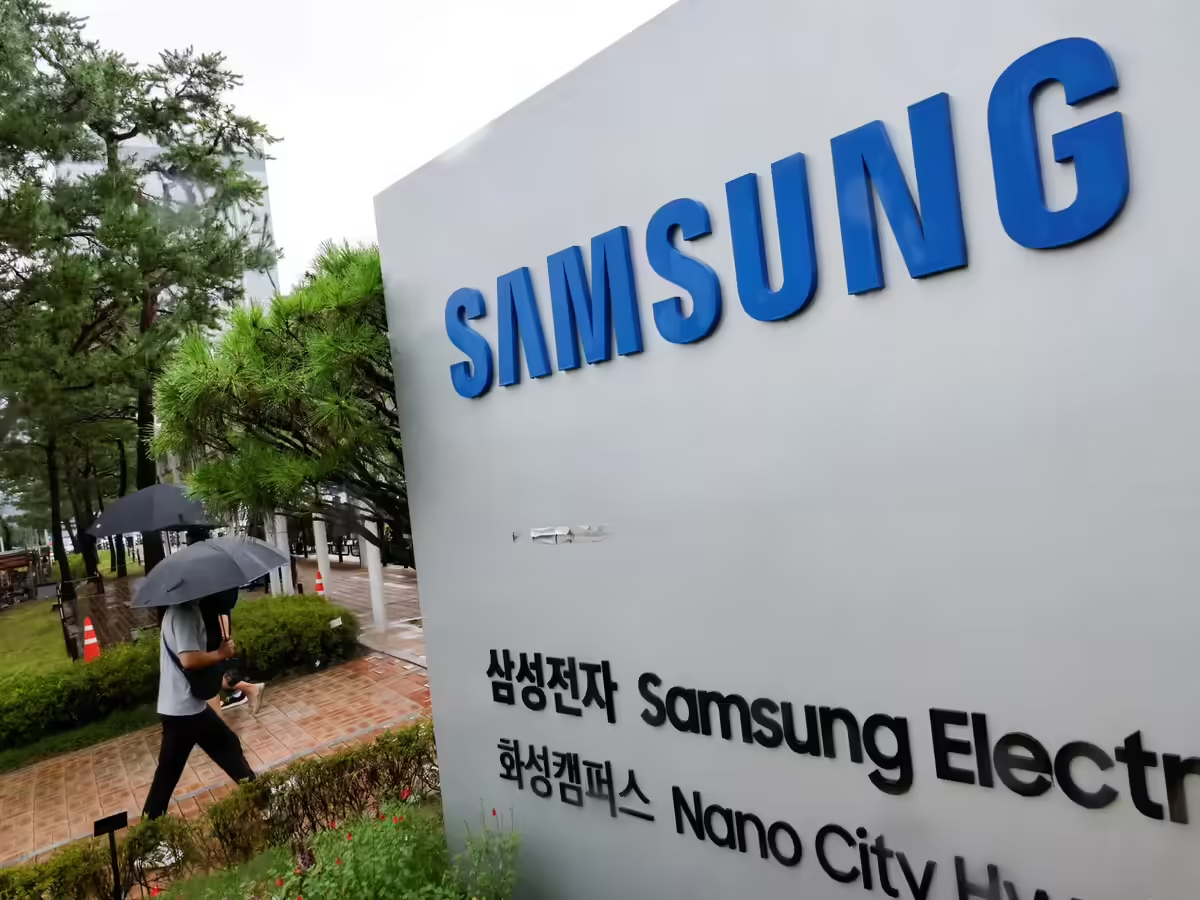
Samsung Electronics is forecasting a sharp recovery in Q1 profits, driven by rising demand for AI chips and advanced memory products. The rebound marks a turning point after a period of weaker earnings across the semiconductor cycle.
The Samsung AI memory demand story highlights how artificial intelligence is reshaping the global chip industry. As AI workloads expand rapidly, demand for high-performance memory has surged, benefiting leading manufacturers.
Consequently, Samsung’s outlook reflects a broader recovery trend in the semiconductor market, fueled by AI-driven infrastructure investment.
Semiconductor cycle shifts with AI-driven demand
Samsung Electronics is one of the world’s largest semiconductor manufacturers, with strong capabilities in memory products such as DRAM and NAND.
The company experienced a downturn during the recent semiconductor cycle. Weak demand for consumer electronics and inventory corrections affected pricing and profitability.
However, market conditions are now changing. AI applications require significantly higher computing power, which increases demand for advanced memory solutions.
In addition, data centers and cloud providers are expanding infrastructure to support AI workloads. This shift has created new growth opportunities for semiconductor companies.
Therefore, the recovery in Samsung’s performance aligns with structural changes in the industry.
Focus on high-value memory and AI applications
Samsung has been actively repositioning its semiconductor business to capitalize on AI-driven demand.
The company is increasing production of high-bandwidth memory (HBM) and other advanced products. These components are critical for AI training and inference workloads.
In addition, Samsung is strengthening partnerships with global technology firms. Collaboration with AI and cloud companies supports long-term demand for its products.
Meanwhile, the company is optimizing its product mix. It is focusing on higher-margin segments rather than volume-driven growth.
This approach allows Samsung to improve profitability while meeting evolving market needs.
AI reshapes semiconductor industry dynamics
The Samsung AI memory demand trend reflects a broader transformation in the semiconductor sector.
AI is no longer just a niche application. It has become a primary driver of demand across the industry.
Memory, in particular, plays a critical role in AI systems. High-performance memory enables faster data processing and supports complex models.
As a result, companies that lead in advanced memory technologies gain a competitive advantage.
However, competition remains intense. Other players are also investing heavily in AI-related products.
Therefore, innovation and execution will determine long-term leadership.
AI demand to sustain semiconductor growth
Looking ahead, demand for AI-related semiconductors is expected to remain strong.
Several factors support this outlook:
- Continued expansion of AI applications across industries
- Growth in data center and cloud infrastructure
- Increasing adoption of generative AI technologies
- Ongoing investment by global technology companies
Samsung is well positioned to benefit from these trends. Its scale, technology capabilities, and market presence provide a strong foundation.
At the same time, the company must navigate pricing volatility and competition.
Therefore, maintaining a balanced strategy will be essential.
Samsung positions for AI-driven growth cycle
Samsung Electronics’ expected profit recovery highlights the growing impact of AI on the semiconductor industry. By focusing on advanced memory products and high-value applications, the company is aligning its strategy with emerging demand.
As the AI boom continues, companies that adapt quickly will capture the most value. The Samsung AI memory demand story demonstrates how industry leaders are repositioning for the next phase of growth.