



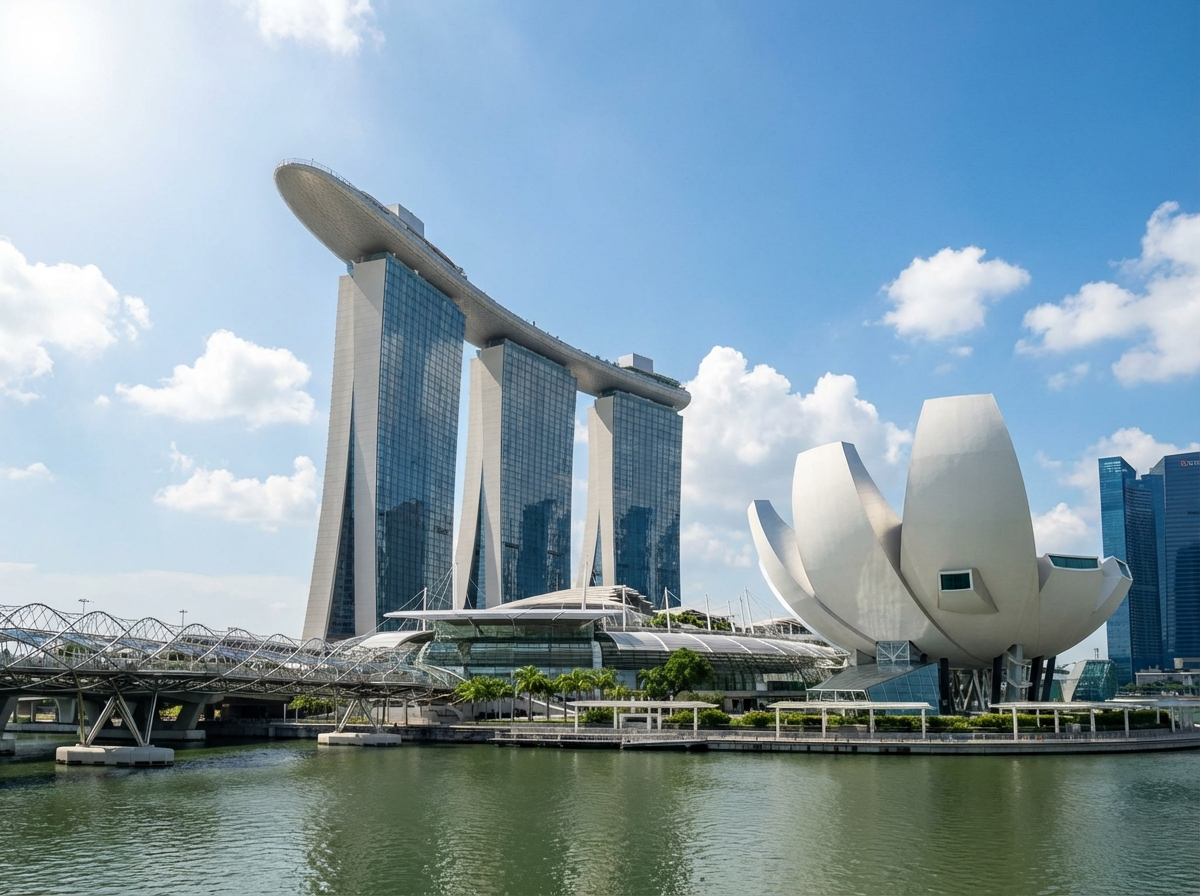


Mobility momentum returns across Asia
India has resumed tourist visa issuance for Chinese nationals as of July 24, 2025, revitalizing one of Asia’s most important travel corridors. This policy shift signals not just a diplomatic reset but also a revival of Singapore–India tourism flows, long viewed as vital for intra-Asia travel recovery.
Moreover, the decision comes amid broader efforts by both nations to rebuild mobility networks and boost regional tourism through bilateral cooperation. With Singapore acting as a key transit and destination hub, the reopening strengthens its central role in post-pandemic Asia.
Asia’s travel rebound gains pace
Before the pandemic, Singapore and India shared strong travel connectivity, supported by over 100 weekly flights and millions of annual visitors. Singapore served as a gateway city for many Chinese and Indian travelers, especially for those transiting between Southeast and South Asia.
However, during the COVID-19 years, visa restrictions and inconsistent travel rules disrupted the flow. As a result, tourism between India and China via Singapore dropped by over 80%. While Indian tourists returned in waves during 2023 and 2024, Chinese tourist volumes remained limited due to visa policies.
The July 2025 visa resumption by India changes this dynamic significantly. Now, with Singapore welcoming both Indian and Chinese travelers visa-free or with simplified e-visas, the India–Singapore tourist corridor is fully operational once again.
Bilateral reset and gateway diplomacy
India’s move to restart tourist visas for Chinese nationals aligns with its broader strategy of regional engagement through mobility. The timing also reflects improving India–China ties and ongoing participation in regional trade and travel platforms.
For Singapore, this reopening reinforces its long-standing ambition to act as a pan-Asian travel hub. The city-state has maintained open access policies for both countries and recently enhanced its Changi Airport capacity to meet rising demand. In particular, Singapore Airlines has increased flight frequencies to Delhi and Shanghai to support the surge in demand.
Moreover, Singapore’s role as a stopover destination is increasingly valuable for premium tourists and business travelers. The return of high-spending Chinese tourists via India routes is expected to boost luxury retail, hospitality, and cruise segments.
This corridor reopening also supports ASEAN’s wider tourism recovery plan, where cross-border flows are essential to sustained growth. India, as a dialogue partner of ASEAN, sees Singapore as its access point to Southeast Asia.
Tourism as soft power and economic driver
The reopening of the India–Singapore tourist corridor is more than a travel update—it reflects how tourism drives regional ties and people-to-people diplomacy. At a time when geopolitical tensions often dominate headlines, the decision to restore mobility illustrates the power of everyday engagement and economic interdependence.
Moreover, this corridor is a case study in adaptive tourism strategy. Singapore’s model of neutrality, efficiency, and cultural accessibility makes it a natural meeting ground. Meanwhile, India’s diversified travel demand—from spiritual tourism to high-spend outbound shopping—creates a broad base for cross-border collaboration.
It’s also worth noting the timing: Chinese outbound tourism is steadily rising in 2025, and India’s infrastructure—especially in cities like Delhi, Mumbai, and Kochi—is better prepared than ever. As a result, India now competes with Thailand and Malaysia for Chinese arrivals.
With both countries also investing in digital visa systems, seamless travel is becoming reality. Initiatives like India’s eVisa for select Chinese cities and Singapore’s SmartGate system could eventually integrate for joint traveler authentication.
A new phase for intra-Asia travel leadership
Looking ahead, the India–Singapore travel corridor may evolve into a template for post-pandemic regional mobility. With China, India, and Singapore now reconnected, new three-way packages, cruise itineraries, and joint visa schemes could emerge.
Tourism boards are already capitalizing on this momentum. The Singapore Tourism Board (STB) is planning dual-market campaigns in Indian metros and Chinese second-tier cities to promote multi-country travel. At the same time, Indian state tourism boards are collaborating with Changi-based operators to include Kerala, Goa, and Rajasthan in luxury Southeast Asia tours.
Moreover, Singapore could serve as a springboard for broader Asia connectivity, especially as talks resume around the Regional Comprehensive Economic Partnership’s mobility annex. The economic impact is also meaningful: travel trade across these nations is projected to exceed pre-pandemic levels by early 2026, with combined inbound visitor spending estimated at over US$18 billion.
Ultimately, the resumed tourist visa access is more than a policy—it’s a signal of renewed cooperation and an optimistic step forward for Asia’s shared travel future.