





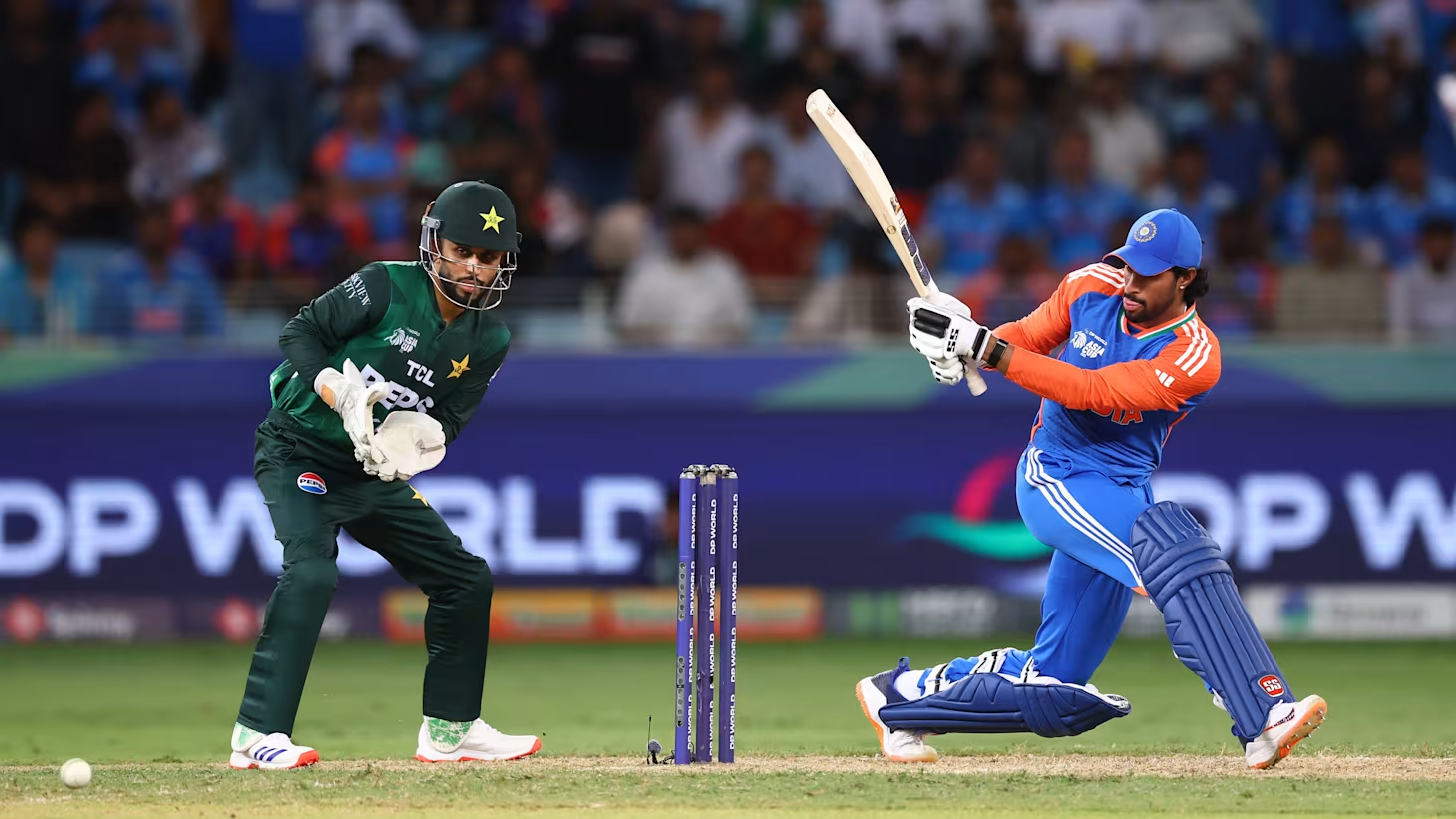
India asserts dominance in high-stakes rivalry clash
India defeated Pakistan by 61 runs in a high-intensity ICC T20 World Cup encounter, powered by an explosive 77 from Ishan Kishan and a disciplined bowling performance. The victory delivered both momentum and psychological advantage in one of cricket’s fiercest rivalries.
Matches between India and Pakistan carry weight beyond group standings. Organised under the governance of the International Cricket Council (ICC), the tournament fixture drew global attention and reaffirmed the rivalry’s commercial and sporting magnitude. Consequently, India’s commanding win strengthens its campaign trajectory early in the competition.
A rivalry shaped by history and tournament stakes
India–Pakistan clashes in ICC events consistently rank among the most-watched sporting contests in Asia. Over the years, these encounters have often influenced tournament narratives and fan expectations.
In T20 World Cup history, India has generally maintained an edge in head-to-head matchups. However, each edition resets competitive dynamics. Form, squad balance, and venue conditions play decisive roles.
Leading into this fixture, both teams aimed to solidify early momentum. Therefore, the contest carried significance beyond points—it shaped confidence and tactical planning for upcoming matches.
Aggressive batting sets the tone
India’s innings revolved around proactive intent from the outset. Ishan Kishan’s 77 off a brisk tempo disrupted Pakistan’s bowling plans and shifted pressure early.
By targeting pace and rotating strike efficiently, India prevented Pakistan from building sustained control. Furthermore, partnerships in the middle overs ensured scoreboard stability rather than collapse.
The team management, under guidance from the Board of Control for Cricket in India (BCCI), has emphasised flexible batting roles throughout the tournament. This adaptability proved effective as India accelerated when required without losing structure.
Importantly, calculated aggression allowed India to post a competitive total that challenged Pakistan’s chase from the first delivery.
Bowling discipline reinforces tournament credentials
While batting laid the platform, India’s bowling unit sealed the outcome. Controlled lengths, sharp field placements, and pressure-building spells limited Pakistan’s scoring rhythm.
In T20 cricket, defending totals requires composure. India’s bowlers avoided excessive experimentation and instead relied on consistent execution.
Moreover, early breakthroughs shifted match momentum decisively. Once Pakistan’s top order faltered, scoreboard pressure intensified.
This performance reflects a balanced squad approach. Rather than relying on individual brilliance alone, India demonstrated cohesion across departments.
Depth and adaptability shape India’s campaign
India’s tournament strategy emphasises depth. The batting lineup combines aggression with anchor options, while the bowling attack offers variation in pace and spin.
Such structural balance reduces dependence on a single match-winner. If one department falters, another can compensate.
Additionally, fitness and rotation policies allow workload management during a demanding tournament schedule. Maintaining peak performance through group and knockout stages remains critical.
Pakistan, governed by the Pakistan Cricket Board (PCB), will likely reassess tactical combinations following this defeat. Rival teams often adapt quickly in tournament play.
Group stage momentum matters
Early victories in ICC tournaments influence both net run rate and morale. India’s 61-run margin strengthens its standing and builds internal confidence.
In tightly contested group formats, decisive wins create strategic cushion. Therefore, commanding margins carry practical value beyond symbolic dominance.
Furthermore, high-profile victories energise supporters and commercial stakeholders. The ICC’s global broadcast footprint ensures these matches reach massive audiences.
As tournament pressure intensifies, teams that secure early rhythm often sustain stronger performance arcs.
Maintaining consistency across matches
Despite this victory, challenges remain. T20 formats reward adaptability and penalise complacency.
Pitch conditions may vary significantly between venues. Therefore, India must continue tailoring tactics to local dynamics.
In addition, maintaining batting aggression without sacrificing stability requires ongoing calibration. Opposition analysis will also target key performers such as Ishan Kishan.
Thus, consistency rather than isolated brilliance will define India’s championship prospects.
Momentum fuels knockout ambitions
In the near term, India’s comprehensive win positions it strongly within the group stage. Confidence gained from defeating a major rival often translates into sharper fielding and execution in subsequent fixtures.
Over the medium term, squad rotation and workload management will determine sustainability. Balanced contributions across matches reduce pressure in knockout scenarios.
Looking ahead, the tournament remains open and competitive. However, victories of this scale reinforce belief within the dressing room.
If India continues blending aggressive batting with disciplined bowling, it will remain a leading contender for the ICC T20 World Cup title.
A statement win in cricket’s fiercest rivalry
India’s 61-run triumph over Pakistan represents more than a group-stage result. Powered by Ishan Kishan’s explosive innings and cohesive bowling, the team delivered a complete performance.
As the ICC tournament progresses, momentum and tactical discipline will shape outcomes. For now, India’s emphatic win signals intent and strengthens its pursuit of World Cup success.