



Strategic investment anchors India’s future in cloud and AI infrastructure
Google has announced a $6 billion investment to build Asia’s largest data centre in Visakhapatnam, India. The project includes a 1-gigawatt facility powered by $2 billion in renewable infrastructure, marking one of the tech giant’s largest single-region infrastructure moves globally.
This bold expansion supports India’s digital economy, which continues to grow at record pace. It also reinforces Google’s long-term strategy to make India a regional hub for cloud computing, AI services, and data sovereignty. As a result, the investment signals a shift in how global tech firms view the region’s role in the next phase of digital transformation.
A rising need for cloud and compute power
India is now the world’s fastest-growing digital market. Its rapid internet adoption, widespread use of smartphones, and increasing digitization of services have pushed demand for cloud storage and computing to new levels. Moreover, businesses across India are adopting AI, machine learning, and big data analytics, all of which rely on robust infrastructure.
Currently, most large-scale data services in the country depend on smaller, scattered data centres. This results in higher latency, less efficiency, and rising operational costs. Google’s plan to build a centralized, high-capacity data campus directly addresses these issues.
The company has previously launched cloud regions in Mumbai and Delhi, but the upcoming Visakhapatnam facility represents a major scale-up in both size and ambition.
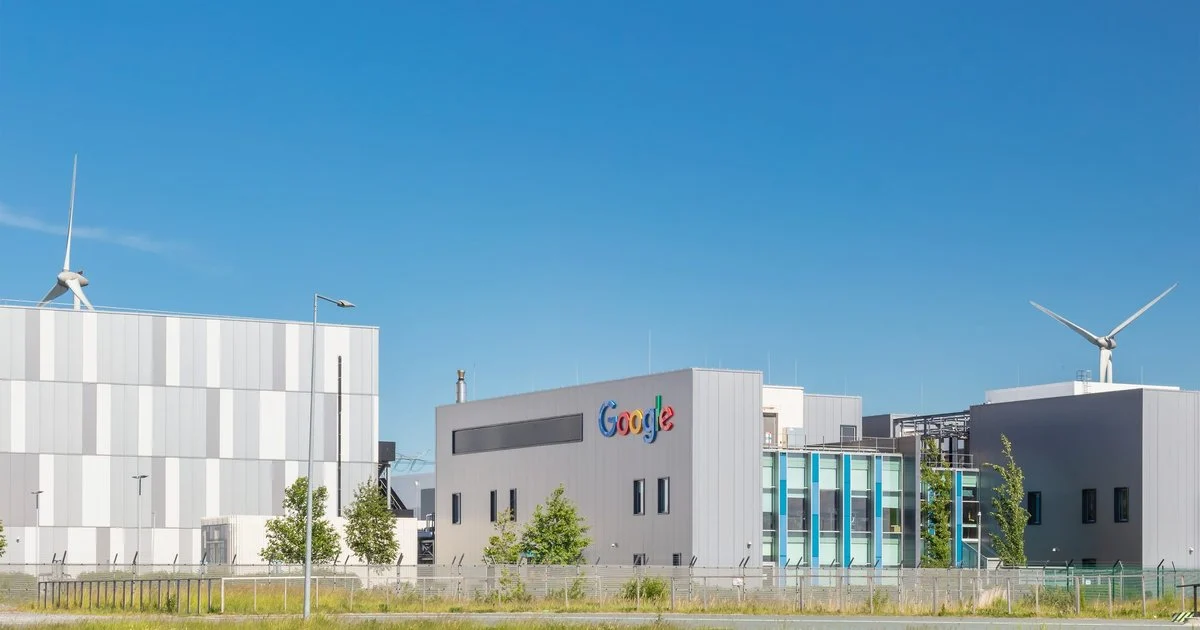
Google data centre in Visakhapatnam
The new data centre will be powered by 1 gigawatt (GW) of energy, backed by clean sources like solar and wind. Of the total $6 billion, nearly $2 billion will go into renewable power generation. Google plans to run the campus with net-zero emissions, aligning with its global carbon neutrality goals.
The location—Visakhapatnam in Andhra Pradesh—was chosen for its strategic coastal access, government incentives, and robust energy infrastructure. The project will create thousands of direct and indirect jobs and boost the local economy.
More importantly, it will lower cloud latency for Indian users, increase data compliance for local firms, and support Google Cloud’s growing list of enterprise customers in the region.
India as a regional cloud hub
This move is not just about India—it’s about Asia’s cloud and AI future. With Southeast Asia’s digital economy booming, companies are seeking stable, high-capacity cloud regions closer to home. Google’s Visakhapatnam facility could serve as a base for serving clients across South and Southeast Asia.
Moreover, India’s government is pushing for data localization laws, requiring companies to store and process certain data within the country. This has made domestic data infrastructure not just preferable—but mandatory.
As a result, this investment helps Google meet regulatory needs, improve customer trust, and expand its market share in a rapidly growing cloud services market. According to IDC, India’s public cloud spending is expected to exceed $13 billion by 2026, growing at more than 20% annually.
Futureproofing India’s AI infrastructure
Google is also expected to use this centre to support its AI ecosystem, which includes products like Gemini, Google Cloud Vertex AI, and future open-source model training. By having compute infrastructure close to users, Google can offer faster services, better security, and lower operational costs.
Additionally, the data centre will support Google’s Indian partners in e-commerce, finance, education, and healthcare. These sectors are increasingly data-driven and require high-speed, high-volume processing capabilities.
The project also reflects a shift in infrastructure leadership—with India now seen as a digital-first economy worth long-term investment. It opens the door for similar mega-scale projects by other tech giants in the near future.
A defining moment for India’s tech backbone
Google’s $6 billion data centre investment is more than just an infrastructure play. It is a statement of confidence in India’s digital trajectory and a catalyst for regional cloud growth. The Visakhapatnam campus will not only anchor Google’s AI and cloud operations in Asia but also empower thousands of Indian businesses with world-class digital infrastructure.
In short, India is no longer just a user market. With moves like this, it is becoming a core player in building the internet’s future.