




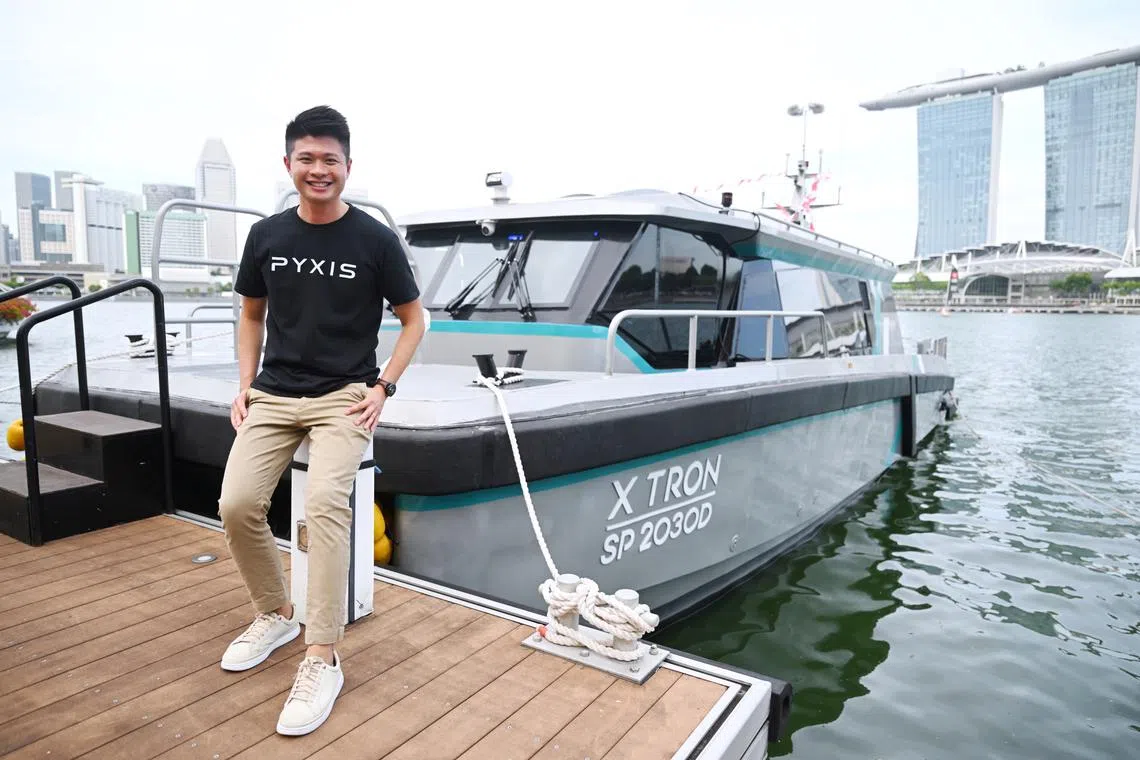
Pyxis maritime electrification draws growth capital in Singapore
Singapore-based Pyxis has secured just over $10 million in the first close of its growth funding round, signalling sustained investor interest in maritime electrification and green propulsion across Asia. The raise points to a clear shift in climate-tech attention. Investors now favour solutions that can decarbonise heavy, regulated sectors through real deployments, not only pilots.
For Singapore, the timing is meaningful. The city-state is pushing standards and infrastructure planning for electric harbour craft, and that policy tailwind is starting to pull private capital into startups that can scale vessels, batteries, and fleet operations. Pyxis sits in that intersection, where climate urgency meets port-city pragmatism.
Why maritime electrification is moving from concept to procurement
Shipping decarbonisation often sounds like a deep-sea problem. Yet near-shore craft offer a faster path to impact. Harbour craft, crew boats, and short-range work vessels run predictable routes. They also return to base often. That makes them better candidates for electrification than long-haul routes that still face fuel density limits.
Asia’s ports add pressure. Many hubs operate in dense urban environments. Air quality, noise, and emissions now affect public acceptance, not only operating cost. Electric craft can reduce local emissions and cut noise for crew and coastal communities. They can also lower maintenance burden because electric drivetrains have fewer moving parts.
Singapore’s regulators have begun to formalise the transition. In 2025, the Maritime and Port Authority of Singapore and Enterprise Singapore backed a technical reference to guide charging and battery swap systems for electric harbour craft, which helps standardise safety and interoperability. This matters because capital tends to follow standards. When rules become clearer, pilots become procurement.
This context explains why a startup like Pyxis can raise growth funding now. The market is not purely speculative. It is being shaped by policy readiness, port operator demand, and the need for measurable emissions cuts in coastal operations.
What Pyxis is building and where the money goes
Pyxis positions itself as a maritime electrification company that combines electric vessel development with an ecosystem approach to charging, operations, and fleet management. The first-close funding is designed to support scaling, not experimentation. The company has signalled that it will use the capital to expand vessel production capacity and advance its broader electrification ecosystem.
The strategic logic is simple. Electric vessels are only one part of the solution. Operators also need reliable charging, uptime planning, and predictable maintenance. If those elements remain fragmented, fleets hesitate. Pyxis appears to be building for integration so operators can adopt electrification with fewer operational unknowns.
Singapore is a practical base for this strategy. It is a major maritime hub with a strong testing environment, dense harbour operations, and a policy agenda that is increasingly supportive of electric harbour craft. That combination reduces friction for early deployments and gives a startup clearer feedback loops.
Pyxis also benefits from ecosystem validation. Singapore’s maritime innovation networks have highlighted electrification as a priority area, which helps connect startups to operators, regulators, and infrastructure partners.
What this round signals for Asia’s clean maritime funding
Growth funding for maritime electrification sends a strong market signal: investors believe decarbonisation in marine operations can move from narrative to revenue. In Asia, this matters because maritime activity sits close to trade, tourism, and energy logistics. Electrifying harbour craft offers a visible way to cut emissions without waiting for deep-sea fuel transitions to mature.
The round also highlights what funders want now. They want commercial traction, repeatable deployments, and partnerships that can lead to fleet orders. In other words, they want scaling capability. This is the same pattern seen in other industrial climate-tech segments, such as grid storage and industrial efficiency.
For Singapore, private funding complements the state’s standards-first approach. When regulators define charging and safety specifications, startups can design to a clear target. That speeds adoption and lowers risk for operators. The government’s approach also helps avoid a fragmented infrastructure landscape, where different vessels require incompatible charging solutions.
For the wider region, this round acts as a reference point. It suggests that maritime electrification is no longer “too early” for growth-stage capital. It is entering the phase where operators can justify budgets, insurers can evaluate risk more clearly, and ports can plan infrastructure on a multi-year basis.
Electrification wins only when operators trust uptime
The most important barrier is not ambition. It is uptime. Harbour craft and short-range vessels operate on tight schedules. Operators will not switch to electric if charging reliability is uncertain or if battery performance degrades unpredictably. Therefore, startups must prove operational consistency, not just headline performance.
This is why standards and policy frameworks matter. Clear charging specifications reduce operational risk. They also enable ports and operators to build shared infrastructure rather than bespoke systems. In Singapore’s case, that direction is being driven by the Maritime and Port Authority of Singapore, which has signalled support for electrification through standards and ecosystem coordination.
There is also a talent and service layer. Electric fleets need technicians, monitoring tools, and maintenance playbooks that differ from diesel operations. Startups that build service capability early can create a real moat. Those that rely on “hardware only” often struggle when scaling begins.
Finally, there is cost realism. Electric craft can reduce fuel and maintenance costs, but upfront capex can be higher. Adoption depends on financing models, fleet utilisation rates, and the ability to spread infrastructure cost across multiple vessels. This is where partnerships with ports, utilities, and public agencies become critical.
What comes next for Pyxis and Asia’s e-harbour craft push
In 2026, the next milestone will be repeatable deployments in more than one market. Singapore can serve as a proving ground, but regional expansion will require adaptation. Ports differ in regulations, grid access, and operational profiles. Flooding risk, storm seasons, and heat also affect charging infrastructure and battery management.
The winners will likely be companies that can build modular solutions. That includes vessel designs that scale across use cases, and charging approaches that can fit different port constraints. It also includes fleet software that helps operators plan charging windows without disrupting schedules.
Policy coordination may widen across Asia too. As more ports look at electrification, agencies will look for standard templates to reduce complexity. Regional confidence rises when governments and industry bodies align on safety and interoperability.
In Singapore, the involvement of Enterprise Singapore alongside maritime regulators signals that electrification is not only an environmental goal. It is also an industrial and innovation priority. That framing supports exportable solutions, which matters for startups that want to scale beyond a single harbour.
Pyxis maritime electrification funding shows momentum is real
Pyxis’ first-close funding of just over $10 million signals that maritime electrification is gaining investor confidence as an operational transition, not a distant vision. The opportunity is clear: near-shore vessels offer an actionable pathway to emissions reduction, and Singapore’s standards-led approach reduces adoption uncertainty.
However, the next phase will be decided by execution. Pyxis and its peers will need to prove reliability, service readiness, and scalable infrastructure partnerships. If they do, maritime electrification could become one of Asia’s most practical climate-tech wins, with Singapore serving as a launchpad for regional adoption.