



Taiwan–U.S. pact reshapes AI and semiconductor cooperation
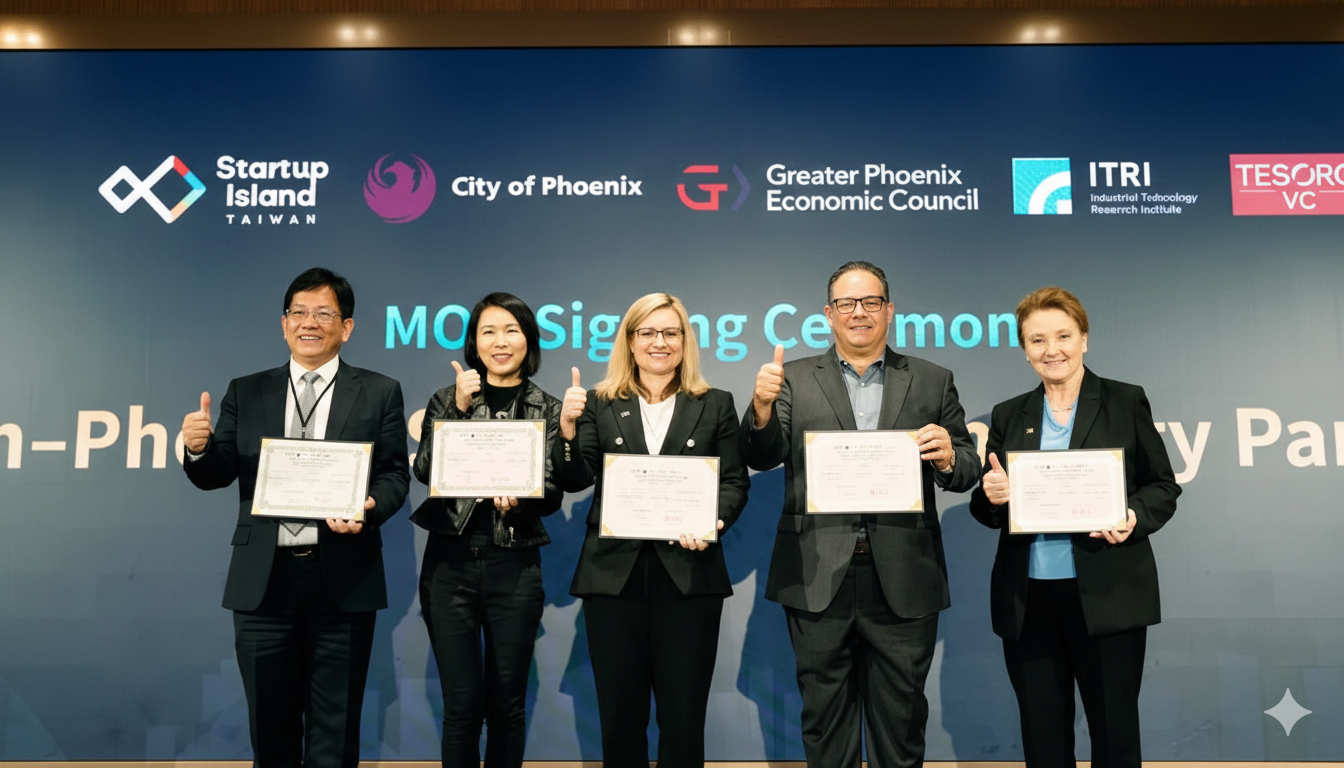
Taiwan and the United States have reached a strategic trade partnership aimed at deepening cooperation across artificial intelligence, semiconductors, and advanced energy technologies. The agreement, which still requires ratification by Taiwan’s Legislative Yuan, focuses on tariff reductions, expanded high-tech investment, and stronger supply-chain resilience.
The pact involves close coordination between Taiwan’s Ministry of Economic Affairs, the National Development Council, and the U.S. Department of Commerce, signalling high-level government alignment. It positions the agreement as one of the most consequential bilateral technology arrangements involving Asia in recent years.
Why Taiwan anchors the global semiconductor ecosystem
Taiwan sits at the centre of the global semiconductor and AI hardware supply chain. Companies such as TSMC, MediaTek, and ASE Technology play critical roles in advanced chip manufacturing, design, and packaging, supporting everything from consumer electronics to data-centre AI systems.
For decades, Taiwan’s technology sector has benefited from coordinated industrial policy, skilled talent, and sustained capital investment. Government bodies such as the Industrial Technology Research Institute (ITRI) and National Science and Technology Council have supported early-stage research and commercial scaling.
From the U.S. perspective, ensuring stable access to advanced chips has become a strategic priority. Agencies including the U.S. Department of Commerce and Office of the U.S. Trade Representative have increasingly focused on trusted supply chains and long-term technology cooperation with key partners like Taiwan.
What the partnership includes in practice
The agreement rests on three main pillars. The first is tariff and trade facilitation for high-tech components, which is expected to ease cost pressures for semiconductor manufacturers and AI system builders operating across both markets.
The second pillar centres on investment expansion and industrial cooperation. Taiwanese firms such as TSMC and Foxconn are expected to benefit from clearer frameworks supporting overseas investment, joint R&D, and capacity expansion aligned with U.S. demand. On the U.S. side, companies including NVIDIA, AMD, and Intel stand to gain from improved access to advanced manufacturing and packaging capabilities.
The third pillar focuses on energy and infrastructure coordination. AI and semiconductor production require stable, scalable power. The partnership aligns clean-energy planning with industrial growth, supporting long-term expansion without undermining sustainability goals.
Technology trade is now national strategy
This Taiwan–U.S. agreement reflects a structural shift in global trade thinking. Technology is no longer treated as a neutral commercial sector. Instead, AI and semiconductors are now embedded within national economic and security strategies.
Governments are playing a more active role in shaping outcomes. Policy coordination, incentives, and diplomatic alignment increasingly influence where chips are made, how AI systems are deployed, and which companies gain long-term advantages.
For Taiwan, the pact reinforces its status as a trusted technology partner. However, it also increases responsibility. As reliance on Taiwanese semiconductor capacity deepens, expectations around reliability, resilience, and collaboration rise accordingly.
Implications for Asia’s technology landscape
If ratified, the partnership could reshape corporate planning across Asia. Semiconductor firms in Japan, South Korea, and Southeast Asia may see increased demand for complementary manufacturing, testing, and materials supply linked to Taiwan–U.S. cooperation.
AI developers and cloud providers are also likely to adjust investment timelines, supported by improved confidence in long-term chip availability. At the same time, regional governments may accelerate their own industrial strategies to remain competitive within evolving supply networks.
Execution remains key. Parliamentary approval in Taiwan, regulatory clarity, and follow-through on investment commitments will determine the partnership’s real impact on global AI and semiconductor capacity.
A defining alignment for the AI and chip era
The strategic AI and semiconductor trade partnership between Taiwan and the United States marks a defining alignment in global technology policy. By combining trade facilitation, industrial investment, and energy coordination, the agreement goes beyond traditional trade deals.
For Asia, the pact highlights how future technology leadership will be shaped by trusted partnerships, government coordination, and industrial depth. As AI and semiconductor demand continues to rise, the Taiwan–U.S. framework may influence how the next generation of global technology ecosystems is built.