





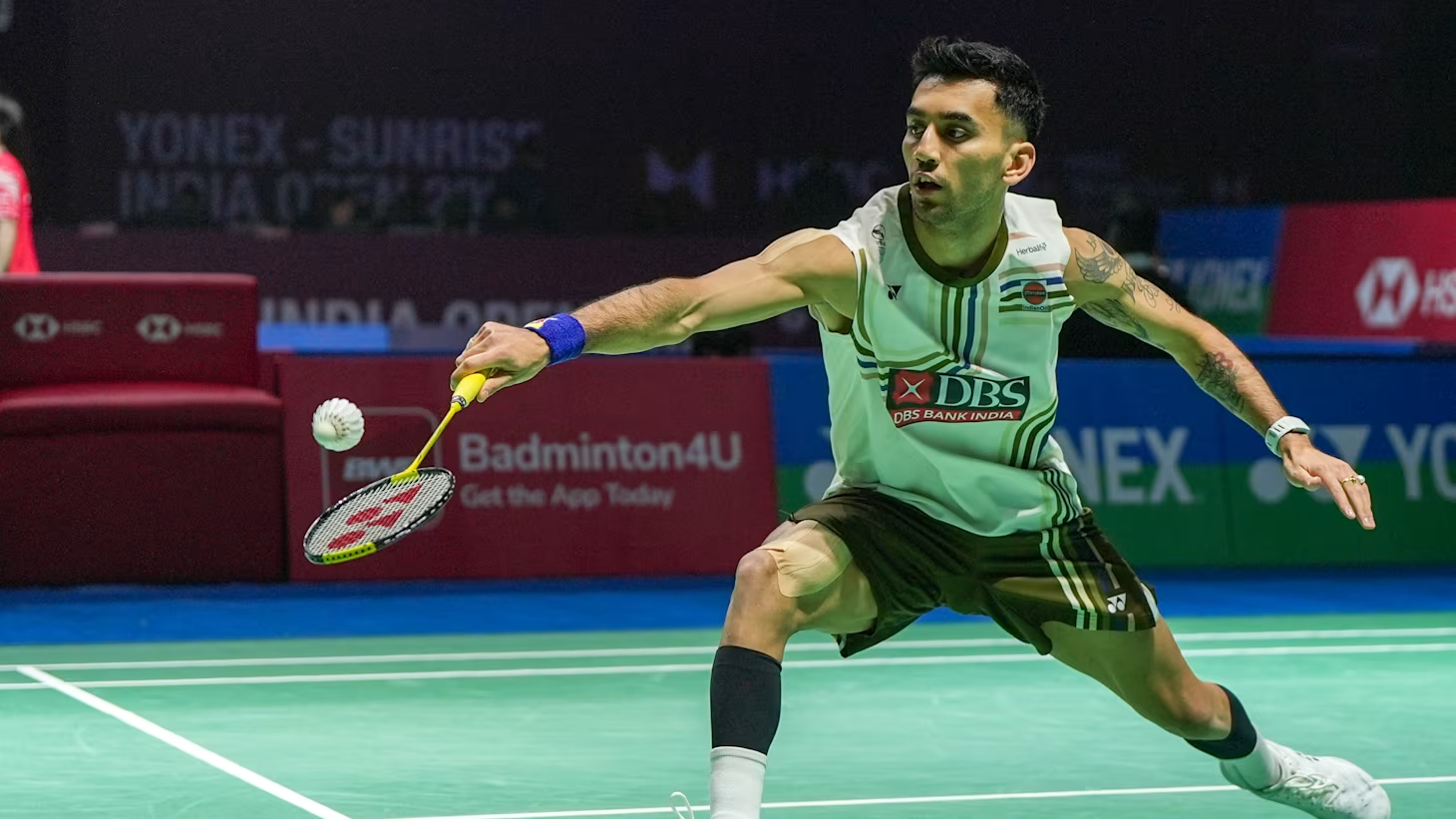
Asia’s top badminton nations begin qualification battle
The 6th Badminton Asia Team Championships officially began on 3 February 2026 in Qingdao, China, marking the start of one of Asia’s most important continental badminton events. Featuring elite national men’s and women’s teams, the tournament serves as Asia’s official qualifier for the Thomas Cup and Uber Cup, placing immediate global stakes on every match.
Beyond qualification, the championships highlight Asia’s dominance in world badminton. With traditional powerhouses and emerging challengers competing side by side, the Qingdao event sets the tone for national rivalries, squad depth, and long-term competitive planning ahead of the global team championships.
Why the Badminton Asia Team Championships matter
The Badminton Asia Team Championships hold a unique position in the international badminton calendar. Unlike individual tournaments, team championships test depth, versatility, and tactical coordination across singles and doubles disciplines. Success depends not on one star player, but on a complete and balanced squad.
Asia’s depth in badminton makes this event especially demanding. Many nations treat qualification through this tournament as more competitive than the global finals themselves. As a result, preparation cycles often revolve around this championship, with national associations aligning training, selection, and player conditioning months in advance.
Powerhouses set early statements
Top badminton nations entered the Qingdao championships with carefully constructed strategies. China, competing on home soil, fielded balanced squads that combine experienced leaders with younger players gaining exposure to high-pressure matches. This approach allows tactical flexibility while safeguarding long-term development.
Other leading nations such as Japan, South Korea, Indonesia, Malaysia, and India focused on securing early group-stage momentum. Strong starts reduce knockout risks and allow coaches to manage workloads across multiple ties. Doubles pairings, in particular, play a decisive role in shaping match outcomes under the team format.
Team events expose national badminton systems
Team championships offer a clear lens into the health of national badminton systems. Unlike individual events, they reveal whether a country has built sustainable pipelines across age groups, coaching structures, and domestic competition.
The Qingdao tournament reinforces a key reality: badminton success is increasingly system-driven. Nations that invest consistently in grassroots development, sports science, and domestic leagues tend to perform better when pressure spreads across an entire team. This dynamic separates short-term contenders from long-term leaders in Asian badminton.
Youth exposure and Olympic-cycle planning
Another defining feature of the 2026 championships is youth integration. Several teams used the tournament to test younger players in high-stakes situations, balancing immediate qualification goals with Olympic-cycle planning.
This strategy carries calculated risk. Younger athletes may struggle under pressure, yet exposure at this level accelerates maturity. By blending veterans with emerging players, teams aim to secure results while strengthening future squad depth, ensuring competitiveness beyond the current tournament.
Familiar clashes with renewed stakes
Historic rivalries have added intensity to the championships. Matchups between East Asian and Southeast Asian nations continue to attract strong attention, reflecting contrasting playing styles and tactical philosophies.
India’s encounters with Indonesia and Malaysia remain especially significant, highlighting shifting power dynamics in Asian badminton. Meanwhile, China–Japan clashes continue to showcase precision, discipline, and strategic depth, reinforcing why these nations remain global benchmarks in team badminton.
Qingdao as an emerging badminton destination
Hosting the championships enhances Qingdao’s profile as an international sports city. Modern venues, efficient logistics, and strong local attendance have contributed to a competitive atmosphere from the opening rounds.
For China, distributing major tournaments beyond traditional metropolitan centres supports broader sports development goals. For players, strong crowd engagement adds psychological pressure, testing mental resilience alongside technical ability during qualification-driven matches.
Qualification battles intensify
As the championships progress into knockout stages, pressure will intensify. Qualification margins are narrow, and tactical decisions become decisive. One unexpected result can reshape the entire qualification landscape for the Thomas and Uber Cups.
Looking ahead, performances in Qingdao will influence national funding priorities, player selections, and public expectations for the remainder of the season. For many teams, the tournament serves as both a proving ground and a benchmark for global competitiveness later in the year.
Asia’s team supremacy on full display
The 2026 Badminton Asia Team Championships in Qingdao represent more than a continental title race. As Asia’s gateway to the Thomas and Uber Cups, the event tests national depth, strategic planning, and long-term development systems.
With qualification stakes, historic rivalries, and emerging talent all on display, the championships reaffirm Asia’s central role in world badminton. The outcomes in Qingdao will shape global team competitions and define national trajectories well beyond this tournament.



