





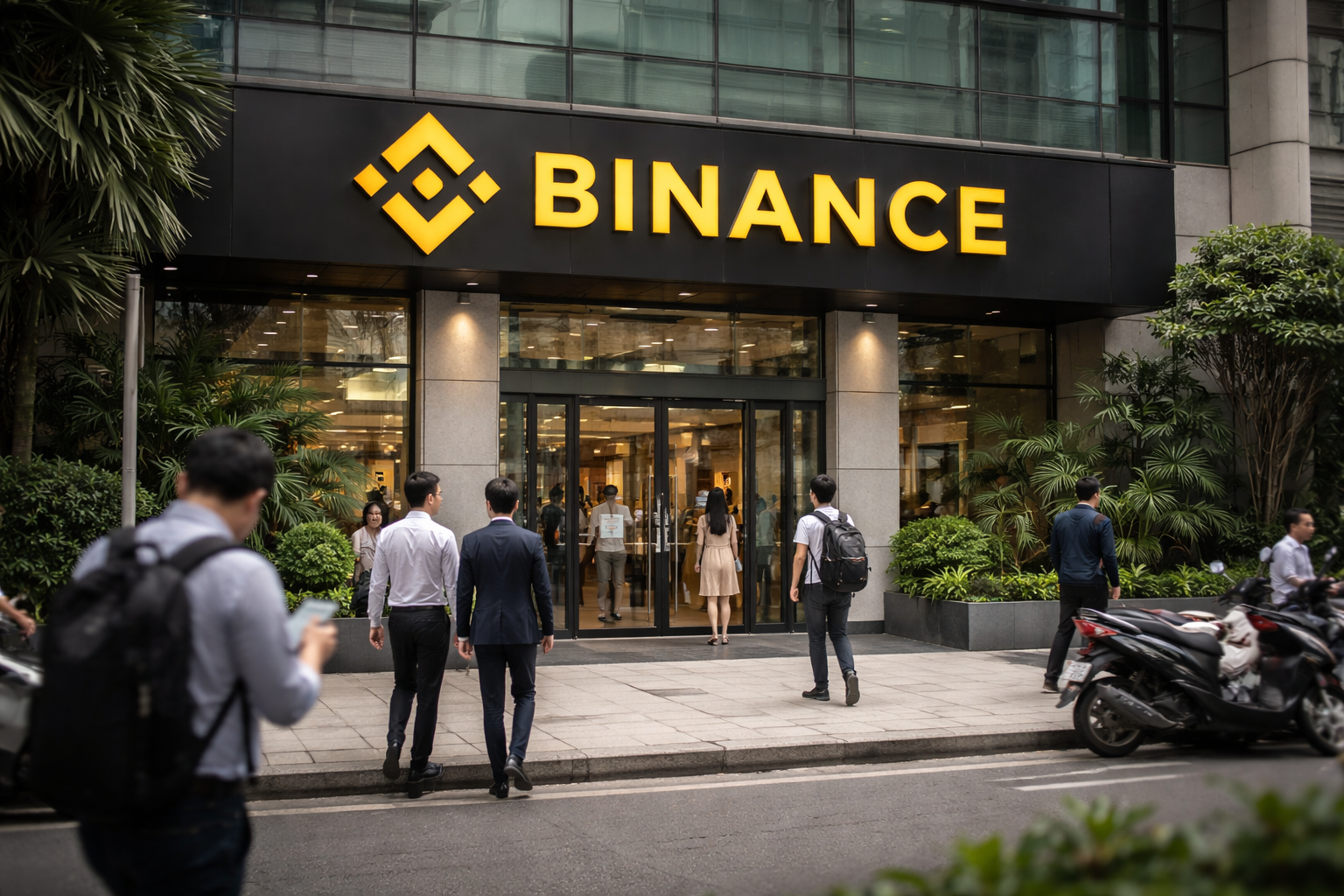
Binance Asia licenses strategy signals regulatory expansion
Global cryptocurrency exchange Binance is pursuing five new regulatory licenses across Asia as part of a broader strategy to strengthen its presence in one of the world’s fastest-growing digital asset markets. The company aims to align its operations with evolving regulatory frameworks while expanding services across multiple Asian jurisdictions.
The Binance Asia licenses strategy highlights how crypto exchanges are increasingly prioritizing regulatory compliance to operate in key financial markets. As governments across Asia introduce stricter digital-asset regulations, exchanges must secure licenses and work closely with regulators to maintain market access.
Consequently, obtaining regulatory approvals has become a critical step for cryptocurrency platforms seeking long-term growth in the region’s rapidly evolving digital finance ecosystem.
Asia emerges as a major crypto market
Asia has become one of the most important regions for cryptocurrency adoption and digital asset innovation. Several countries across the region have established regulatory frameworks designed to support the growth of blockchain technology while protecting financial stability.
In Singapore, the Monetary Authority of Singapore (MAS) regulates digital payment token services under the Payment Services Act, which requires cryptocurrency platforms to obtain operating licenses and meet strict compliance standards.
Similarly, Hong Kong’s Securities and Futures Commission (SFC) introduced licensing frameworks for crypto trading platforms to strengthen investor protection and market transparency.
Japan has also implemented comprehensive regulations for digital asset exchanges through the Financial Services Agency (FSA).
Meanwhile, other jurisdictions across Asia are developing regulatory frameworks that balance innovation with financial oversight.
These policies reflect the growing importance of digital assets within Asia’s financial ecosystem.
At the same time, several major cryptocurrency companies are expanding their regional operations. Exchanges such as Coinbase, OKX, Bybit, and Crypto.com are actively pursuing regulatory approvals to operate in Asia’s regulated financial markets.
As a result, compliance and licensing have become essential for exchanges seeking to build long-term credibility with regulators and investors.
Binance seeks regulatory approvals across Asia
The Binance Asia licenses strategy focuses on securing regulatory approvals in several key markets across the Asia-Pacific region.
Although the company has not publicly disclosed all jurisdictions involved, the expansion reflects a shift toward stronger regulatory engagement following increased global scrutiny of cryptocurrency exchanges.
By obtaining operating licenses, Binance aims to provide regulated services such as cryptocurrency trading, custody, and digital asset management in multiple Asian markets.
Regulatory approval allows exchanges to offer services legally while meeting compliance standards related to anti-money laundering (AML), consumer protection, and financial reporting.
Furthermore, licensed operations can help exchanges establish partnerships with financial institutions and payment providers.
For Binance, regulatory alignment also supports long-term credibility with institutional investors and corporate clients who require compliant digital asset services.
Consequently, expanding licensed operations across Asia could significantly strengthen the company’s regional presence.
Crypto exchanges compete for regulatory approval
The Binance Asia licenses strategy occurs within an increasingly competitive cryptocurrency industry.
Over the past several years, regulators around the world have introduced stricter rules governing digital asset trading platforms.
Exchanges must now demonstrate compliance with financial regulations, cybersecurity standards, and investor protection frameworks.
As a result, many cryptocurrency companies have shifted from operating globally without licenses to building regulated regional operations.
Competitors such as Coinbase, Kraken, OKX, and Bybit are actively expanding regulated services across Asia and other markets.
For example, several exchanges have obtained approvals in jurisdictions such as Singapore, Japan, and Hong Kong, which have become important digital asset hubs.
Consequently, securing regulatory licenses is now a critical competitive factor in the crypto industry.
Companies that successfully obtain approvals in multiple jurisdictions gain access to larger markets and institutional investors.
Regulation reshapes the crypto industry
The expansion of regulatory frameworks across Asia reflects a broader transformation of the global cryptocurrency industry.
In its early years, the crypto sector operated largely outside traditional financial regulations.
However, as digital assets gained popularity and market value increased, regulators began introducing rules designed to improve transparency and reduce financial risks.
Today, most major cryptocurrency exchanges recognize that long-term success requires compliance with national financial regulations.
Licensed operations help protect investors, reduce fraud risks, and integrate digital assets into the broader financial system.
For exchanges such as Binance, adapting to regulatory expectations is essential for maintaining market access and building trust with governments and financial institutions.
At the same time, regulatory clarity may encourage greater institutional investment in digital assets.
Financial institutions often require clear regulatory frameworks before entering emerging markets.
Therefore, stronger oversight may ultimately support the long-term growth of the cryptocurrency ecosystem.
Asia likely to remain a key crypto hub
Looking ahead, Asia is expected to remain a major center for digital asset innovation and blockchain technology.
Several countries across the region are positioning themselves as global hubs for cryptocurrency trading, fintech development, and digital finance.
Singapore, Hong Kong, and Japan have already established regulatory frameworks that support licensed crypto operations.
Meanwhile, other jurisdictions across Southeast Asia are exploring regulatory models designed to attract digital asset companies.
Institutional interest in cryptocurrencies is also increasing.
Banks, asset managers, and fintech firms are gradually integrating digital assets into financial services.
As this trend continues, regulated cryptocurrency exchanges will play a critical role in providing secure and compliant trading platforms.
Consequently, companies that secure licenses across multiple Asian markets may gain a significant competitive advantage.
Binance regulatory expansion reflects evolving crypto landscape
Binance’s pursuit of five new regulatory licenses across Asia demonstrates how cryptocurrency exchanges are adapting to stricter regulatory environments while continuing to expand operations.
By prioritizing compliance and regulatory engagement, the company aims to strengthen its presence in Asia’s rapidly growing digital asset markets.
As the cryptocurrency industry matures, licensing and regulatory alignment will likely become essential for exchanges seeking long-term success in the global financial system.