


UBTech AI factory automation expansion gains momentum
Chinese robotics company UBTech Robotics is accelerating deployments of its AI-powered automation systems across manufacturing and industrial facilities in China, strengthening its position in the country’s rapidly evolving smart manufacturing sector. The company is expanding industrial robot adoption as factories increasingly seek automation, efficiency, and AI-driven operational upgrades.
The UBTech AI factory automation strategy highlights how robotics and artificial intelligence are becoming central to the future of industrial production. As manufacturers face rising labor costs, efficiency demands, and global competition, AI-enabled robotics are emerging as critical infrastructure.
Consequently, UBTech is positioning itself at the forefront of China’s next-generation industrial automation ecosystem.
China intensifies smart manufacturing transition
China has been rapidly advancing its smart manufacturing ambitions over the past decade. Government-led initiatives such as intelligent manufacturing upgrades and industrial modernization programs have accelerated investment in robotics and automation technologies.
At the same time, factories are under increasing pressure to improve productivity and operational efficiency. Labor shortages in certain manufacturing sectors and rising wage costs are encouraging companies to adopt automated systems.
Artificial intelligence is also transforming industrial environments. AI-powered robots can perform repetitive tasks, analyze operational data, and improve production accuracy with minimal human intervention.
Meanwhile, global manufacturing competition has intensified. Companies are seeking advanced technologies to maintain efficiency and production scalability.
China has already become one of the world’s largest industrial robotics markets. Domestic robotics companies are now competing more aggressively with international manufacturers.
Therefore, UBTech’s expansion aligns with broader national and industry trends.
Scaling AI-powered industrial robotics
The UBTech AI factory automation strategy focuses on expanding deployment capabilities across multiple industrial sectors.
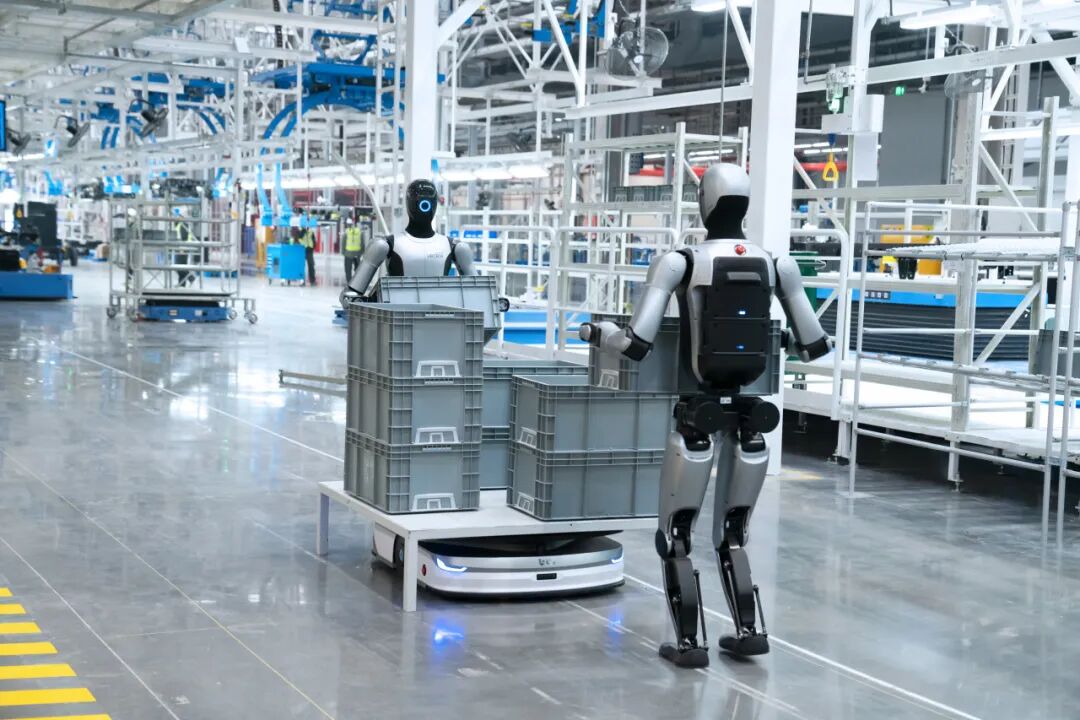
First, the company is increasing deployment of AI-enabled robots within manufacturing facilities. These systems are designed to support assembly, inspection, logistics, and repetitive industrial workflows.
In addition, UBTech is strengthening its integration of artificial intelligence into robotics platforms. AI allows robots to adapt more effectively to dynamic factory environments and improve operational decision-making.
Meanwhile, the company is targeting large-scale industrial clients. Automotive, electronics, and advanced manufacturing sectors are expected to remain key adoption areas.
The robots also support operational efficiency improvements. Automated systems can reduce downtime, improve precision, and optimize workflow consistency.
At the same time, AI-powered analytics are becoming increasingly important. Industrial data collected by robots can help factories improve predictive maintenance and production planning.
UBTech may also expand partnerships with manufacturing groups and industrial technology providers to accelerate implementation.
As a result, the company is evolving from a robotics manufacturer into a broader industrial AI solutions provider.
AI and robotics redefine industrial competitiveness
The UBTech AI factory automation expansion reflects a broader transformation taking place across global manufacturing industries.
Automation is no longer limited to mechanical systems. Artificial intelligence is enabling robots to perform more complex tasks and adapt to changing environments.
At the same time, countries are increasingly viewing robotics as strategic infrastructure. Industrial automation directly impacts productivity, economic competitiveness, and supply-chain resilience.
China’s robotics sector has also matured significantly. Domestic companies are building stronger technological capabilities while reducing reliance on imported systems.
However, industrial AI deployment remains challenging. Factories often require significant infrastructure upgrades and integration support before implementing advanced automation systems.
Meanwhile, workforce transformation is becoming an important issue. Automation changes labor requirements and increases demand for technical and engineering skills.
Therefore, successful industrial automation depends not only on technology but also on ecosystem readiness and workforce adaptation.
Robotics adoption accelerates industrial modernization
UBTech’s deployment expansion has broader implications for China’s manufacturing sector.
First, it supports China’s transition toward higher-value industrial production. AI-driven automation can improve quality, efficiency, and scalability across factories.
Second, domestic robotics deployment strengthens technological independence. Chinese firms are increasingly building local automation ecosystems instead of depending entirely on foreign providers.
In addition, industrial robotics adoption may accelerate across mid-sized manufacturers. As costs decline and technology improves, automation becomes more accessible.
Meanwhile, AI-powered factories can improve supply-chain resilience. Automated systems help manufacturers respond more quickly to market fluctuations and operational disruptions.
The expansion also demonstrates growing confidence in AI-driven industrial infrastructure.
As a result, robotics and automation are becoming central components of China’s long-term industrial strategy.
AI factory automation expected to grow rapidly
Looking ahead, AI-powered factory automation is expected to expand significantly across China and global manufacturing markets.
Several factors support this trend:
- Rising demand for industrial efficiency and productivity
- Increasing labor shortages in manufacturing sectors
- Growth of AI-powered predictive maintenance systems
- Expansion of smart factory and Industry 4.0 initiatives
- Strong government support for automation technologies
UBTech may continue expanding into additional industrial verticals and enterprise partnerships.
Meanwhile, robotics systems are likely to become more intelligent and collaborative. AI-driven robots will increasingly work alongside human employees in hybrid manufacturing environments.
The company could also strengthen global ambitions over time. International demand for industrial automation solutions continues to rise across developed and emerging markets.
At the same time, AI regulation and industrial safety standards may evolve further as deployment scales.
Therefore, the future of manufacturing will likely be shaped by the integration of robotics, AI, and advanced industrial infrastructure.
UBTech strengthens China’s automation future
UBTech Robotics’ acceleration of AI-powered factory deployments marks a significant milestone in China’s industrial modernization journey. By combining robotics with artificial intelligence, the company is helping reshape how manufacturing facilities operate in the era of smart automation.
As industries increasingly adopt AI-driven infrastructure, robotics companies will play a larger role in defining global manufacturing competitiveness. The UBTech AI factory automation strategy demonstrates how China’s future-tech sector is evolving into a powerful force within industrial transformation.