

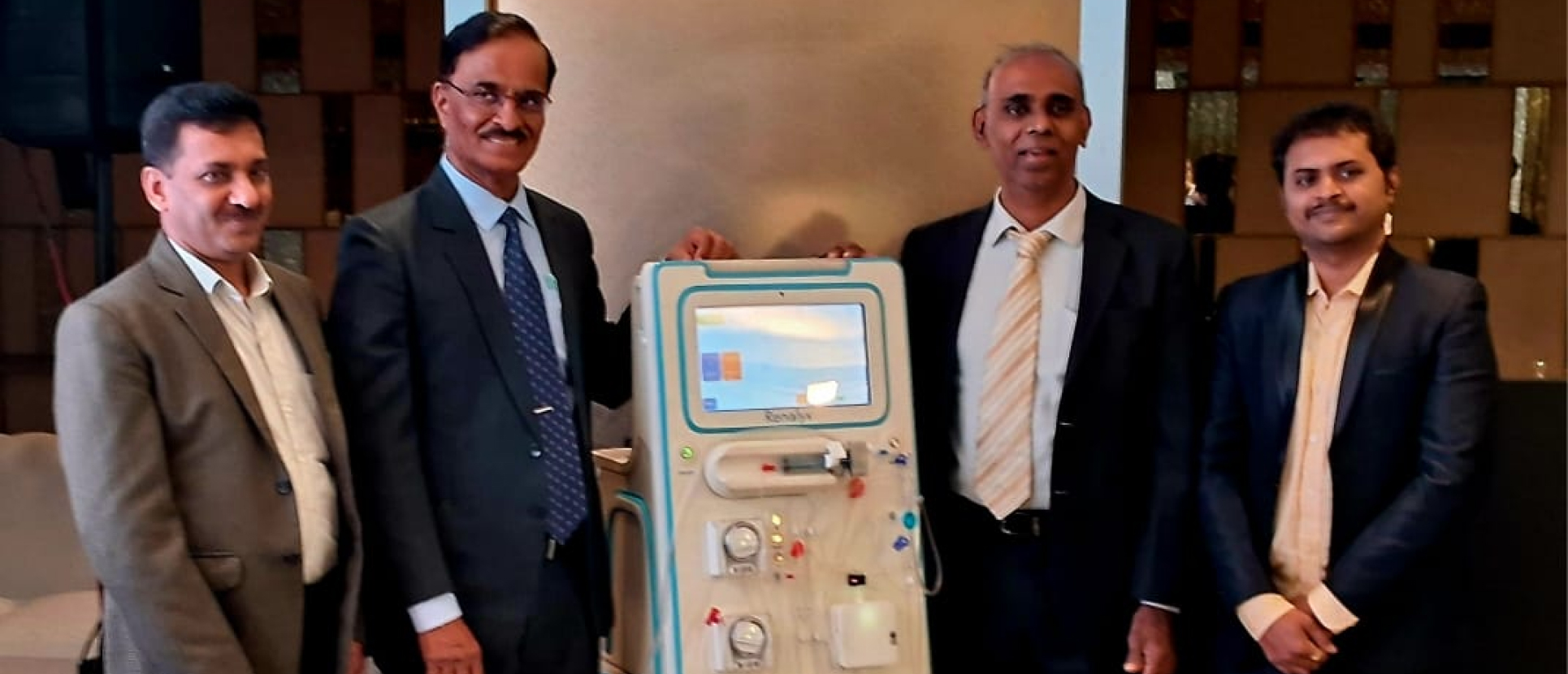



India AI dialysis ecosystem signals major healthcare innovation milestone
India has unveiled what is being described as the world’s first AI-powered dialysis ecosystem at Shakti Super Speciality Hospital in Ahmedabad, marking a major step forward in the integration of artificial intelligence within healthcare infrastructure. Developed by Lord’s Mark Industries, the system combines AI-driven clinical intelligence, remote patient monitoring, and smart haemodialysis technologies designed to improve treatment efficiency and long-term patient care.
The initiative reflects India’s broader push toward digitally enabled healthcare infrastructure and scalable medical innovation capable of addressing the country’s growing chronic disease burden.
The India AI dialysis ecosystem story highlights how AI is increasingly moving from experimental healthcare applications into real-world operational deployment across hospitals and clinical systems.
Consequently, India is strengthening its position as an emerging global center for scalable health-tech and AI-driven medical innovation.
AI rapidly transforms global healthcare systems
Artificial intelligence has become one of the fastest-growing areas within healthcare technology. Hospitals and medical providers worldwide are increasingly adopting AI systems to improve diagnostics, patient monitoring, workflow management, and predictive analytics.
At the same time, chronic kidney disease and dialysis demand continue rising globally. Healthcare systems face growing pressure to manage increasing patient volumes while improving treatment outcomes and operational efficiency.
India’s healthcare sector is particularly important within this context. The country combines a large patient population with rising digital-health adoption and strong government support for healthcare modernization.
Meanwhile, remote healthcare technologies have gained momentum following the pandemic. Telemedicine, connected medical devices, and AI-assisted monitoring systems are becoming more integrated into patient care models.
Lord’s Mark Industries’ deployment at Shakti Super Speciality Hospital reflects a broader industry shift toward smart healthcare ecosystems rather than standalone medical devices.
Therefore, the Ahmedabad launch arrives at a strategically important moment for India’s healthcare innovation landscape.
Integrating AI, monitoring, and smart dialysis systems
The India AI dialysis ecosystem integrates multiple technologies into a connected healthcare infrastructure model.
First, AI-driven clinical intelligence systems are designed to support treatment optimization and operational efficiency. These tools can help clinicians analyze patient data more effectively and identify potential risks earlier.
In addition, remote monitoring capabilities allow healthcare providers to track patient conditions continuously rather than relying solely on in-person observations.
Meanwhile, smart haemodialysis systems improve automation and treatment consistency. AI-assisted operational systems can enhance workflow precision and reduce manual intervention requirements.
The ecosystem also reflects broader healthcare scalability ambitions. India’s healthcare providers increasingly seek technologies capable of supporting large patient populations efficiently.
At the same time, digital healthcare integration improves long-term data collection and patient management capabilities.
The project may also strengthen India’s growing medical technology ecosystem by encouraging further innovation in AI-driven healthcare infrastructure.
As a result, the Ahmedabad deployment demonstrates how hospitals are evolving into more intelligent, data-connected healthcare environments.
AI healthcare moves from concept to infrastructure
The India AI dialysis ecosystem reflects broader structural changes taking place within the global healthcare industry.
Artificial intelligence is no longer confined to pilot programs and research labs. Hospitals are increasingly integrating AI directly into operational healthcare systems.
At the same time, healthcare infrastructure is becoming more data-centric. Real-time monitoring, predictive analytics, and intelligent automation are reshaping patient care models.
India’s role is particularly significant because scalable healthcare innovation is critically important in high-population environments.
However, healthcare AI deployment also presents challenges. Data privacy, clinical validation, regulatory oversight, and infrastructure reliability remain essential concerns.
Meanwhile, accessibility is becoming increasingly important. Advanced healthcare technologies must remain affordable and scalable to achieve broader public-health impact.
The Ahmedabad project also demonstrates how private-sector innovation is contributing to healthcare modernization across India.
Therefore, the future of healthcare may increasingly depend on integrated ecosystems combining AI, connected devices, and remote clinical management.
Smart healthcare infrastructure gains momentum
The AI-powered dialysis ecosystem has implications beyond a single hospital deployment.
First, it reinforces India’s ambition to become a global leader in digital healthcare innovation.
Second, AI-assisted dialysis infrastructure may improve treatment accessibility and operational efficiency across healthcare systems.
In addition, remote monitoring capabilities could support expansion into underserved and semi-urban healthcare markets over time.
Meanwhile, healthcare providers globally are watching AI infrastructure deployments closely as hospitals seek ways to improve efficiency and patient outcomes simultaneously.
The initiative may also encourage broader adoption of AI-assisted systems across specialties including cardiology, diagnostics, intensive care, and chronic disease management.
As a result, AI-powered healthcare infrastructure is evolving into a major strategic growth sector within global medtech and hospital systems.
AI-driven healthcare ecosystems expected to expand
Looking ahead, AI-enabled healthcare infrastructure is expected to grow rapidly across India and global markets.
Several factors support this trend:
- Rising demand for chronic disease management systems
- Expansion of remote healthcare and telemedicine technologies
- Increasing healthcare AI adoption worldwide
- Strong focus on operational efficiency within hospitals
- Growing investment in digital-health infrastructure
India is likely to continue accelerating healthcare modernization initiatives involving AI, automation, and connected medical systems.
Meanwhile, hospitals may increasingly deploy AI-assisted monitoring and predictive healthcare tools to improve treatment quality.
Medical-device ecosystems are also expected to become more interconnected through cloud systems, analytics platforms, and real-time monitoring technologies.
At the same time, regulators and healthcare providers will continue addressing issues involving data security, validation, and patient privacy.
Therefore, the future of healthcare infrastructure may increasingly revolve around intelligent, connected, and scalable AI-driven systems.
India strengthens leadership in healthcare AI innovation
The launch of the AI-powered dialysis ecosystem in Ahmedabad marks a significant milestone in India’s healthcare technology journey. By combining AI-driven intelligence, remote monitoring, and smart dialysis systems, the project demonstrates how healthcare infrastructure is rapidly evolving toward more connected and data-driven models.
The India AI dialysis ecosystem story highlights the growing convergence of healthcare, artificial intelligence, and digital infrastructure. As hospitals increasingly adopt intelligent systems, India is positioning itself as an important player within the future of global healthcare innovation.