

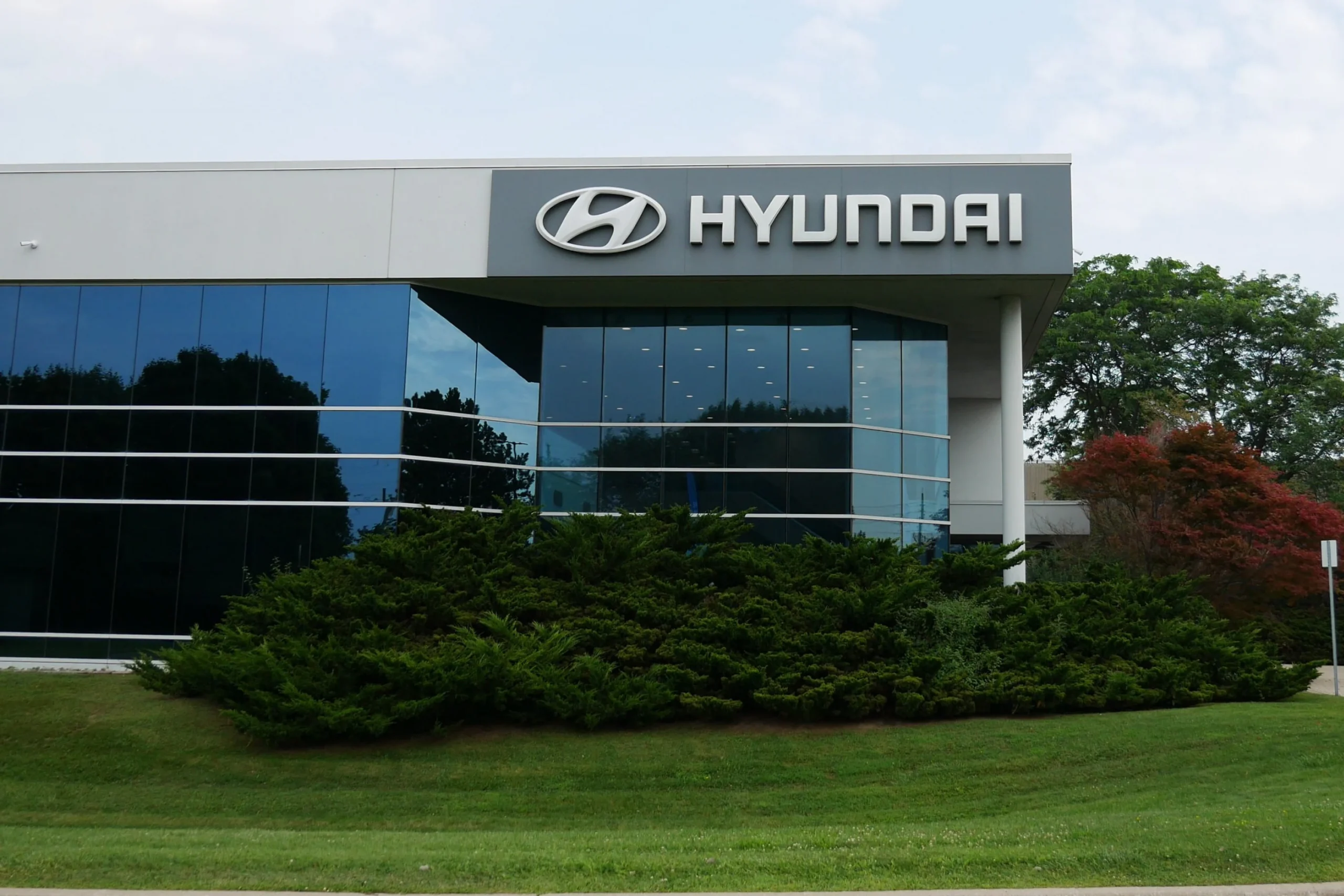
Hyundai sets the stage for Korea’s next industrial leap
Hyundai Motor Group has announced a landmark domestic investment commitment worth US$86.5 billion, set to be deployed between 2026 and 2030. The announcement, shared on 17 November 2025, signals one of the most ambitious industrial reinvestment plans in South Korea’s history. It reflects Hyundai’s intent to anchor its future around electric vehicles, software-defined mobility and advanced manufacturing systems, while reinforcing jobs, supplier ecosystems and long-term competitiveness. This decision arrives at a time when global mobility is undergoing rapid transformation, and Hyundai’s scale of commitment positions South Korea as a strategic hub for the next era of automotive innovation.
A reshaped industrial and global landscape
Hyundai’s investment plan comes against the backdrop of shifting global trade conditions and evolving demand for next-generation vehicles. Recent tariff adjustments between the United States and South Korea give Hyundai stronger incentives to upgrade domestic production for export competitiveness. At the same time, global automakers are racing to transition toward electrification and integrated software-controlled vehicle platforms. Hyundai’s planned US$86.5 billion outlay is divided across technology development, core manufacturing expansion and research capabilities to support this shift.
The allocation includes major funding for artificial intelligence and future mobility businesses, alongside substantial investment in research and development intended to accelerate Hyundai’s transition toward new propulsion systems, battery technologies and connected-vehicle architectures. The company is also investing heavily in modernising its domestic factories with AI-enabled automation and smarter production frameworks. These efforts build upon Hyundai’s earlier domestic cycle, which totalled around US$61.5 billion between 2021 and 2025, and mark a significant scale-up for the next decade.
A deep transformation of Hyundai’s industrial base
Hyundai’s multi-year investment will reshape its capabilities across the full mobility value chain. The core focus lies in accelerating the production and commercialisation of electric vehicles. By expanding EV capacity within South Korea, Hyundai strengthens its position in a global market increasingly driven by emissions regulations, consumer shifts and competitive pressure from China, Europe and the United States. Reinforced domestic capacity allows Hyundai to meet rising export demand through stable, technologically advanced manufacturing lines.
Another strategic dimension lies in the group’s push toward software-defined vehicles. Automakers are rapidly evolving beyond mechanical engineering into software ecosystems, and Hyundai is investing to ensure its vehicles become smarter, more connected and more adaptable over time. Building these capabilities at home enables tighter integration between hardware and software teams and supports Hyundai’s ambition to become a leader in digital mobility.
Equally important is the strengthening of Hyundai’s domestic supply chain. Korean parts suppliers have faced global volatility in recent years, driven by disrupted logistics, changing consumption patterns and the shift away from internal combustion engines. Hyundai’s investment provides suppliers with stability, new business pipelines and opportunities to co-develop future technologies. This has major implications for regional manufacturing clusters, particularly in cities where automotive production forms the backbone of local economies.
Modernising production infrastructure is another pillar of Hyundai’s plan. By upgrading factories with AI-enabled robotics, flexible manufacturing systems and advanced quality-control technologies, the company is preparing its facilities to handle a wider range of models with greater efficiency and speed. This approach aligns with global best practices for high-value manufacturing and supports Hyundai’s strategy to remain competitive in export markets.
A defining moment for South Korea’s industrial future
Hyundai’s commitment represents more than corporate expansion; it is a signal of confidence in South Korea’s long-term economic and technological trajectory. In an era when many multinational manufacturers diversify operations across multiple countries, Hyundai is concentrating its largest strategic push within its home market. This decision strengthens South Korea’s role as a global mobility and innovation hub and reinforces its industrial base at a time of global uncertainty.
The investment also reflects a broader trend emerging across Asia. As supply chains fragment and geopolitical tensions rise, major Asian firms are reinvesting at home while building export capacity outward. Hyundai’s move mirrors similar shifts in Japan’s automotive sector and China’s industrial upgrading efforts. But the scale of Hyundai’s US$86.5 billion commitment sets a new benchmark for the region and confirms South Korea’s ambition to lead in electric mobility, AI-driven engineering and advanced production technologies.
The impact will extend beyond automotive. By investing heavily in software, automation and AI, Hyundai elevates South Korea’s broader innovation ecosystem. Universities, research centres, engineering hubs and the domestic tech workforce all benefit from the spillover effects. As global capital looks for stability and technological excellence, South Korea’s industrial clusters could become even more attractive for foreign investment.
South Korea emerges as a global mobility powerhouse
Over the next decade, Hyundai’s investment will reshape South Korea’s mobility sector and influence the global automotive landscape. The company’s factories are expected to adopt next-generation manufacturing methods that integrate robotics, machine learning and digital diagnostics. These facilities may also become Hyundai’s global test beds for software-defined vehicles, autonomous driving capabilities and advanced component development.
For suppliers, the benefits are equally transformative. Continued demand for EV parts, battery components, semiconductors, AI systems and software platforms will stimulate investment and potentially expand Korea’s supplier footprint across Southeast Asia and India. Domestically, job creation in engineering, robotics, materials science and data systems is expected to grow.
Globally, Hyundai’s decision strengthens its competitive posture. As the EV race tightens and global demand for sustainable mobility expands, South Korea will serve as Hyundai’s core development and production centre. The country’s industrial base, supported by this record-scale investment, will play a defining role in Asia’s mobility leadership.
A transformative bet on South Korea’s industrial future
Hyundai Motor Group’s US$86.5 billion investment through 2030 marks a defining moment for South Korea’s industrial and technological landscape. The plan strengthens the country’s position as a leader in EV manufacturing, software-defined mobility and smart production technologies. It also reinforces Hyundai’s long-term competitiveness in global markets and demonstrates how Asian industrial champions are shaping the next era of mobility. For suppliers, policymakers and investors, Hyundai’s strategy signals a long-term vision rooted in innovation, scale and domestic strength.