



From ultra-efficient solar panels and grid-scale batteries to green hydrogen and offshore wind, Asia’s renewable-energy leaders are driving the region’s decarbonisation push. These ten companies stand out for scale, technology depth, and multi-market impact—accelerating Asia’s transition away from fossil fuels.
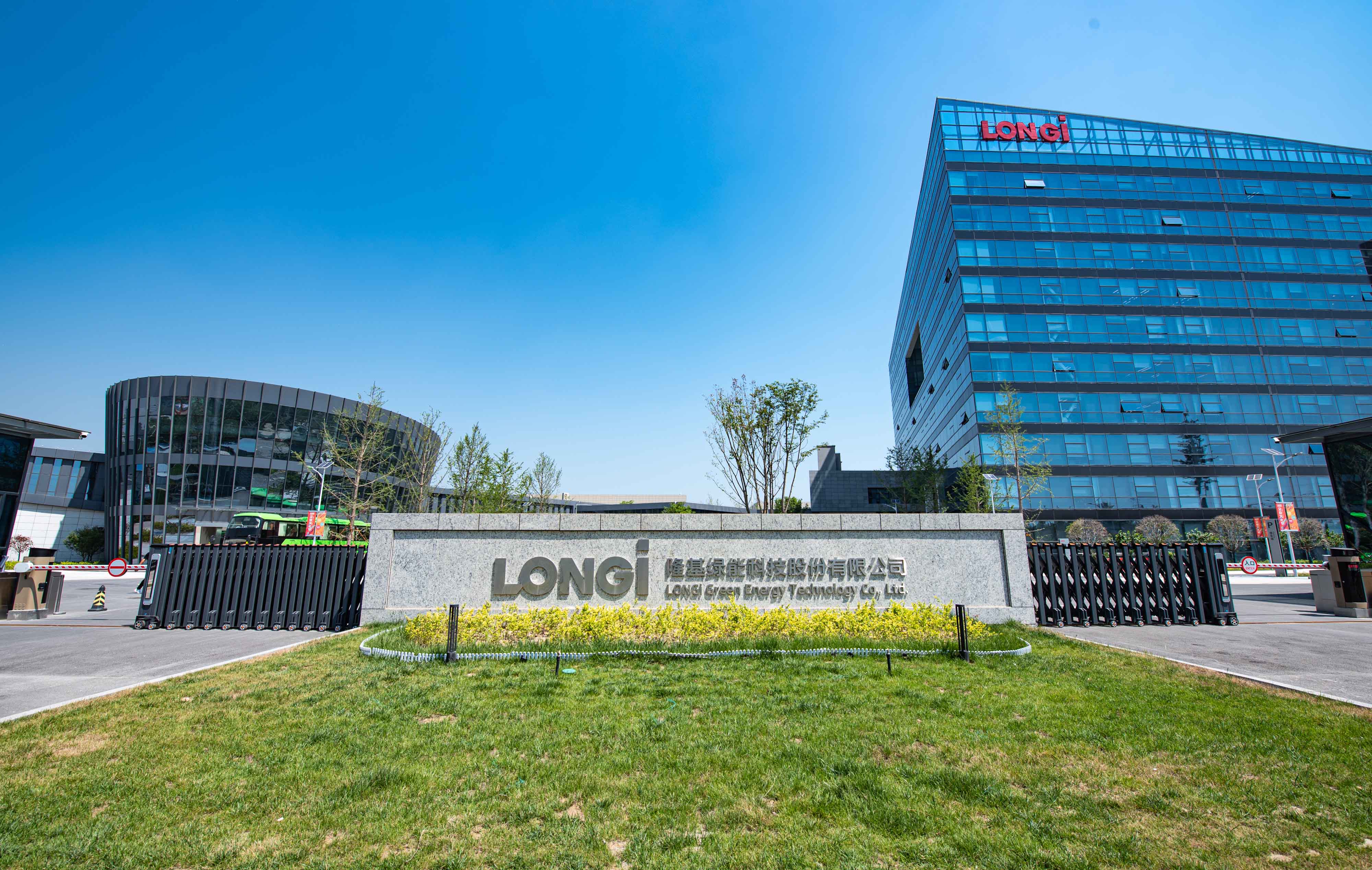
Image by Longi
LONGi Green Energy Technology |
- China
Founder: Li Zhenguo
World’s largest solar-module maker; >130 GW annual module capacity as of 2025
Founded in 2000 in Xi’an, LONGi has evolved from a mono-crystalline wafer specialist into the world’s most influential solar-technology company. Its high-efficiency modules underpin utility-scale solar farms from India to the Middle East, helping drive down the global levelised cost of energy. LONGi invests heavily in R&D for next-gen cell architectures and bifacial panels suited to Asia’s harsh climates. With manufacturing spread across China and overseas, it is central to scaling affordable renewables across emerging Asian markets.
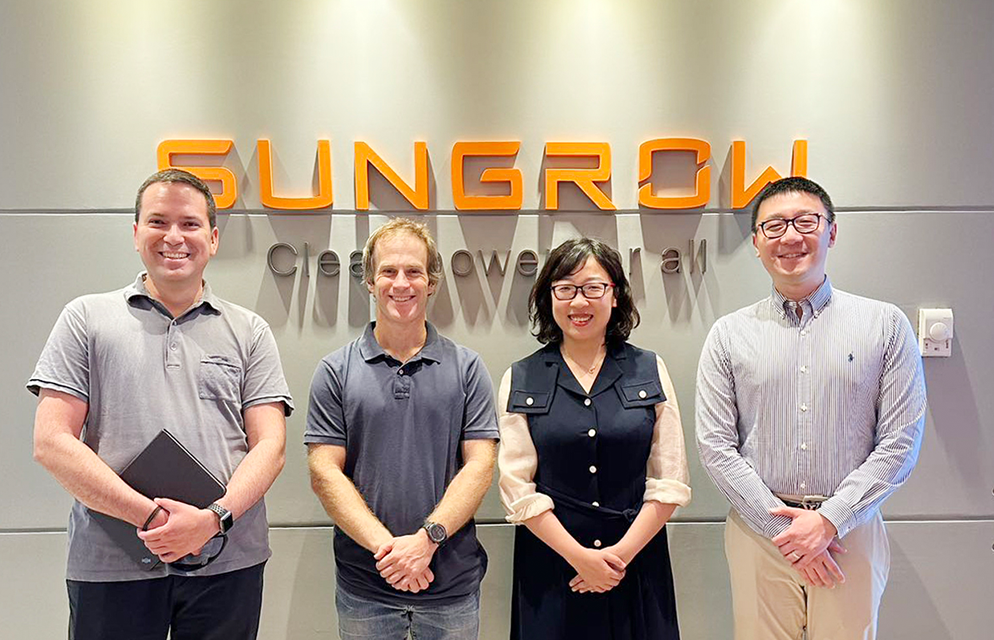
Image by Sungrow US
Sungrow |
- China
Founder: Cao Renxian
World’s No.1 inverter supplier by global market share; 405+ GW of inverters installed worldwide
Established in 1997, Sungrow has become the backbone of renewable-energy infrastructure thanks to its solar and storage inverters. Its grid-forming technologies stabilise power systems with high shares of renewables, which is crucial for countries like India and Vietnam. The company also leads in utility-scale battery energy storage systems, enabling peak shifting and frequency regulation. Through engineering centres and service hubs across Asia, Sungrow is accelerating reliable integration of renewables into national grids.
Image by News24
Adani Green Energy |
- India
Founder: Gautam Adani
India’s largest renewables company with >25 GW operational & under-construction capacity; part of a 45 GW by 2030 target
Incorporated in 2015, Adani Green Energy has built some of the world’s largest solar and hybrid parks, including projects in Rajasthan and Gujarat. The company focuses on gigawatt-scale renewable clusters connected via high-voltage transmission to industrial centres. While the wider Adani Group has drawn scrutiny, Adani Green remains a central player in India’s 500 GW non-fossil capacity goal. Its pipeline positions India as a key exporter of green electrons and, eventually, green hydrogen.
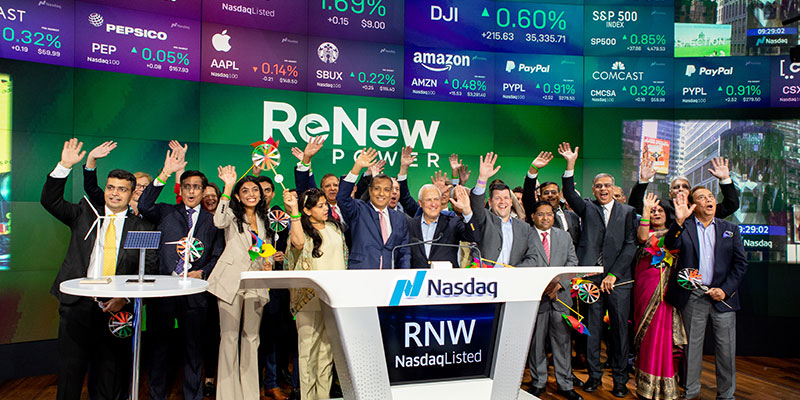
Image by Naukri campus
ReNew Energy Global |
- India
Founder: Sumant Sinha
>13 GW operational capacity across wind, solar, and hybrid projects; listed on NASDAQ
Founded in 2011, ReNew has grown into one of Asia’s largest independent renewable-power producers. It operates wind farms, solar parks, and round-the-clock hybrid projects across more than 10 Indian states. The company is also investing in green hydrogen and pumped hydro storage to provide firm, clean power to industrial customers. With international investors on board, ReNew is a bellwether for energy-transition capital flows into Asia.
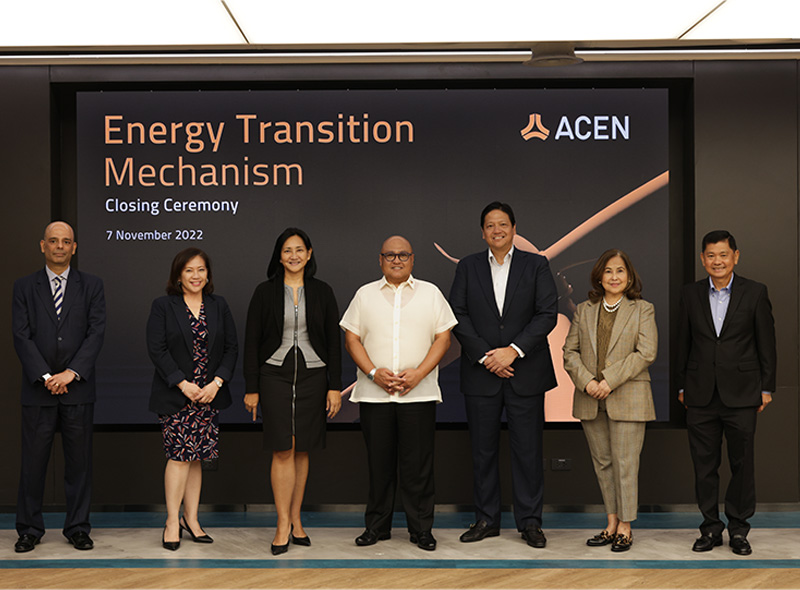
Image by ACEN
ACEN Corporation |
- Philippines
Founder: Ayala Group (energy arm)
9 GW of attributable renewables capacity across Asia-Pacific with a 20 GW 2030 target
ACEN, the energy platform of the Ayala Group, has transformed from a domestic utility into a pan-Asian renewables developer. Founded in 2011, it now operates wind, solar, and battery projects in the Philippines, Vietnam, Indonesia, India, and Australia. The company is exiting coal and aiming for 100% renewables by 2025 on an attributable basis. With strong project-finance capabilities, ACEN is a flagship example of Southeast Asian capital backing regional green infrastructure.

Image by Renewable Energy in Southeast Asia
JERA Co. |
- Japan
Founders: Joint venture of TEPCO Fuel & Power and Chubu Electric Power
Japan’s largest power producer; targeting 5 GW of renewable capacity and large-scale hydrogen/ammonia co-firing by 2035
Created in 2015, JERA is Japan’s biggest utility and a critical actor in Asia’s transition strategy. While historically gas and coal focused, JERA is investing heavily in offshore wind, grid-scale renewables, and low-carbon fuels such as hydrogen and ammonia. Its pilot projects with co-firing at existing thermal plants provide a pragmatic pathway to decarbonise legacy infrastructure. With projects from Japan to Vietnam and Taiwan, JERA’s transition roadmap will influence how other Asian utilities pivot.

Image by KEPCO Australia
KEPCO Renewable Energy |
- South Korea
Founder: Government-owned utility (KEPCO)
Multi-GW pipeline in onshore and offshore wind, solar, and planned floating offshore wind in the Yellow & East Seas
KEPCO, established in its modern form in 1982, is South Korea’s dominant utility and a major investor in renewables through its subsidiaries. It is spearheading large offshore-wind clusters and exploring floating platforms to harness deeper coastal waters. KEPCO is also modernising Korea’s grid to handle high renewable penetration and cross-border interconnections. As South Korea targets carbon neutrality by 2050, KEPCO’s renewables arm will shape the pace and scale of deployment.

Image by Vena Energy
Vena Energy |
- Singapore
CEO, Nitin Apte
>7 GW of operating, in-construction, and advanced-development renewable projects across Asia-Pacific
Headquartered in Singapore, Vena Energy is one of Asia-Pacific’s largest independent renewable-power producers. Its portfolio spans solar, onshore wind, and storage in markets including Japan, Taiwan, South Korea, India, Australia, and Southeast Asia. The company is particularly active in Japan’s offshore-wind and Taiwan’s grid-scale solar sectors. With institutional investors behind it, Vena acts as a regional consolidator of high-quality green assets.

Image by wikipedia
CLP Holdings (Renewables Division) |
- Hong Kong
Founder: CLP founded by Shek Lai Him’s family in 1901 (as China Light & Power)
>3 GW of non-carbon generation across China, India, and Southeast Asia; coal share steadily declining
CLP is one of Asia’s oldest utilities, now in the midst of a structured energy transition. Its renewables division develops and operates wind, solar, and hydro assets across mainland China and India while systematically retiring coal capacity. The company’s decarbonisation roadmap includes interim 2030 emissions-intensity targets aligned with climate-science pathways. As a listed utility serving Hong Kong and the Pearl River Delta, CLP’s shift signals how legacy grids in Asia can transition while maintaining reliability.

Image by Mint
Gentari (Petronas Clean Energy) |
- Malaysia
Founder: Petronas
Targeting 30–40 GW of renewables capacity and leadership in green hydrogen & EV ecosystems by 2030
Gentari is the dedicated clean-energy arm of Malaysian energy major Petronas. Despite being one of the youngest entities on this list, it has quickly built a pipeline spanning solar, onshore renewables, energy solutions, and cross-border green hydrogen projects. Gentari is also rolling out EV-charging networks across Malaysia and India, linking power, mobility, and hydrogen strategies. As national oil companies pivot to low-carbon businesses, Gentari showcases how incumbent players can move decisively into renewables.
Asia’s energy transition will not be won by policy alone—it depends on companies capable of scaling technologies from factories to gigawatt-scale projects. LONGi and Sungrow are lowering hardware costs; Adani Green, ReNew, ACEN, Vena, and Gentari are turning those technologies into real assets; while JERA, KEPCO, and CLP are rewiring legacy power systems. Together, these ten renewable-energy leaders are accelerating Asia’s path toward a cleaner, more resilient energy future.
Discover more inspiring journeys on Feature.Asia: 10 Entrepreneurs Under 30 Changing Asia’s Economy