



Honor humanoid robot innovation showcases AI and hardware convergence
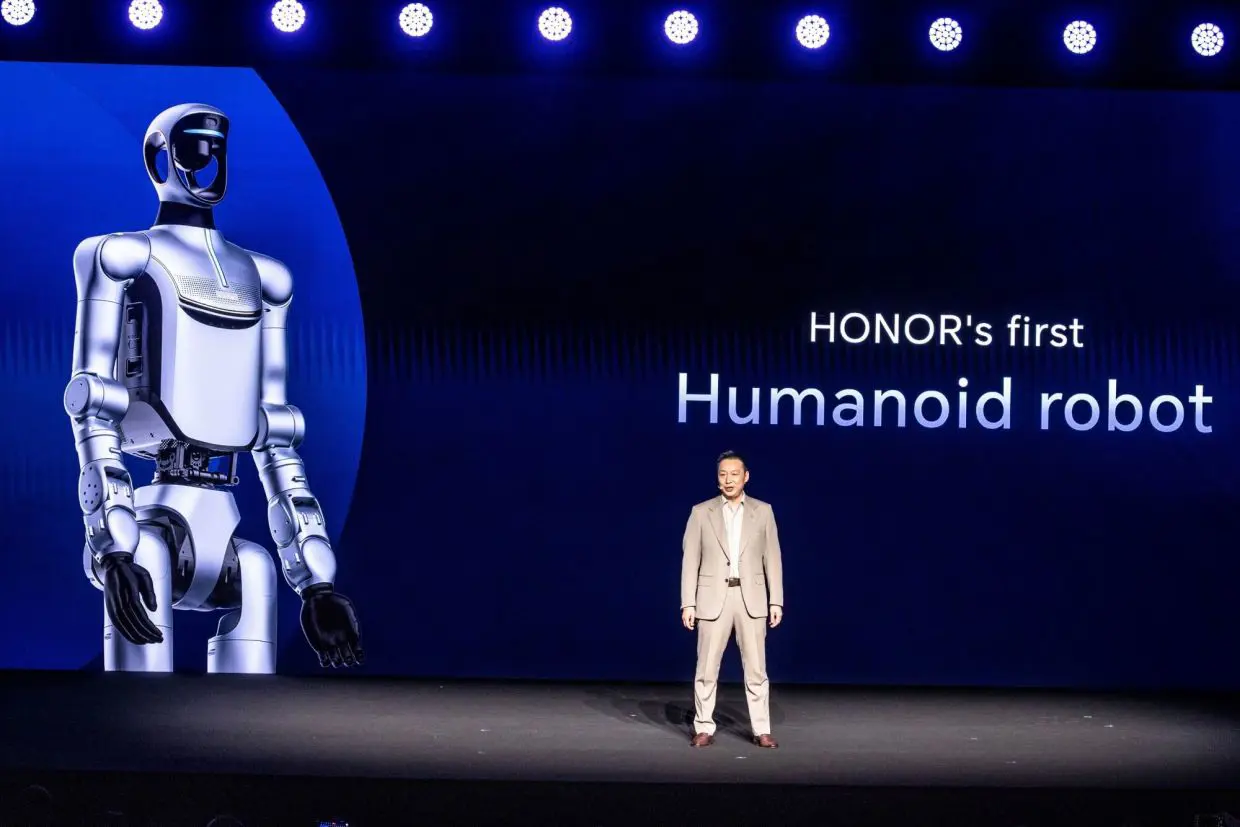
Chinese tech company Honor has developed a humanoid robot powered by smartphone-level technology, capable of completing a half-marathon faster than humans in controlled testing. The breakthrough highlights how consumer electronics expertise is now being applied to advanced robotics.
The Honor humanoid robot innovation demonstrates a powerful convergence between AI, hardware, and mobility. By leveraging smartphone chips, sensors, and optimization techniques, the company has pushed robotics performance into real-world scenarios.
Consequently, this development signals a new phase where consumer tech companies are entering the robotics race.
The Tesla AI voice assistant China strategy highlights how global tech companies are adapting products for regional markets. As regulations tighten, localization is becoming essential for product deployment and growth.
Consequently, Tesla’s move signals a deeper commitment to China as a critical market for its AI and automotive ecosystem.
Smartphone technology expands into robotics
Smartphone manufacturers have built deep expertise in hardware optimization, chip efficiency, and sensor integration. These capabilities are now being applied beyond mobile devices.
At the same time, robotics has advanced rapidly due to improvements in AI models, motion control systems, and computing power.
China has been investing heavily in robotics innovation. Both startups and established tech companies are exploring humanoid systems for industrial and service applications.
Meanwhile, the demand for automation is increasing globally. Robotics is being adopted in logistics, manufacturing, and urban environments.
Therefore, the combination of consumer tech and robotics is creating new opportunities for innovation.
Leveraging mobile tech for robotics performance
The Honor humanoid robot innovation is built on adapting smartphone technologies to robotics.
The robot uses optimized processors similar to those found in mobile devices. These chips enable efficient real-time decision-making while maintaining low power consumption.
In addition, advanced sensors and AI algorithms help the robot maintain balance and navigate complex environments.
Meanwhile, software optimization plays a key role. Honor has applied its expertise in system integration to improve performance and responsiveness.
The half-marathon demonstration highlights endurance and efficiency. Completing such a distance requires both hardware reliability and intelligent control systems.
As a result, Honor is showcasing a new approach to robotics development.
Consumer tech firms enter robotics race
The Honor humanoid robot innovation reflects a broader shift in the technology landscape.
Traditionally, robotics development was led by specialized companies and research institutions. However, consumer electronics firms are now entering the space.
These companies bring unique advantages. They have experience in scaling hardware production and optimizing cost efficiency.
At the same time, AI capabilities are becoming more accessible. This allows companies to integrate intelligence into physical systems more easily.
However, challenges remain. Robotics requires precise engineering and real-world reliability, which differ from consumer devices.
Therefore, success will depend on execution and continuous innovation.
Robotics to benefit from consumer tech integration
Looking ahead, the integration of consumer technology and robotics is expected to accelerate.
Several factors support this trend:
- Advances in mobile processors and AI chips
- Improvements in sensor technology
- Growing demand for automation across industries
- Increased investment in robotics innovation
Honor may continue developing robotics solutions beyond prototypes. Commercial applications could emerge in logistics, healthcare, and service sectors.
Meanwhile, other smartphone companies may follow similar paths. The convergence of devices and robotics will reshape the industry.
Therefore, consumer tech firms could become key players in the future of robotics.
Honor pushes boundaries of AI-powered robotics
Honor’s humanoid robot achievement marks a significant step in combining smartphone technology with advanced robotics. By demonstrating real-world performance, the company is expanding the possibilities of AI-driven machines.
As innovation continues, the lines between consumer electronics and robotics will blur further. The Honor humanoid robot innovation highlights how new approaches can drive the next wave of technological progress.