





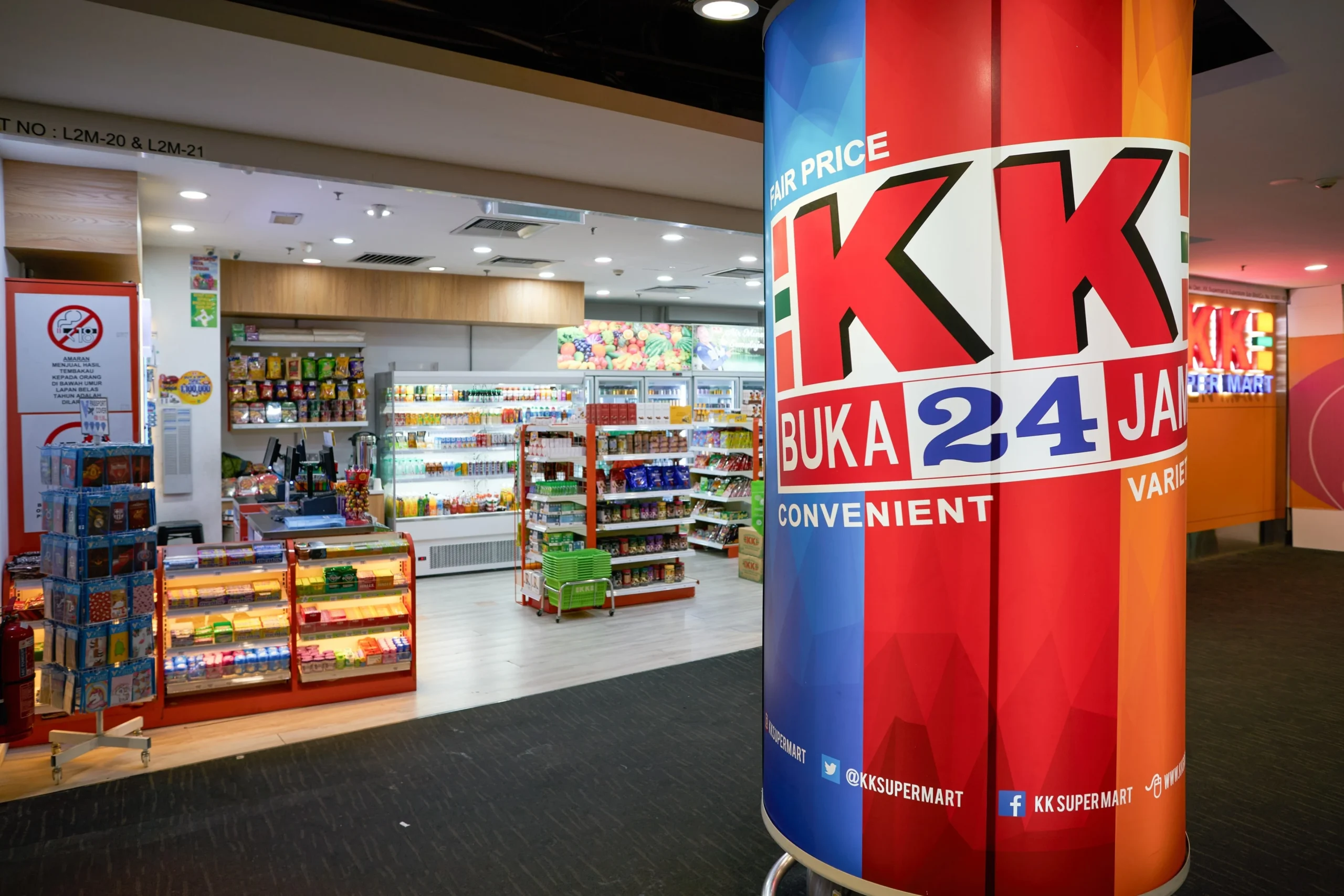
KK Mart IPO reflects Southeast Asia’s consumer growth momentum
Malaysia-based convenience store chain KK Mart has reportedly begun meeting cornerstone investors ahead of a planned initial public offering (IPO) expected to value the company at approximately US$750 million. The move comes as Southeast Asia’s retail and consumer sectors continue expanding rapidly amid rising urbanization, digital adoption, and middle-class spending.
The KK Mart IPO Southeast Asia story highlights how regional consumer businesses are increasingly attracting investor attention as ASEAN economies strengthen domestic consumption and modern retail infrastructure.
Consequently, KK Mart is positioning itself as one of the latest Southeast Asian consumer brands seeking to capitalize on the region’s strong IPO and retail growth momentum.
Southeast Asia’s retail economy enters expansion phase
Southeast Asia has become one of the world’s fastest-growing consumer markets. Rising disposable incomes, urban population growth, and digital connectivity are reshaping retail behavior across ASEAN economies.
Malaysia, in particular, has seen strong growth in convenience retail and neighborhood commerce. Consumers increasingly value accessibility, speed, and extended operating hours offered by convenience store formats.
At the same time, modern retail infrastructure continues expanding across the region. International and regional chains are investing heavily in store networks, logistics systems, and digital commerce integration.
Meanwhile, Southeast Asia’s capital markets are also regaining momentum. Investors are showing renewed interest in consumer-focused IPOs as economic conditions improve across multiple ASEAN economies.
KK Mart has become one of Malaysia’s most recognizable convenience retail brands, benefiting from strong domestic brand familiarity and rapid outlet expansion.
Therefore, the IPO arrives at a strategically important moment for both the company and the broader regional retail sector.
Expanding retail footprint and investor positioning
The KK Mart IPO Southeast Asia strategy appears focused on strengthening expansion capacity and long-term market positioning.
First, the IPO could provide fresh capital to accelerate store expansion across Malaysia and potentially other Southeast Asian markets.
In addition, the company may invest more heavily in supply-chain efficiency, logistics infrastructure, and digital retail systems.
Meanwhile, convenience retail remains highly scalable in urban ASEAN markets. Dense city populations and changing consumer lifestyles continue supporting demand for accessible neighborhood retail formats.
KK Mart may also strengthen digital integration. Retailers increasingly rely on mobile payments, loyalty systems, delivery platforms, and data-driven inventory management.
At the same time, investor interest in consumer-facing businesses remains strong. Companies tied to domestic spending and retail growth are viewed as attractive long-term opportunities in emerging markets.
The IPO process itself signals growing confidence in Southeast Asia’s public-market environment.
As a result, KK Mart is positioning itself to benefit from both retail expansion and regional investor optimism.
ASEAN consumer brands gain global investor attention
The KK Mart IPO Southeast Asia story reflects broader structural changes across the region’s economy.
For years, Southeast Asia’s startup and investment narrative was dominated primarily by technology and super-app companies. However, traditional consumer businesses are regaining visibility as retail demand strengthens.
Convenience stores are becoming particularly important because they combine physical retail with digital commerce integration. Modern convenience chains increasingly function as payment points, logistics hubs, and quick-commerce nodes.
At the same time, investors are seeking businesses with predictable consumer demand and scalable operational models.
Malaysia’s retail sector also benefits from regional positioning. The country sits within one of the world’s fastest-growing consumer corridors connecting ASEAN markets.
However, competition remains intense. Convenience retail margins are often thin, requiring strong operational discipline and efficient supply-chain management.
Meanwhile, consumer preferences are evolving rapidly. Retailers must adapt to digital payments, online ordering, sustainability expectations, and changing shopping patterns.
Therefore, long-term success depends not only on expansion but also on operational adaptability.
IPO momentum strengthens ASEAN retail ecosystem
KK Mart’s planned listing has implications beyond Malaysia’s retail sector alone.
First, it highlights growing investor confidence in Southeast Asia’s consumer economy. IPO activity often reflects broader optimism about regional growth prospects.
Second, the listing could encourage other ASEAN consumer brands to explore public-market opportunities.
In addition, convenience retail plays an important role in urban economic infrastructure. Expanding store networks support employment, logistics activity, and local supplier ecosystems.
Meanwhile, Southeast Asia’s rising middle class continues driving domestic consumption growth. Retail-focused companies are increasingly becoming strategic investment targets.
The IPO may also strengthen Malaysia’s broader capital-market visibility within ASEAN.
As a result, KK Mart’s public-market ambitions reflect larger regional trends involving consumption, urbanization, and retail modernization.
Southeast Asia retail and IPO activity expected to grow
Looking ahead, Southeast Asia’s retail and consumer sectors are expected to continue expanding strongly.
Several factors support this trend:
- Rising middle-class spending across ASEAN
- Continued urbanization and population growth
- Expansion of digital payments and mobile commerce
- Increasing demand for convenience-driven retail models
- Recovery of regional IPO and investment activity
KK Mart may continue scaling its store network and digital retail capabilities after listing.
Meanwhile, retail competition is likely to intensify as both domestic and international brands expand across ASEAN markets.
Technology integration will also become increasingly important. AI-driven inventory systems, customer analytics, and automated logistics are expected to shape future retail operations.
At the same time, investors will continue monitoring profitability and operational efficiency closely.
Therefore, Southeast Asia’s next phase of retail growth will likely combine physical expansion with digital transformation and stronger capital-market participation.
KK Mart IPO highlights ASEAN retail growth potential
KK Mart’s planned IPO marks another important milestone in Southeast Asia’s expanding consumer economy. By seeking public-market capital during a period of strong regional retail growth, the company is positioning itself to benefit from rising consumer demand and urban expansion across ASEAN.
As Southeast Asia’s retail landscape continues evolving, convenience chains capable of combining operational scale with digital adaptation may gain long-term advantages. The KK Mart IPO Southeast Asia story demonstrates how regional consumer businesses are increasingly becoming central players within Asia’s broader economic growth narrative.