

Tesla Samsung AI chip partnership reshapes manufacturing strategy
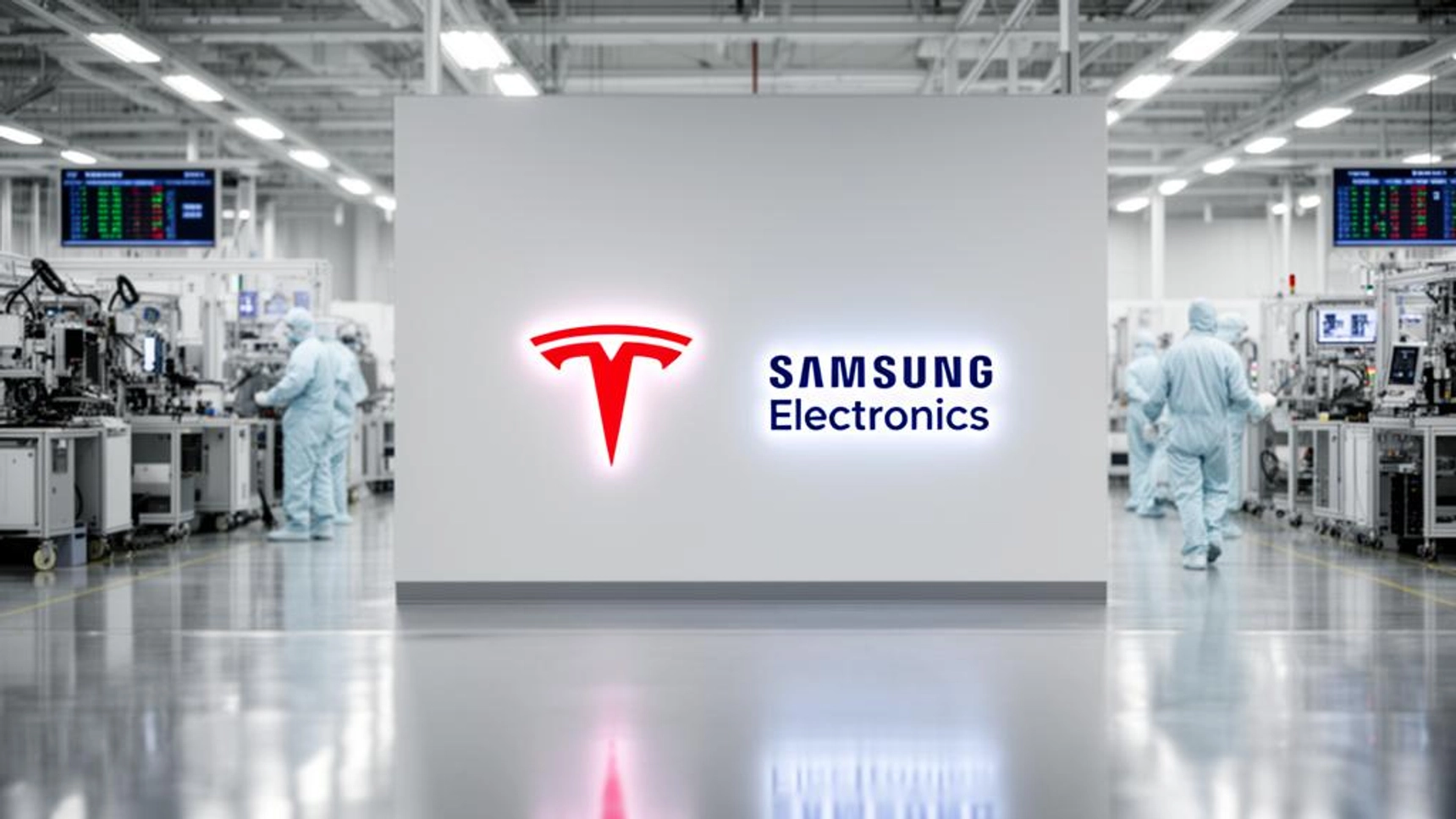
Tesla has signed a multi-billion-dollar chip sourcing agreement with Samsung Electronics to produce next-generation AI chips, marking a major step in strengthening its hardware capabilities. The deal focuses on securing advanced semiconductor supply for AI-driven systems, including autonomous driving and in-vehicle computing.
The Tesla Samsung AI chip partnership highlights a critical shift in how technology companies approach manufacturing. As AI demand accelerates, securing reliable chip supply has become a strategic priority.
Consequently, this collaboration signals a deeper alignment between automotive innovation and semiconductor manufacturing.
AI chips become core to automotive innovation
Artificial intelligence is rapidly transforming the automotive industry. Features such as autonomous driving, smart navigation, and real-time data processing rely heavily on advanced chips.
Tesla has been at the forefront of integrating AI into vehicles. Its systems require high-performance processors capable of handling complex workloads.
At the same time, global semiconductor supply chains have faced disruptions. Companies are increasingly seeking long-term partnerships to ensure stability.
Meanwhile, Samsung Electronics has established itself as a major player in semiconductor manufacturing. The company produces advanced chips for global technology firms.
Therefore, collaboration between automakers and chipmakers is becoming more common.
Securing supply and scaling AI capabilities
The Tesla Samsung AI chip partnership focuses on long-term supply and innovation.
Tesla aims to secure consistent access to next-generation chips. This reduces reliance on uncertain supply chains and supports future product development.
In addition, the partnership allows for closer collaboration on chip design and manufacturing. Custom solutions can improve performance and efficiency.
Meanwhile, Samsung benefits from a major long-term client. The deal strengthens its position in the global semiconductor market.
The agreement also reflects a shift toward vertical integration. Companies are seeking greater control over critical components.
As a result, both firms gain strategic advantages.
Manufacturing partnerships redefine tech competition
The Tesla Samsung AI chip partnership reflects a broader transformation in the technology industry.
Competition is no longer limited to software or product features. Control over manufacturing and supply chains has become equally important.
Companies are forming strategic alliances to secure critical resources. This approach reduces risk and improves long-term planning.
At the same time, AI is driving a new wave of demand. Chips designed specifically for AI workloads are becoming essential.
However, these partnerships also increase interdependence. Companies must manage relationships carefully to maintain flexibility.
Therefore, collaboration and competition are becoming closely intertwined.
AI chip demand to drive deeper collaborations
Looking ahead, demand for AI chips is expected to grow significantly.
Several factors support this trend:
- Expansion of autonomous driving technologies
- Growth of AI applications in consumer and industrial sectors
- Increasing need for high-performance computing
- Continued investment in semiconductor innovation
Tesla may expand similar partnerships to secure additional supply. Meanwhile, Samsung is likely to pursue more collaborations with global firms.
The semiconductor industry will continue evolving rapidly. Companies that secure reliable manufacturing partnerships will gain a competitive edge.
Therefore, strategic alliances will play a key role in shaping the future.
Tesla and Samsung strengthen AI manufacturing ecosystem
The Tesla–Samsung chip agreement marks a significant step in aligning automotive innovation with semiconductor manufacturing. By securing supply and enabling collaboration, both companies are positioning themselves for long-term growth in the AI era.
As technology continues to advance, partnerships like this will define industry dynamics. The Tesla Samsung AI chip partnership demonstrates how collaboration can drive innovation and resilience in global supply chains.