



India A Women Asia Cup campaign signals depth in cricket pipeline
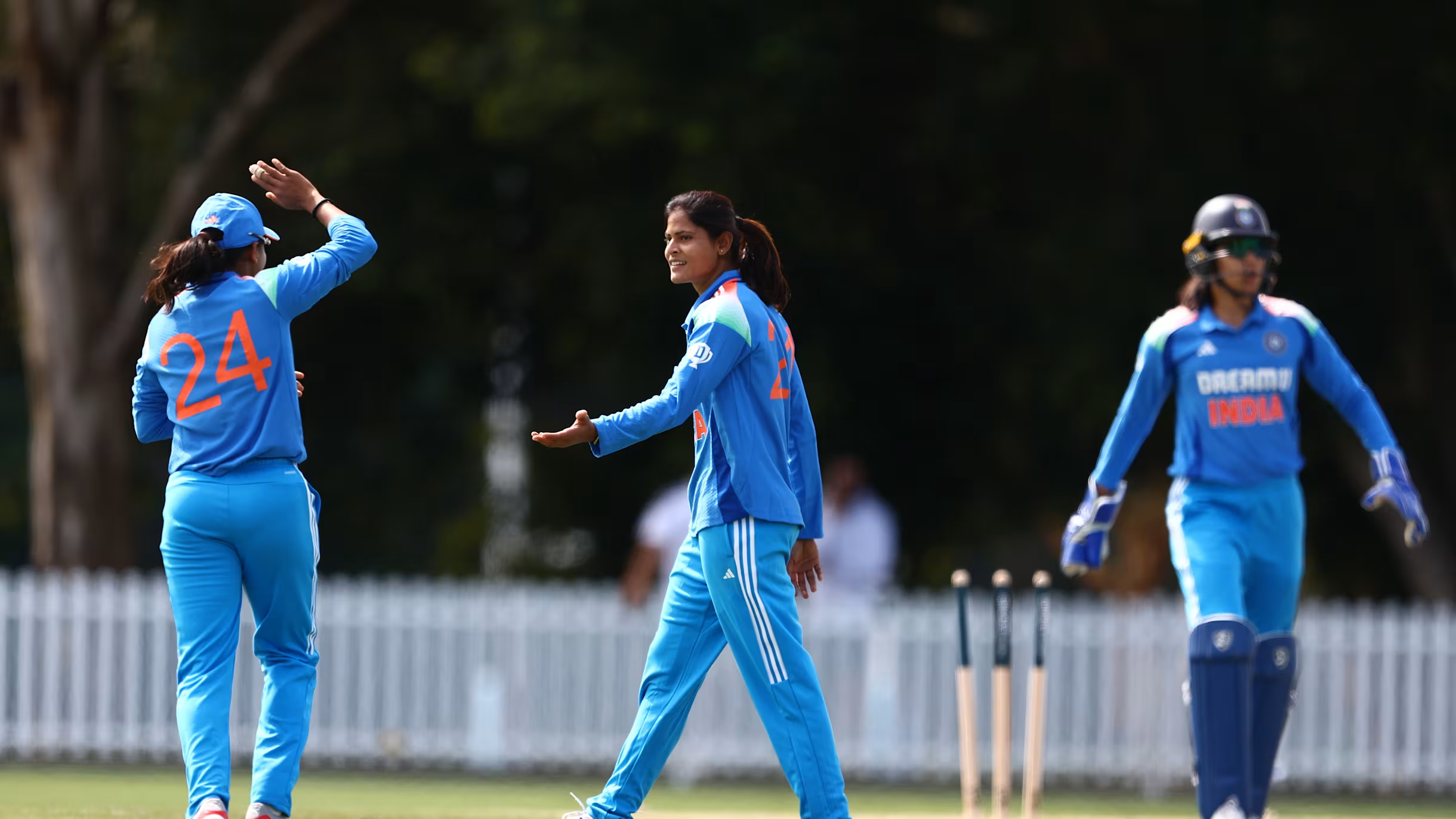
India A Women confirmed their qualification for the knockout stage of the Women’s Asia Cup Rising Stars tournament after securing a dominant victory over Nepal. The result underlined the depth of India’s emerging women’s cricket talent and reinforced the country’s long-term pipeline strategy.
The India A Women Asia Cup performance reflects a broader structural evolution in women’s cricket across Asia. With stronger domestic systems and structured development programmes, second-tier national squads are increasingly competitive and strategically significant.
Rising Stars tournament builds future international core
The Women’s Asia Cup Rising Stars tournament, conducted under the governance of the Asian Cricket Council (ACC), was designed to give emerging players structured international exposure. Unlike senior tournaments, this competition prioritises developmental depth and bench strength.
India’s cricket ecosystem, supported by the Board of Control for Cricket in India (BCCI), has expanded its women’s cricket investment over the past decade. Central contracts, domestic leagues and structured academy pathways have strengthened the talent base.
Furthermore, the launch and growth of domestic competitions have accelerated match readiness for younger players. Consequently, India A squads now serve as transition platforms between domestic circuits and the senior national team.
Bench strength and tactical maturity
India A Women approached the tournament with a balanced squad featuring top-order batters, versatile all-rounders and disciplined bowling units. Against Nepal, the team demonstrated both batting depth and controlled field placements.
Early breakthroughs by the bowling attack restricted Nepal’s scoring momentum. In response, India’s top order chased the target with composure, highlighting tactical discipline.
Such performances illustrate how A-team competitions build situational awareness under tournament pressure. Players learn to adapt to varied pitch conditions and opposition styles.
Moreover, the knockout qualification ensures additional high-intensity matches, further strengthening competitive maturity.
Asia’s women’s cricket ecosystem strengthens
Women’s cricket in Asia has grown rapidly in both participation and commercial interest. Countries such as Bangladesh, Sri Lanka and Thailand have expanded grassroots initiatives.
Nepal’s participation itself signals growing regional inclusivity. Although India secured a dominant win, the competitive exposure benefits all teams involved.
The Asian Cricket Council continues to emphasise balanced regional development. Structured competitions provide consistent pathways rather than sporadic international fixtures.
However, maintaining competitive parity requires sustained investment across smaller cricketing nations.
India’s layered cricket structure pays dividends
The India A Women Asia Cup qualification reflects a layered cricket structure that prioritises depth. Instead of relying solely on star performers, India is building interchangeable bench strength.
This approach mirrors successful models in men’s cricket, where A-team tournaments have historically prepared players for senior transitions.
Additionally, commercial interest in women’s cricket has expanded. Sponsorship, broadcast reach and grassroots engagement now support developmental continuity.
Therefore, India’s structured pathway strategy may offer a template for other Asian cricket boards.
Transition from Rising Stars to senior stage
In the near term, knockout-stage performances will determine how many players attract senior team selection attention. Consistent displays under pressure often accelerate promotion.
Over the medium term, India’s women’s cricket ecosystem is likely to integrate performance analytics and fitness frameworks more deeply into A-team development.
Furthermore, regional competitions may expand in scale as interest grows. Increased match frequency strengthens skill adaptation and competitive resilience.
Looking ahead, sustained investment in second-tier squads will ensure that India maintains competitiveness at global tournaments.
Ultimately, the Rising Stars platform functions as a proving ground for the next generation of international cricketers.
Knockout qualification reinforces pipeline strength
India A Women’s qualification for the knockout stage of the Women’s Asia Cup Rising Stars tournament underscores the strength of the country’s developmental cricket framework. A dominant win over Nepal highlighted tactical discipline and bench depth.
As Asia’s women’s cricket ecosystem expands, structured A-team competitions will remain central to sustaining long-term excellence and competitive continuity.